
Last updated September 20, 2026
Level 1 sweep and inspection to the NFPA 211 annual standard - flue, crown, cap, and flashing checked and photographed
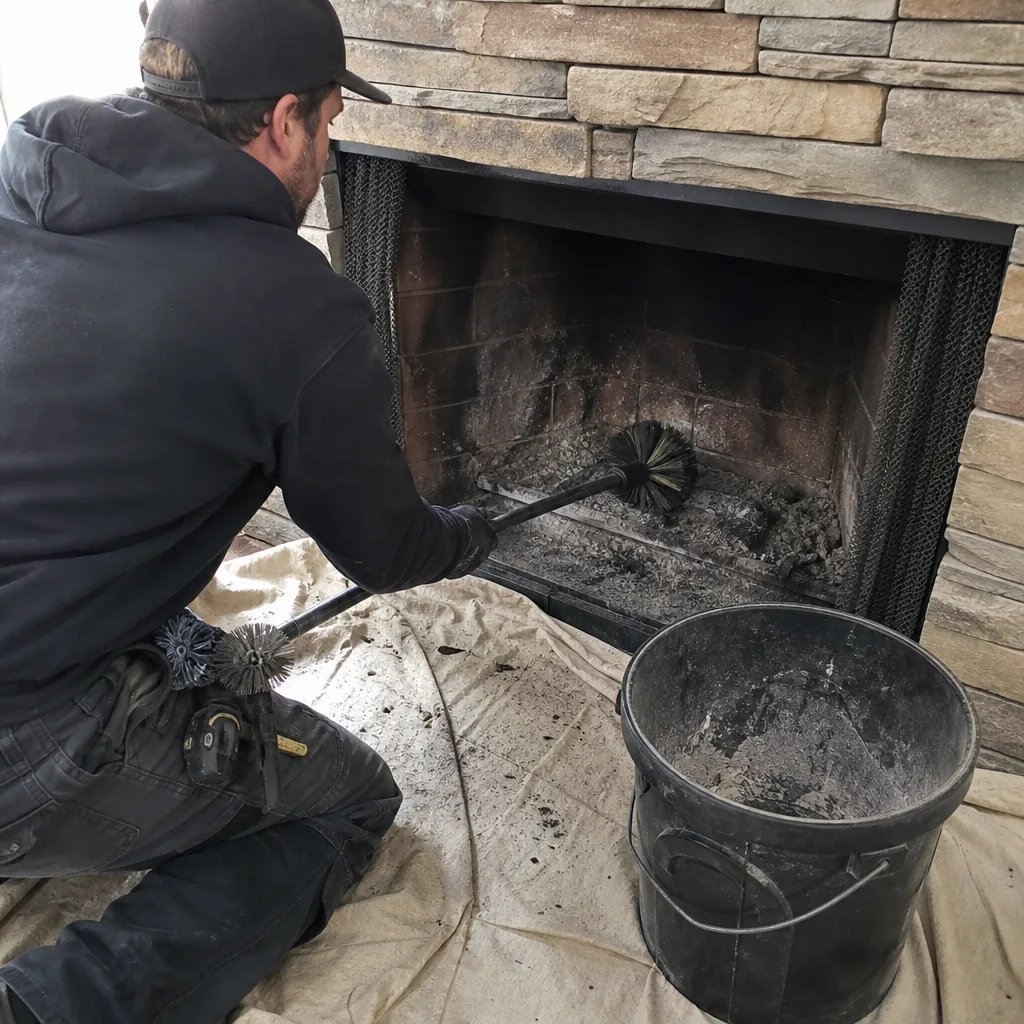
Chimney sweep logs do not sweep chimneys. They loosen some creosote - which then falls where a brush and vacuum still have to collect it.
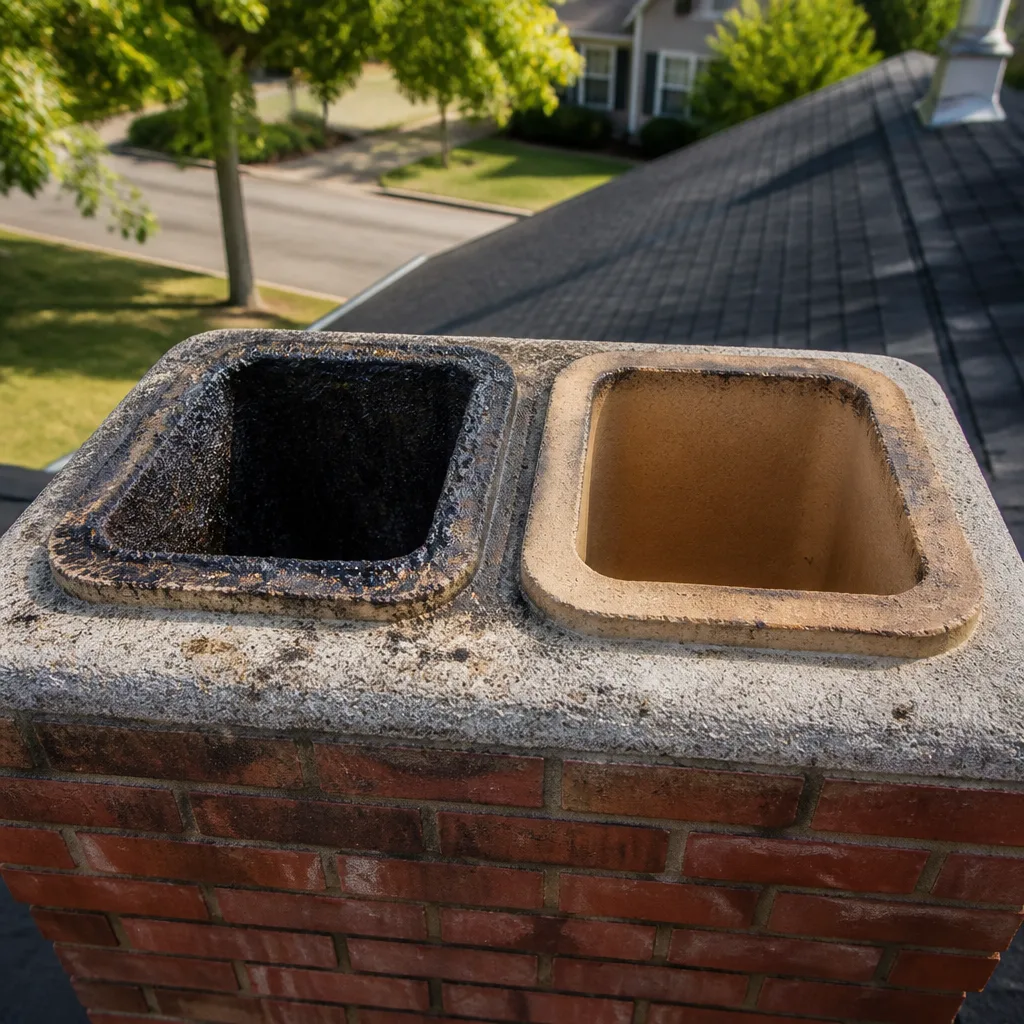
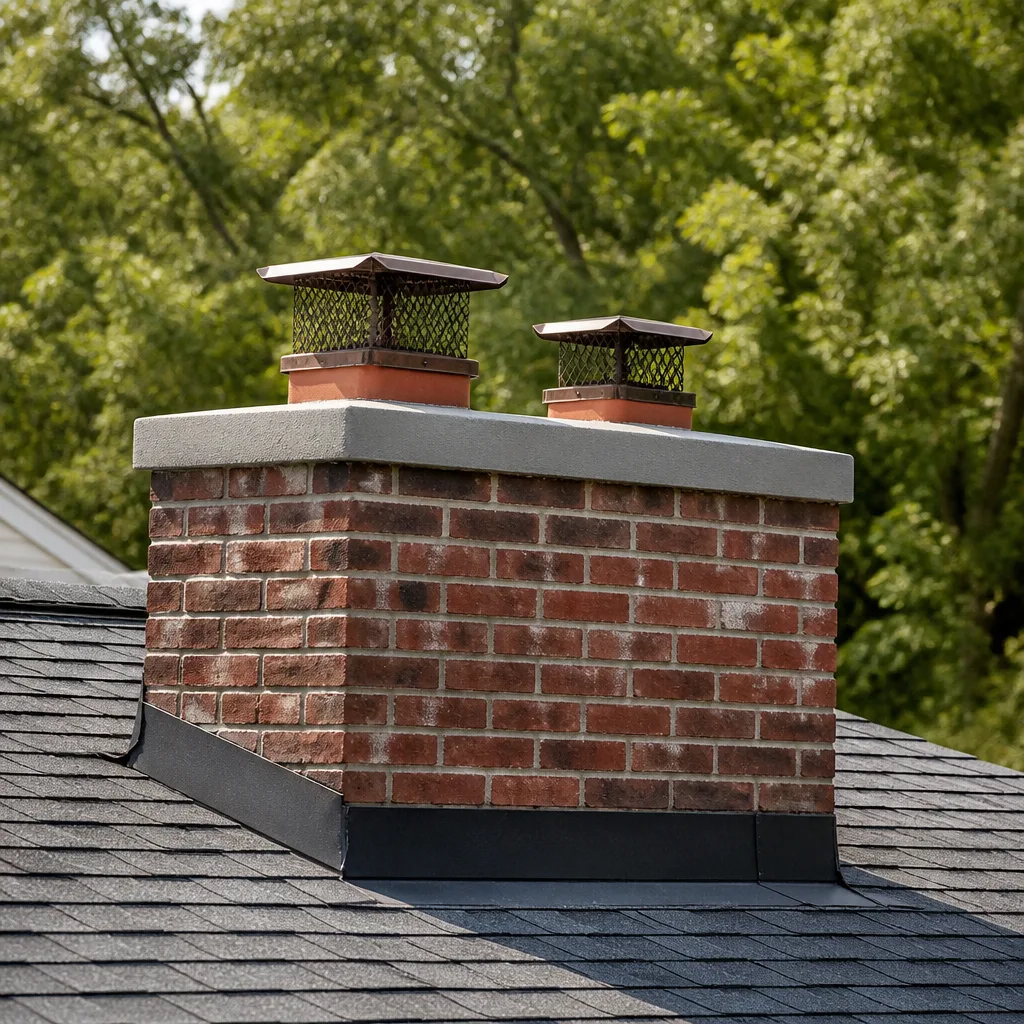
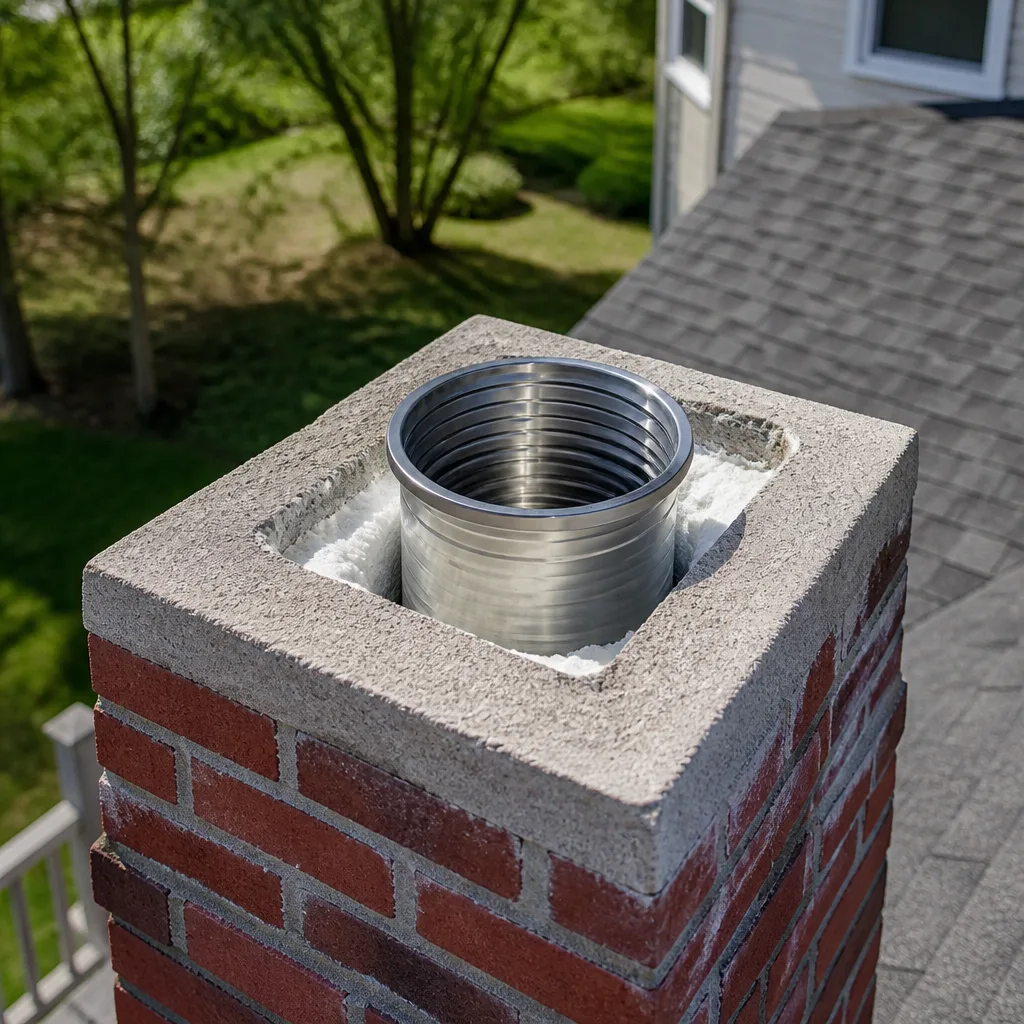
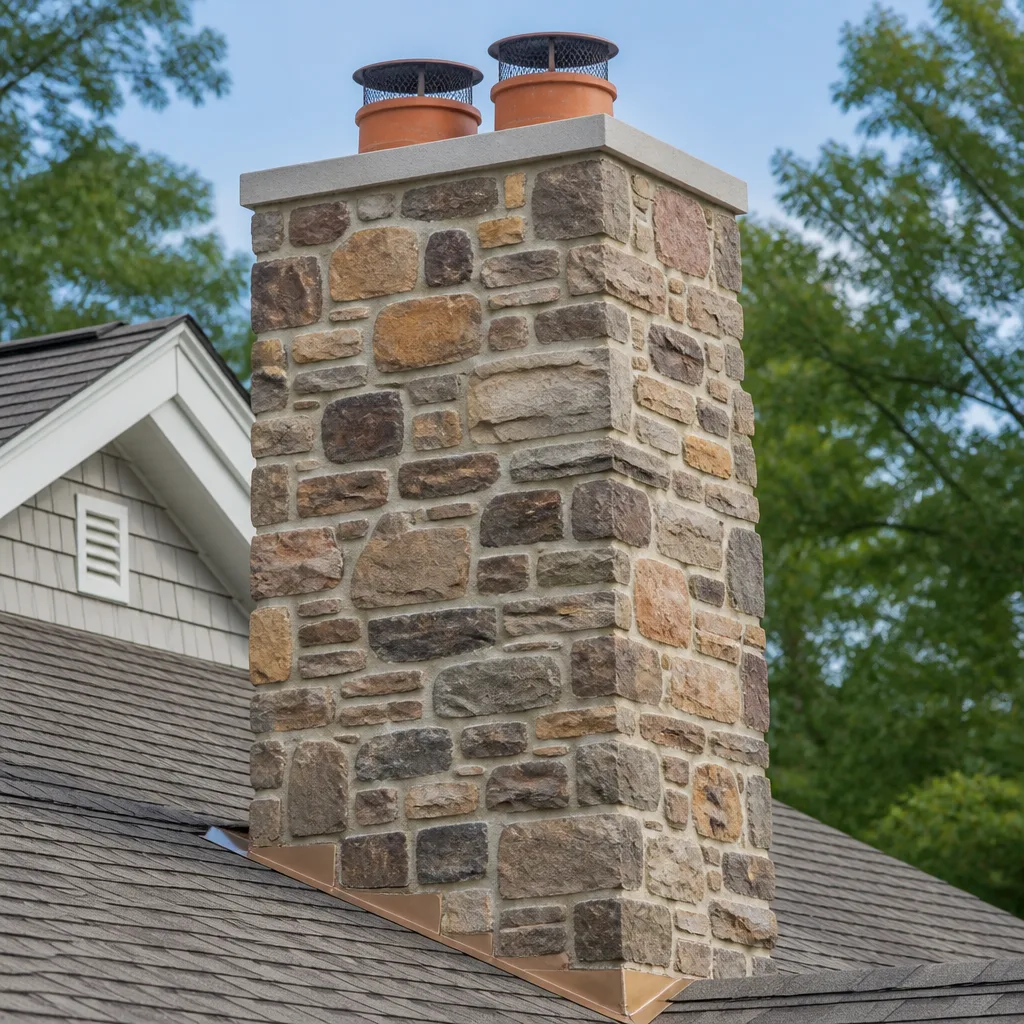
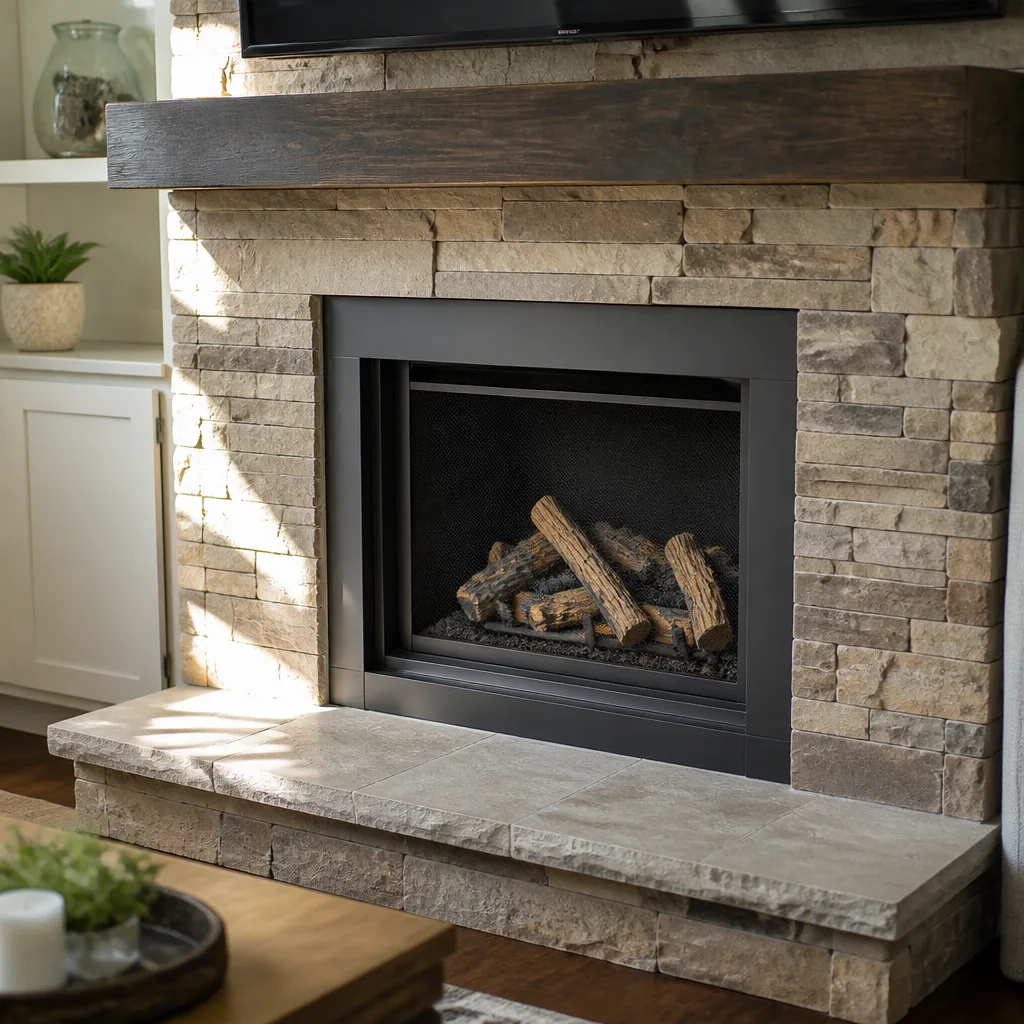
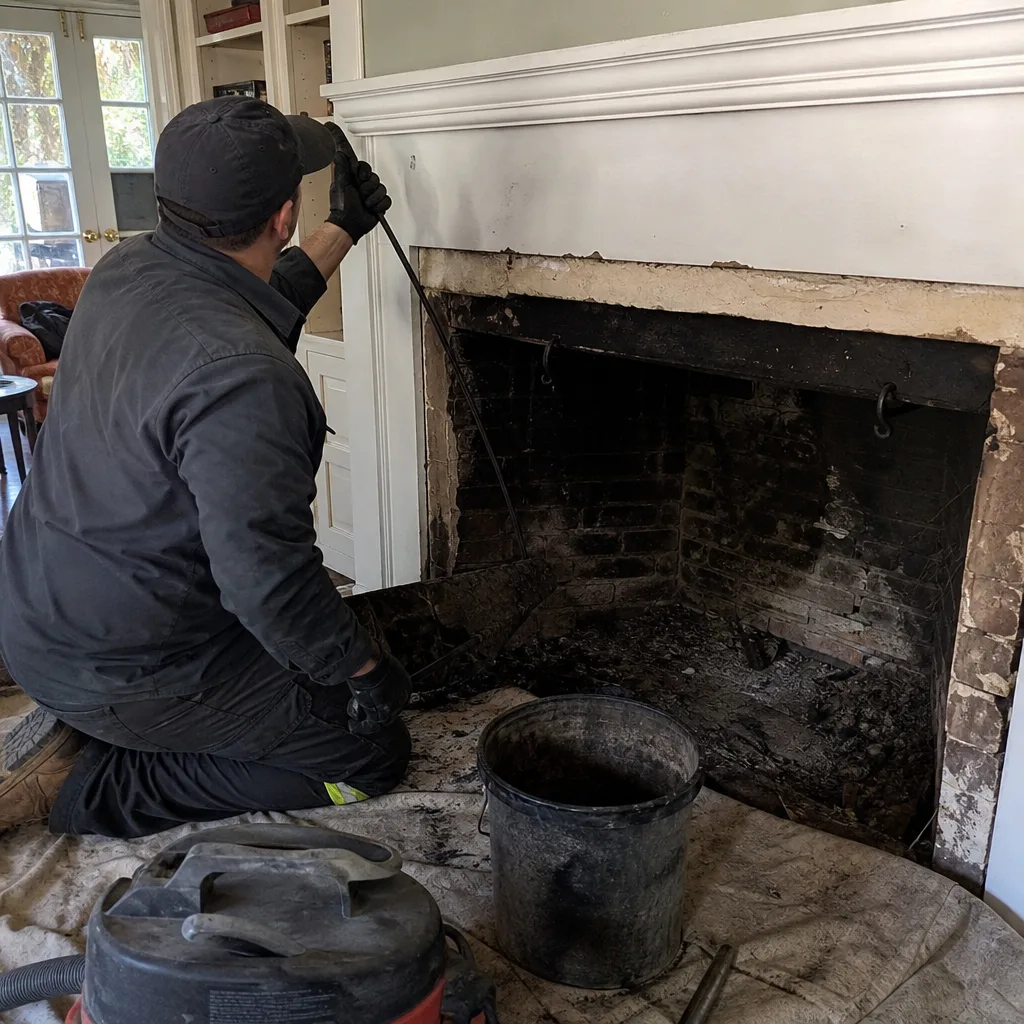 Before
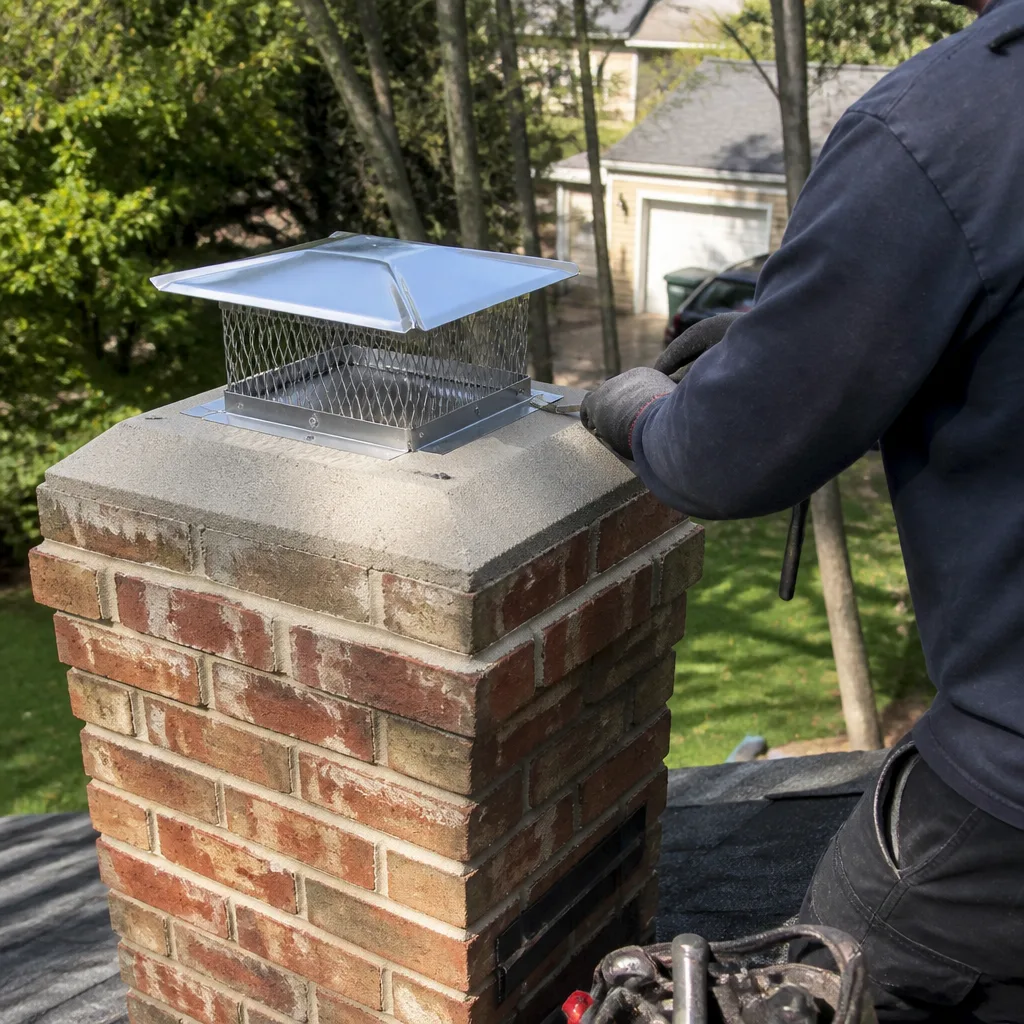 After
After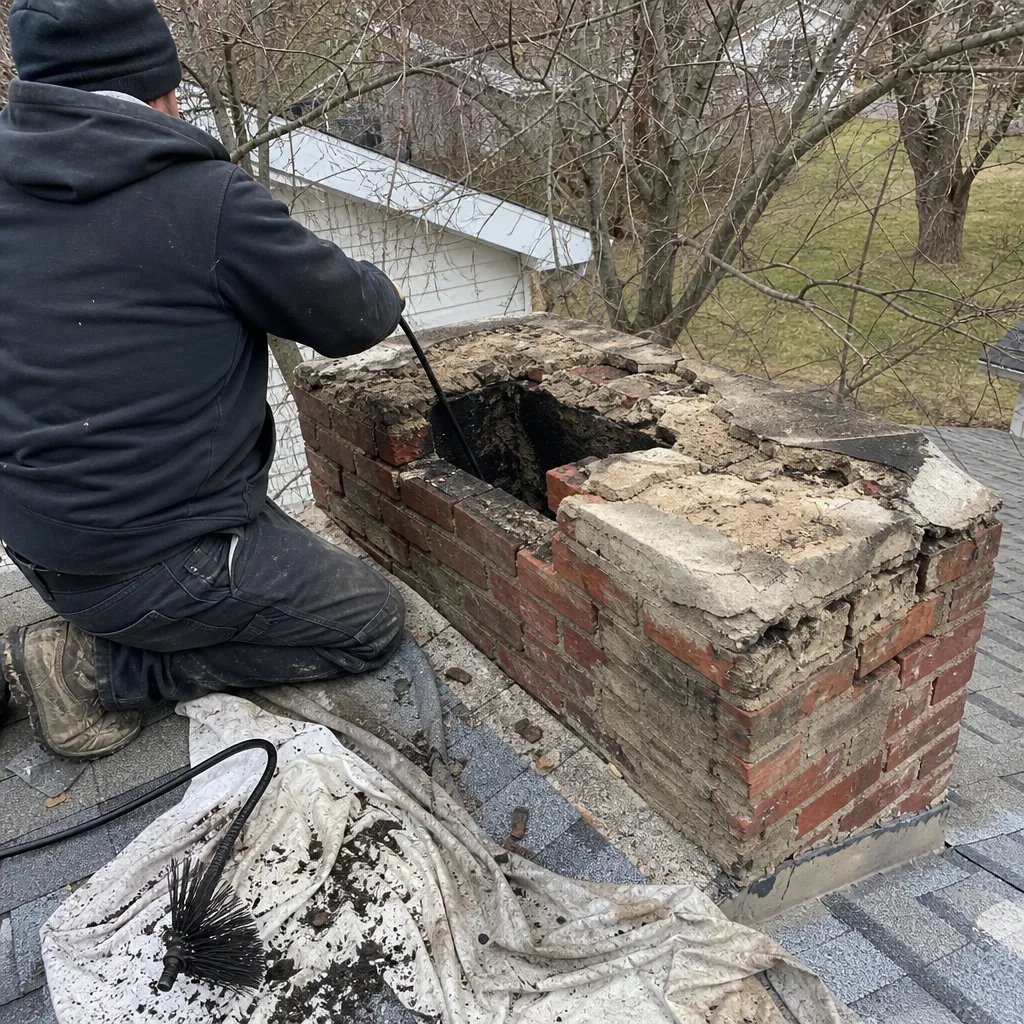 Before
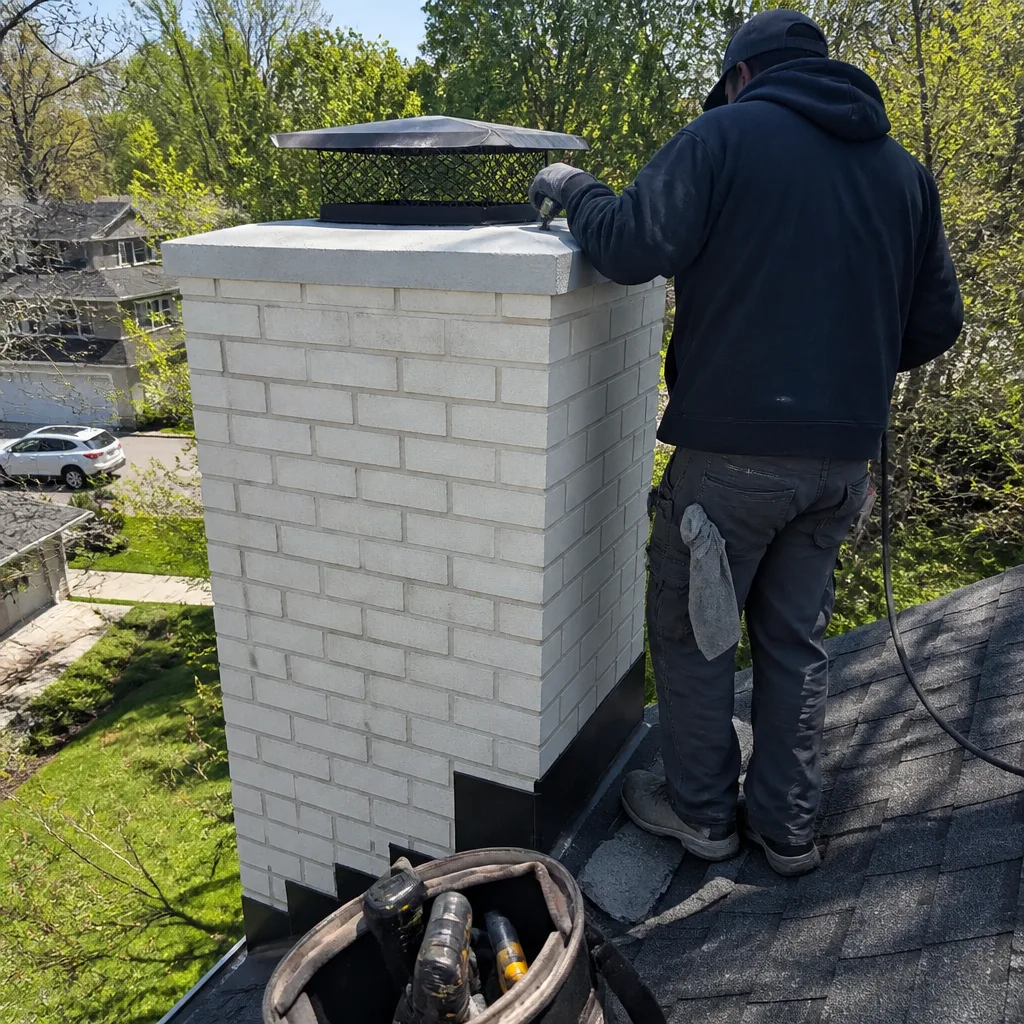 After
After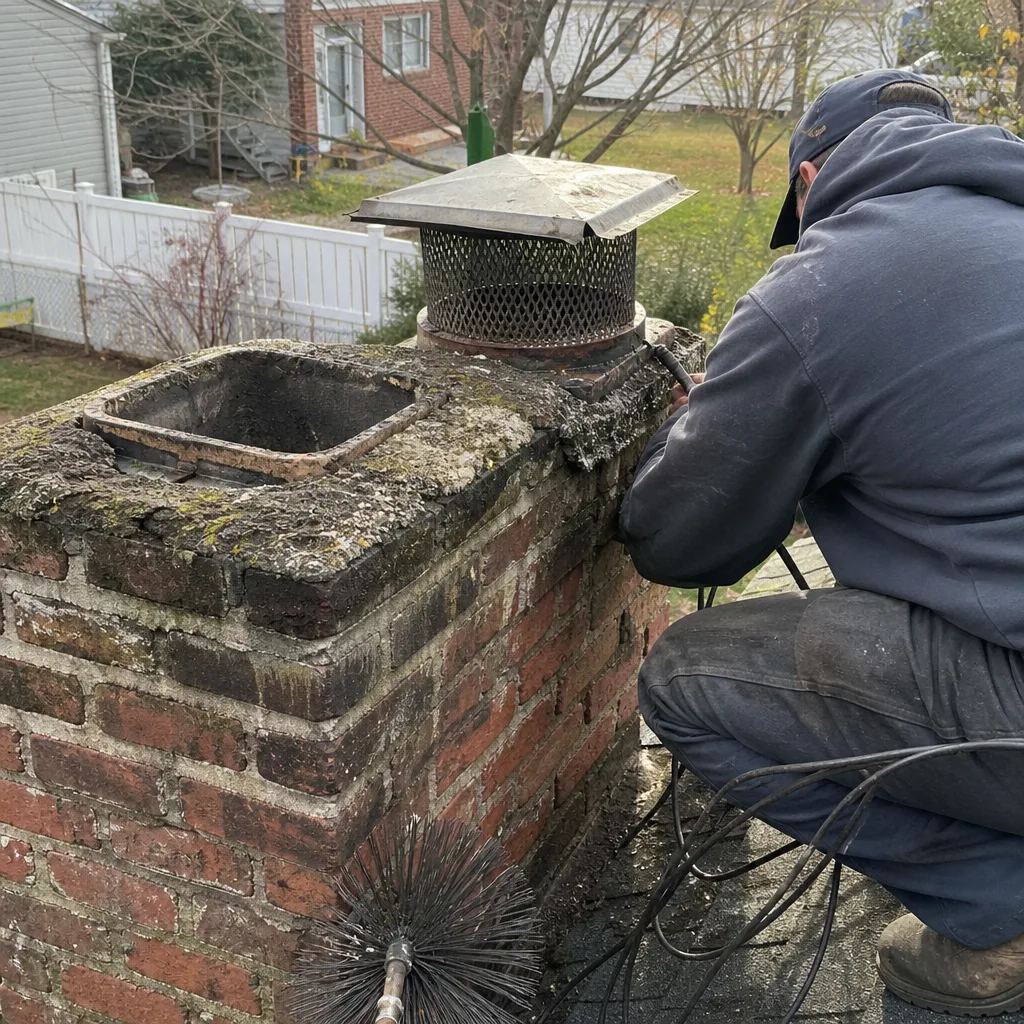 Before
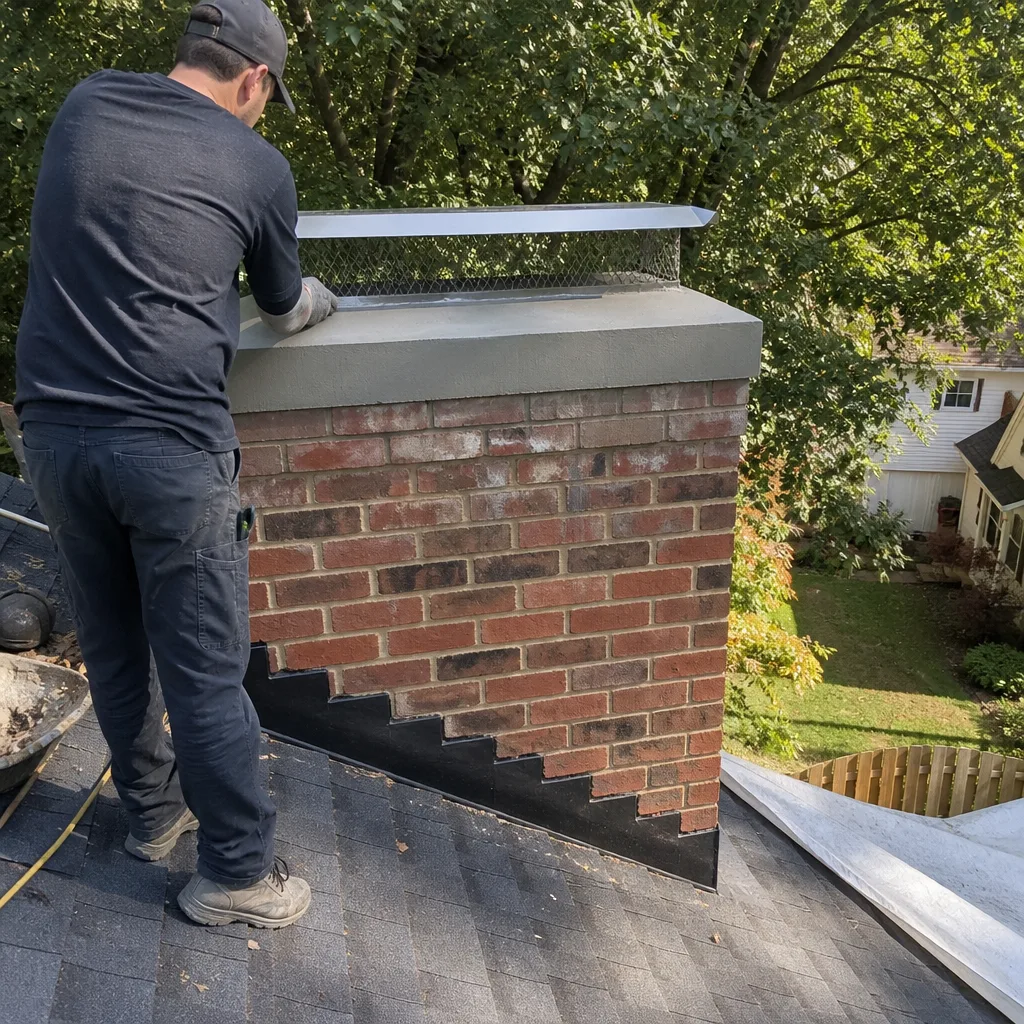 After
AfterChimney Cleaning Warning Signs: A Rockville Homeowner’s Reference Guide
A faint smoke smell in an unused fireplace in July is not a minor nuisance. It’s the most reliable early indicator of a draft reversal caused by a blocked or deteriorating flue, the same condition cited in 62% of smoke-related chimney incidents reviewed by the NFPA. Most Rockville homeowners only notice chimney problems when something dramatic happens: water dripping into the firebox, smoke pouring into the living room, or the sound of animals scratching behind drywall. This guide is different. It explains what each visible warning sign is actually telling you about conditions inside your flue where no one can see without a camera, and what the consequence is if that unseen condition goes unaddressed. Visibility is not the measure of severity.
Quick Answer
The warning signs that matter most in a Rockville chimney are rarely the most dramatic ones. A summer creosote smell, white staining on exterior brick, a rusted damper, or wind noise in an unused fireplace all indicate moisture or flue deterioration that you cannot see without a Level 2 camera inspection. If you notice any one of these, schedule a chimney cleaning and inspection before the next burn season, especially in Rockville’s freeze-thaw climate where trapped moisture in brick accelerates damage through winter. For a deeper look at what to expect, see our Complete Guide to Chimney Cleaning in Rockville.
Table of Contents
- The Seven Observable Warning Signs, Ranked by Urgency
- White Staining (Efflorescence): What It Indicates Inside the Flue
- Why Creosote Smell in Summer Is a Higher-Urgency Signal Than During Burn Season
- Sounds That Belong in a Chimney Versus Sounds That Don’t
- A Rusted Damper: Condensation and What It Tells You About the Flue
- Intermittent Smoke Reversal: The Draft Problem Nobody Diagnoses Correctly
- How to Photograph Warning Signs Before the Sweep Arrives
- The Unseen Internal Signs: What a Camera-Scan Inspection Actually Finds
- Common Mistakes to Avoid
- When to Call a Professional
- Frequently Asked Questions
- The Bottom Line
BeforeAfterThe Seven Observable Warning Signs, Ranked by Urgency
Most warning-sign guides rank by how alarming a problem looks. That’s backwards. A loud chimney fire with flames shooting from the top is obviously urgent, but you don’t need a guide to tell you to call the fire department. The signs that actually prevent damage are the quiet ones that homeowners in Rockville dismiss for years. Here is how we rank observable warning signs by urgency, based on what they indicate is happening inside the flue.
- Creosote smell in warm weather – Indicates a chimney that is not drafting correctly even when the fireplace is cold. This reversal means flue gases, and the moisture they carry, are entering your living space rather than exiting through the crown. Highest urgency because chemistry is working against you year-round, not just during burn season.
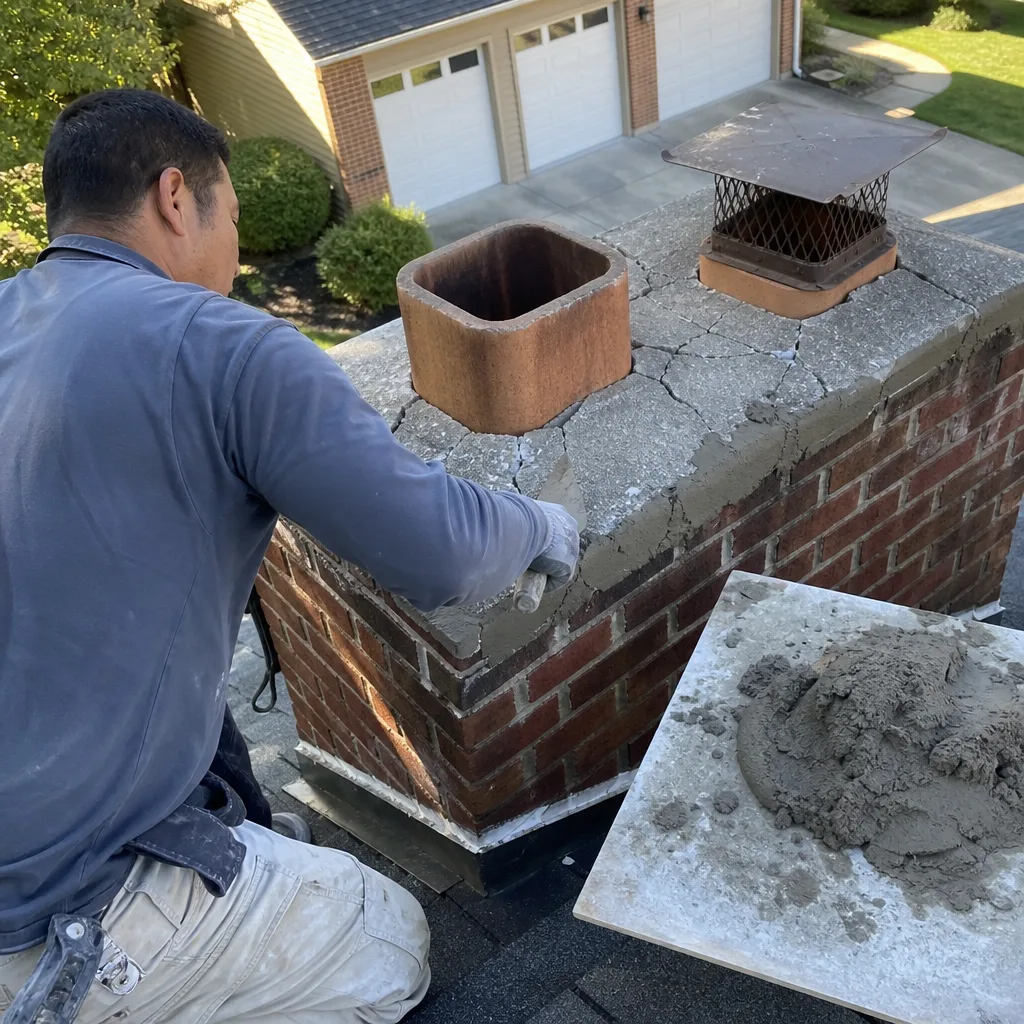
- White staining or crusty deposits on exterior brick – Called efflorescence, this signals moisture is moving through the masonry rather than shedding off it. In Rockville’s freeze-thaw winters, trapped moisture expands and contracts through dozens of cycles each season, turning hairline cracks into structural gaps within two to three years.
- Water in the firebox after rain – A direct, unambiguous sign that the crown, cap, or flashing has failed. Water entering the firebox mixes with creosote and creates an acidic slurry that eats mortar joints from the inside.
- Rusted damper or rust staining on the firebox walls – Condensation from flue gases is collecting inside. This is not a cosmetic problem. It means the flue is not insulated or lined correctly, and acidic condensation is actively corroding metal components.
- Animal sounds or nesting debris visible at the top – Presence of animals means there is an entry point. An entry point means water entry is also possible. Nesting material inside a flue is also a primary ignition source.
- Wind noise or rattling in an unused fireplace – Indicates an improperly sized or damaged damper, or a flue that is no longer sealed against the elements. Air movement means moisture movement.
- Small pieces of tile or mortar at the bottom of the firebox – This appears to be minor but is a direct indicator of spalling: the flue liner breaking apart from heat stress or moisture damage. By the time pieces fall, the liner is compromised above.
The pattern here is intentional. The signs ranked highest are the ones the camera is most likely to find significant internal damage behind, even when the visible symptom seems mild. A strong smoke smell in August is invisible, yet it outranks visible cracking on brick. In our experience inspecting and cleaning chimneys across Rockville since 2009, the correlation between what a homeowner first noticed and what the camera actually found runs against intuition more often than not.
White Staining (Efflorescence): What It Indicates Inside the Flue
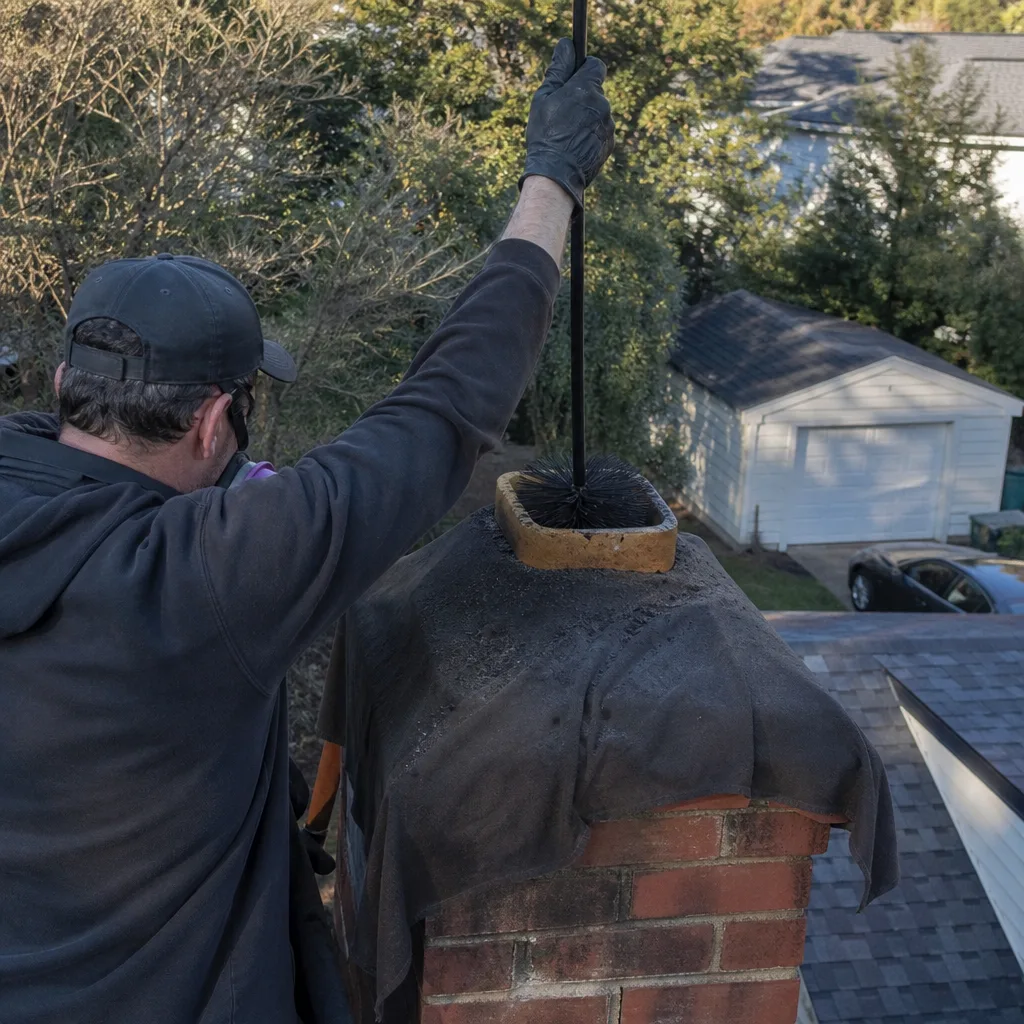
Efflorescence is the white, chalky residue that appears on brick chimney exteriors. Homeowners often mistake it for paint overspray or general weathering. It is neither. Efflorescence is the crystalline salt deposit left behind when water migrates through masonry and evaporates at the surface. The water dissolves mineral salts inside the brick and mortar. The water reaches the surface and evaporates. The salt stays.
What this indicates inside the flue is the critical part. For water to migrate through masonry and reach the exterior surface, there must be moisture inside the chimney structure. That moisture typically originates from one of three sources: a failed or absent chimney cap allowing rain directly into the flue, a cracked crown allowing water into the brick itself, or condensation inside an unlined or improperly lined flue saturating the masonry from within.
In Rockville, the consequence of ignoring efflorescence is more severe than in drier climates. Our winters cycle above and below freezing an average of 52 times per season. Each freeze-thaw cycle enters the water-saturated brick, expands, and breaks the internal structure of the masonry slightly. After two or three winters, what started as a cosmetic white stain has become spalling: bricks cracking, faces popping off, and mortar joints crumbling. Spalling is not a cosmetic condition either. It is the leading cause of chimney rebuilds in Montgomery County.
Here is the practical path. If you see white staining on your chimney, photograph it, note whether it is uniform or concentrated in one area, and call for a camera-scan inspection. The camera will identify where moisture is entering, whether the flue liner is intact, and whether the crown needs repair or replacement. Level Two Chimney Rockville includes this camera scan on every visit, with a documented photo record you keep. It is the same standard written into Clause 4 of the Haven Standard, our operating protocol since 2009.
Why Creosote Smell in Summer Is a Higher-Urgency Signal Than During Burn Season
Creosote smell during burn season is expected. Creosote smell in July is a different category of problem entirely.
Here is the chemistry. Creosote is the condensed residue of unburned wood gases, and it is always present in any wood-burning chimney. During burn season, the draft from a hot fire pulls air, and creosote vapor, up and out of the flue. The airflow moves in one direction: from your living room into the chimney. When the fireplace is cold in summer, there is no draft pushing flue gases out. The air inside the flue is dense and stale, and because chimney air is cooler than outdoor air on a hot Rockville afternoon, it sinks. That sinking air carries creosote odor down the flue and into your home through the damper, the smoke chamber, or any gaps in the firebox.
This is draft reversal. And it tells you two things. One, your damper is not sealing correctly, or is rusted open, or the flue itself has a pressure imbalance. Two, and more importantly, this condition is not limited to summer. The same pressure imbalance that brings creosote smell down in July also prevents proper drafting when you light the first fire in October. Every year we see Rockville homeowners who tolerated a summer smoke smell for months and then experienced a smoke-filled living room on their first burn night. The summer smell was the warning. The October smoke event was the consequence. If you’re weighing whether to handle this yourself, our DIY vs Professional Chimney Cleaning guide breaks down what homeowners can safely assess and what requires a trained sweep.
At minimum, a summer creosote smell means the chimney needs cleaning and a camera inspection to determine whether the damp is sealing, whether creosote has built to Class II or Class III levels, and whether the flue liner is intact. Class III creosote, the dense glazed form, is a genuine chimney fire risk. It cannot be brushed out; it requires mechanical removal and often liner intervention, and it is one reason we source materials from manufacturers like Gelco and Copperfield, whose liner and venting components are built to withstand exactly that condition. If you smell creosote when your fireplace hasn’t been used in weeks, treat it as an active defect, not an old-house quirk.
Sounds That Belong in a Chimney Versus Sounds That Don’t
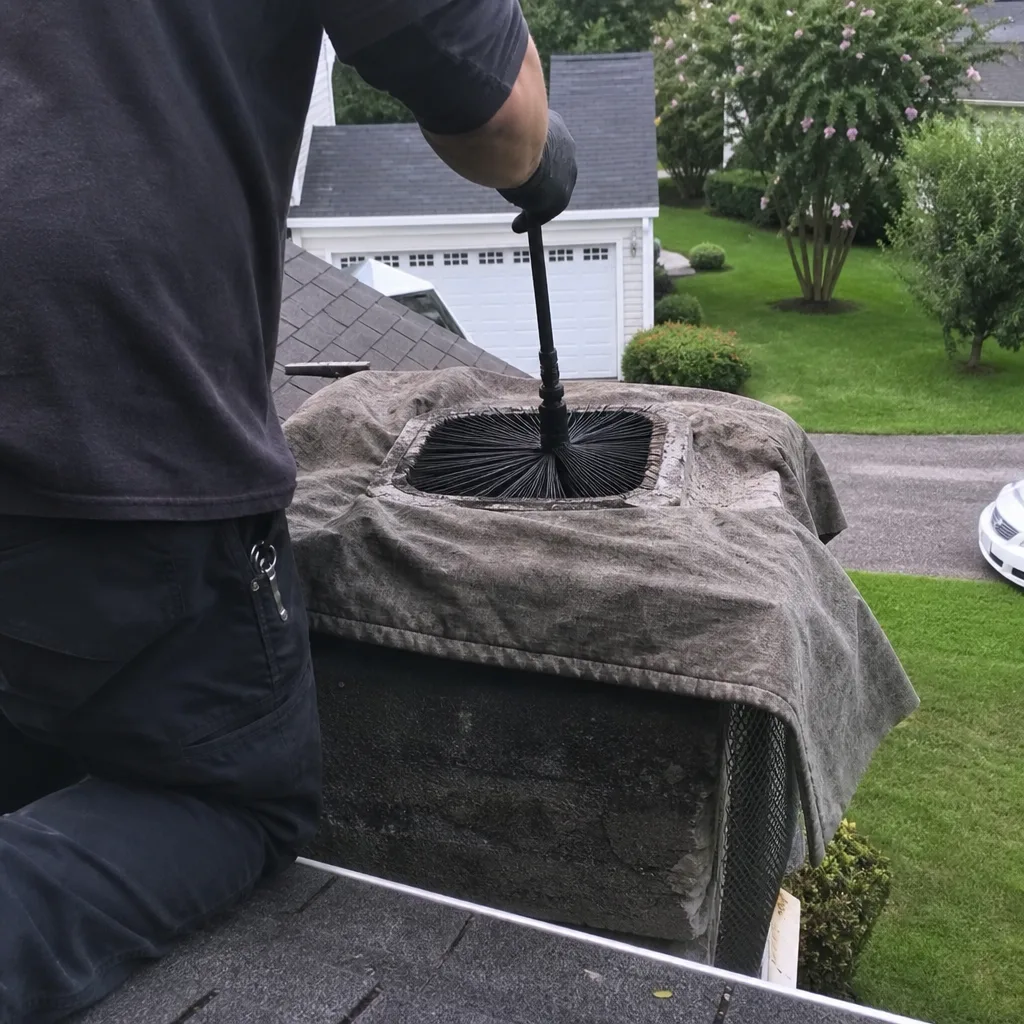
Chimneys make noise. Most of it is benign, and learning the difference is a cheap diagnostic tool.
Sounds that belong:
- A low, steady hum of wind across the cap during stormy weather. This is normal airflow over the chimney crown.
- The occasional tick or creak of metal expanding when a fire is burning. Metal dampers, flue tiles, and caps all move slightly with heat.
- The sound of rain hitting a metal damper when the flue is open. An open flue is a straight pipe into your firebox, and raindrops will reach the damper plate. That sound is a reminder to close the damper, not necessarily a defect.
- Soft settling noises from framing or adjacent masonry during temperature changes. Construction materials move.
Sounds that don’t belong:
- Scratching, scurrying, or flapping inside the flue. This is animal presence, usually a squirrel, raccoon, or bird. Animals in a chimney bring nesting material, which is highly flammable and partially blocks the flue. Animal presence also means there is an entry point at the cap or crown, and that means water is getting in too.
- A wheezy or resonant whistle during wind that sounds like a bottle being blown across. This indicates the flue or cap is damaged or mis-sized, creating turbulence. The same irregular air movement can disrupt proper draft during use.
- A rattle that happens with wind, not fire. A failed damper plate or loose cap component is vibrating. Something is no longer fastened where it should be.
- A grinding or crumbling sound when you open or close the damper. This suggests rust or debris in the damper track, and when combined with visible rust, indicates condensation is present inside the flue exactly where it should not be.
In Rockville, we have a specific seasonal pattern to listen for. Spring is when nesting animals move in, especially starlings and raccoons in older neighborhoods like Twinbrook and King Farm. Fall is when rusted dampers become apparent as the first fire of the season is lit and the damper seizes. If you hear a sound you cannot place, record it on your phone. A 15-second recording is genuinely useful to us during a chimney cleaning and sweep in Rockville, because we can often identify whether the sound is structural, mechanical, or animal-related before we put the camera up.
A Rusted Damper: Condensation and What It Tells You About the Flue
A rusted damper is never just a damper problem. Rust requires moisture, and moisture inside the firebox above the damper has a specific origin. When warm flue gases cool rapidly in an unlined or poorly insulated chimney, the water vapor in those gases condenses on the coldest available surface. That surface is often the metal damper plate and the firebox walls above it. The resulting condensation is mildly acidic, because flue gases contain dissolved creosote compounds. This weak acid sits on metal surfaces for months and produces rust even in a fireplace that is used correctly.
The critical point is the rust is evidence that your flue liner is either absent or failing. A properly lined flue with the correct inner diameter for the appliance keeps flue gases hot enough to rise before condensation occurs. An oversized flue, an unlined flue, or a liner that has cracked allows those gases to linger and cool, and the condensation process begins. The rusted damper is the canary in the flue for a condensation problem that is actively shortening the life of every metal and masonry component inside the chimney.
When we come across a rusted damper during a chimney repair in Rockville, we don’t just replace the damper. We camera-scan the entire flue to determine whether the condensation is ongoing or historical, what the liner condition is, and whether the damper rust is the first visible symptom of a larger problem that needs to be addressed. Replacing a damper with a new one while a condensation source remains active is a repair that will fail again. We’d rather tell a Rockville homeowner that the damper can wait while the flue gets addressed than sell a quick part swap that solves symptom and not cause.
Intermittent Smoke Reversal: The Draft Problem Nobody Diagnoses Correctly
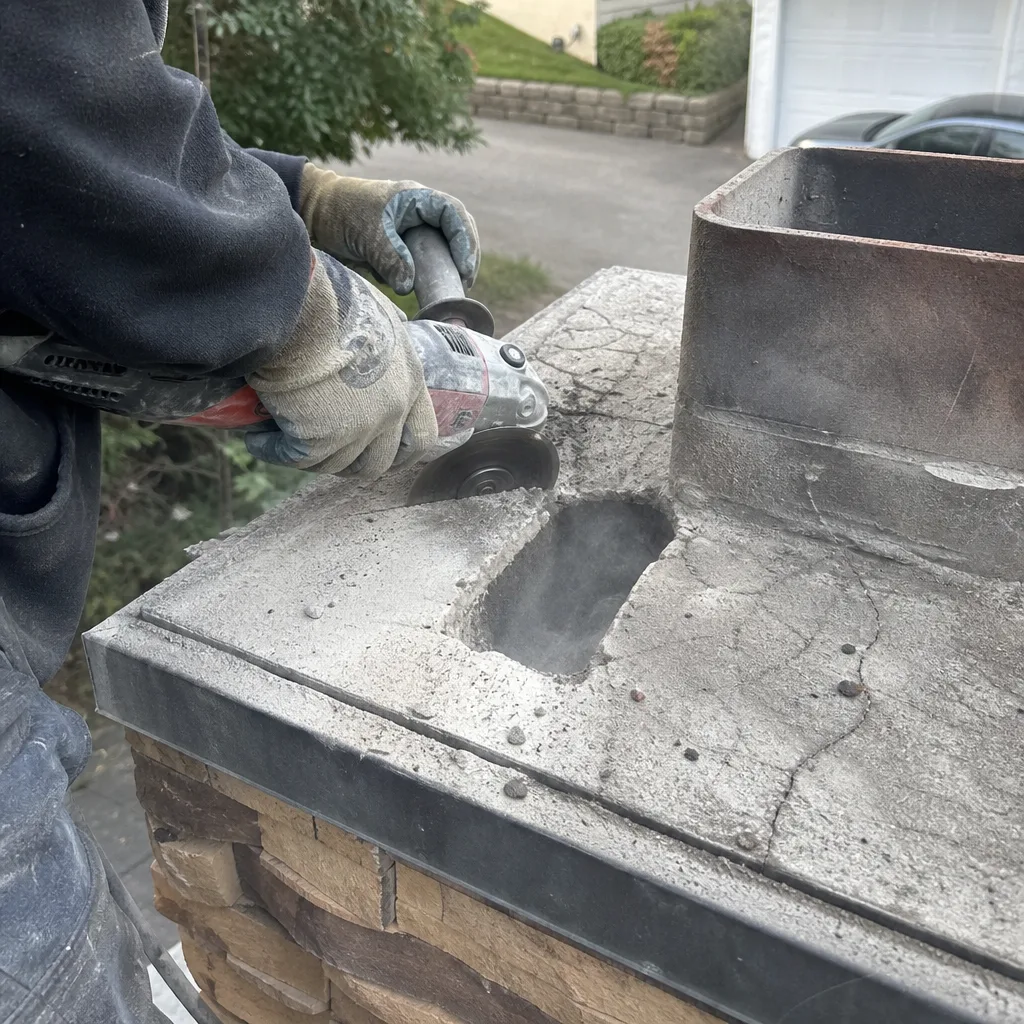
Smoke reversal is when smoke enters the living room instead of exiting through the chimney. It’s often treated as a simple draft problem: open a window, the smoke goes up, problem solved. That is a partial workaround for a symptom, not a diagnosis.
Intermittent smoke reversal, the kind that happens only on certain days or certain times of year, has a specific set of causes that are invisible without a camera inspection:
- Flue height or crown configuration: A chimney that is too short relative to the roof peak, or that competes with a taller nearby roofline, can lose draft in certain wind conditions. Rockville neighborhoods built with similar rooflines on hilly lots experience this in patterns.
- Partial blockages: A partial bird nest, a dislodged flue tile, or a settled creosote mass can narrow the flue enough that draft is compromised only under specific atmospheric conditions.
- Negative pressure in the home: Tightly sealed newer homes in Rockville, especially those built or renovated since 2020 with energy efficiency standards, create negative pressure that pulls air down the chimney when exhaust fans, dryers, or HVAC systems run. The chimney loses the battle for incoming replacement air.
- Deteriorated flue liner surfaces: A liner with spalling or cracked tile faces creates turbulence inside the flue that reduces draft above a threshold.
None of these conditions is visible from the living room. The homeowner sees smoke, opens a window, and decides the problem is manageable. The camera tells the truth. We run a camera-scan inspection on every call where smoke reversal is reported, because the fix varies wildly and performing the wrong fix is expensive. A fan on the crown won’t fix a blocked flue. A liner replacement won’t fix negative pressure. You need to see what the smoke is seeing.
How to Photograph Warning Signs Before the Sweep Arrives
Before you call for an inspection, spend ten minutes documenting what you can see. This creates a pre-inspection baseline: a record of what existed before any cleaning or repair work happened. You will find this useful for your own understanding, and it gives the sweep a concrete piece of evidence to anchor the camera findings to.
Here is a numbered sequence for photographing chimney warning signs on a typical Rockville home:
- Photograph the entire chimney from ground level at two angles. You want both the front face and the side that faces the predominant weather direction. In Rockville, that typically means the west and northwest exposures, which take the brunt of storms.
- Move closer to capture the crown from as many angles as you can safely manage without climbing. Use a zoom lens or phone zoom. Look for cracks in the cement wash, missing sections of crown, or visible gap between crown and brick.
- Photograph any white staining in sections, showing the full area and then a close detail. Note whether the staining is present only on one side of the chimney or all around. This will be useful when the camera identifies where the moisture is entering.
- Photograph the top of the chimney to look for a cap. If you can see open flue tiles from the ground, your chimney has no cap, and you have already found a probable entry point for water and animals.
- Photograph the fireplace interior with flash: the damper plate, the firebox floor, the back wall. Rust, debris, or flaking material should be visible. A rusted damper is often clearly visible in a photo even when you don’t notice it in person.
- Record any sound as a video from inside the firebox. Wind noise that you hear from the living room will be louder with the phone held in the firebox, and a recording of animal sounds gives us a clear direction for the camera.
Send these photos when you book, or have them ready when the technician arrives. At Level Two Chimney Rockville, we archive our own photo record on every visit under Clause 4 of the Haven Standard, so your photos become the “before” to our “after.” The point is to have an honest, verifiable record. That is what documentation is for.
The Unseen Internal Signs: What a Camera-Scan Inspection Actually Finds
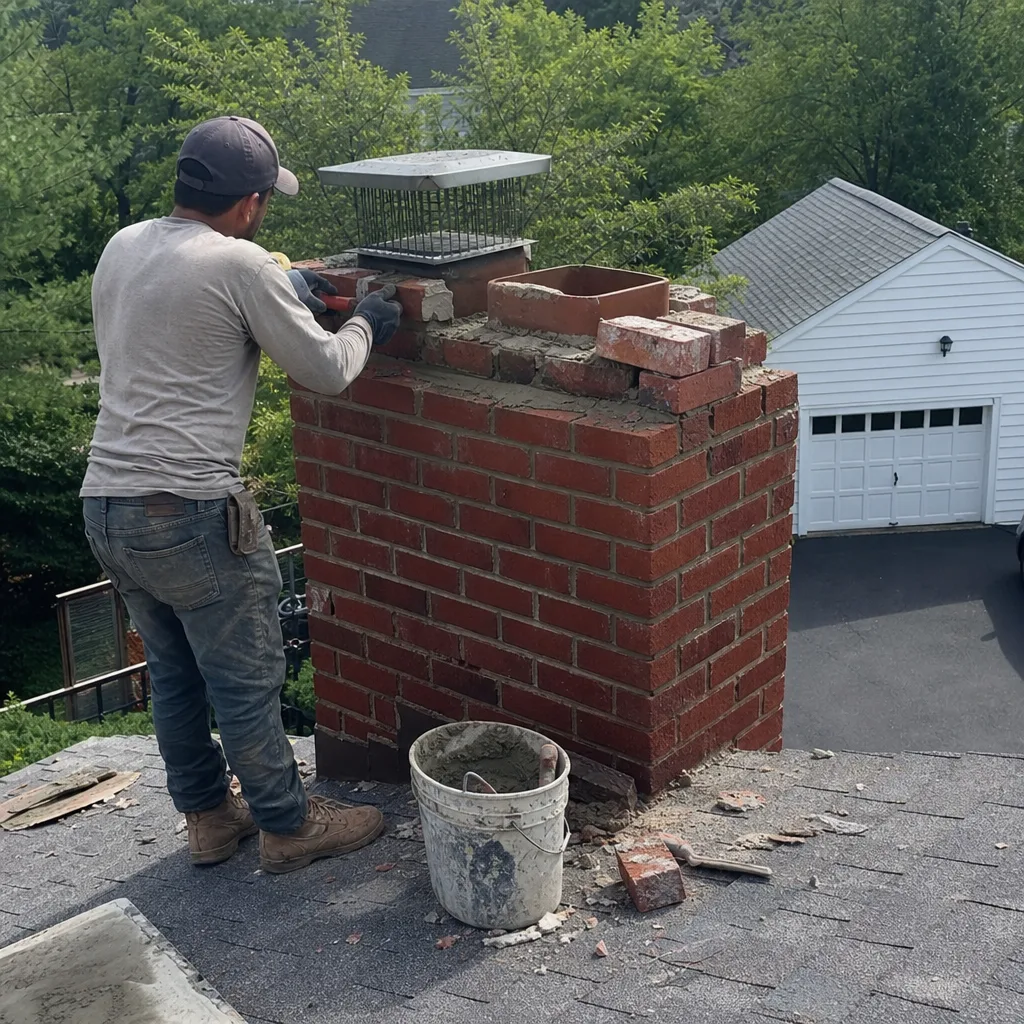
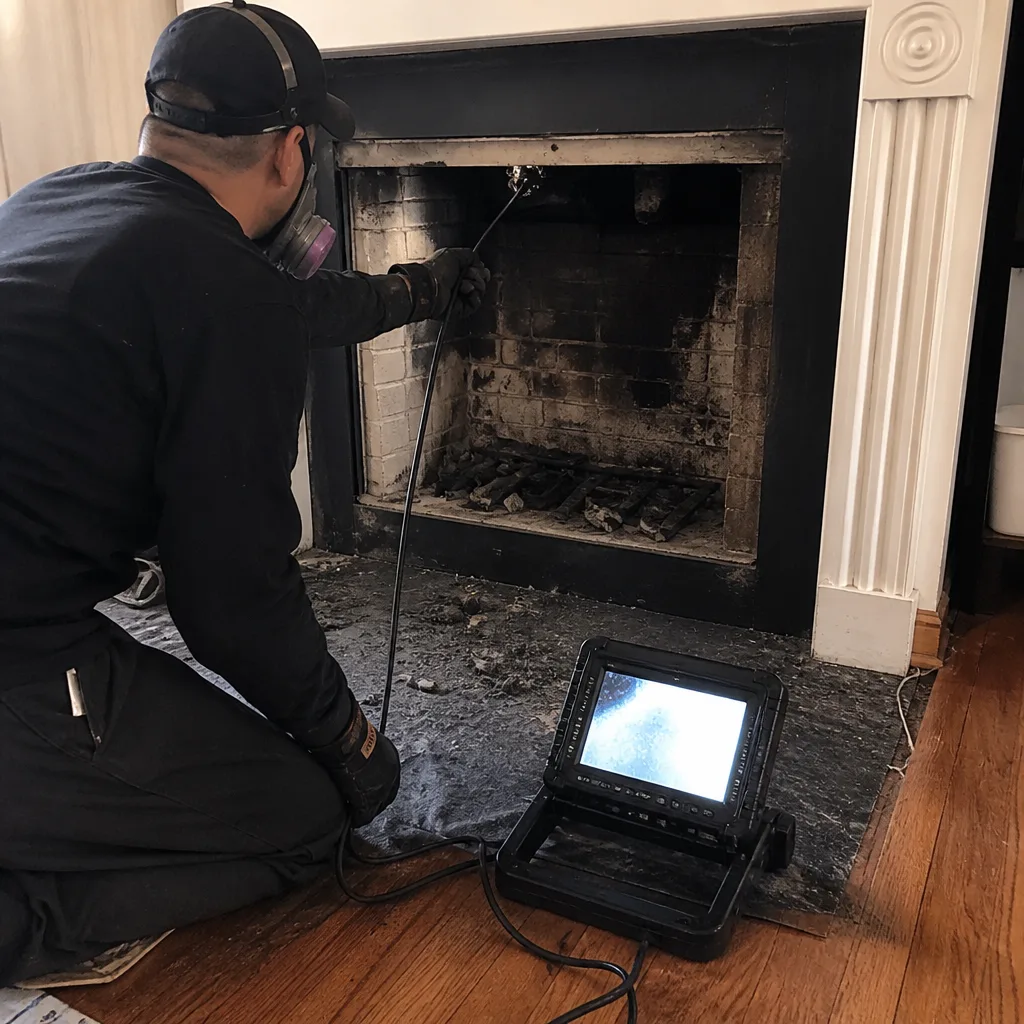
Everything above this section is what you can see from outside the chimney. But the majority of what matters in a chimney is not visible from outside at all. Here is what the camera finds that the naked eye cannot, organized by the visible sign that typically leads us to run the scan in the first place.
Behind efflorescence on the exterior: The camera typically shows a cracked crown with water tracks running down the flue walls, or a void between the flue liner and the brick where condensation has been forming for years. In severe cases we find flue tiles that have physically separated.
Behind a summer creosote smell: The camera usually shows a creosote buildup above the damper that extends significantly higher than the homeowner guessed. More important, it often reveals a flue liner with spalling or cracked sections that are holding moisture and reducing draft.
Behind a rusted damper: The camera shows either an unlined flue that should have been lined decades ago or a liner that has lost its integrity. It may also reveal that the chimney is oversized for the fireplace or appliance, creating exactly the low-draft condition that leads to condensation.
Behind animal sounds: The camera typically shows animal presence, and after removal, reveals nesting material and damage to the flue walls from urine and moisture. It also identifies the entry point: a missing cap, a void at the crown, or a broken flue tile at the top.
These are the findings that change the scope of work from “sweep” to “sweep plus repair.” And they are the reason we state, in writing, what the camera found before any work is done. A written scope and written price are delivered before anyone starts, no exceptions. That is Clause 1 of the Haven Standard. For Rockville homeowners, this means no surprise scope creep, no discovered “extras” that the tech alone has authority to add, and a documented photo record at the end.
Since 2009, we have completed more than 38,000 chimney inspections and cleanings across Rockville and the surrounding Montgomery County area. Every one of them includes this camera documentation. We made camera-scan the default practice years before any local regulation asked for it, and the practice now runs continuously in every neighborhood we serve, from West End to Fallsgrove to Hungry Hall.
Common Mistakes to Avoid
- Waiting for burn season to address a chimney problem you noticed in summer. A summer smoke smell means the chimney is not drafting correctly now. The first October fire will be a smoke event, not a warm memory. Book the sweep while the problem is observable.
- Painting over efflorescence without fixing the moisture source. Paint traps water inside the brick and accelerates spalling in freeze-thaw cycles. Remove the moisture source first, then consider exterior coating options.
- Using a fireplace with a known cracked flue liner. A cracked liner allows heat and combustion gases to reach combustible framing materials. This is how chimney fires become house fires. The damage is rarely visible from the firebox.
- Assuming a chimney cap is optional. In Rockville, an uncapped flue is an open invitation for rain, snow, animals, and debris. We see this most often in older homes in Rockville’s established neighborhoods where the cap was lost decades ago and never replaced.
- Not documenting a competitor’s written estimate before doing work. These are useful comparison tools. Level Two Chimney Rockville offers a Free Second Opinion on any written estimate, and we use the original document as the baseline for comparison. If you’re not comfortable with a quote, get another one in writing.
- Replacing a rusted damper as a standalone fix. Rust means condensation is occurring. A new damper will rust again if the flue isn’t addressed. Get a camera scan before signing off on a damper swap.
- Delaying a chimney sweep because “we only use the fireplace a few times a year.” Creosote accumulates by volume of wood burned, not frequency of use. An occasional-use fireplace that has never been swept in a decade has more creosote risk than a heavily used one that is swept annually.
When to Call a Professional
Call for a chimney inspection if you notice any of the seven warning signs in this guide, especially creosote smell in warm weather, white staining on brick, water in the firebox, a rusted damper, or sounds coming from the flue. You should also call if you’ve never had the chimney inspected since buying your home in Rockville and the previous owners could not provide sweep records. A chimney that hasn’t been inspected in a decade is a chimney we need to see from the inside with a camera, not a flashlight. Level Two Chimney Rockville offers free estimates in Rockville. Every job is quoted in writing before work begins, and the estimate you receive is the price you’ll pay, backed by our 365-Day Done Right Promise. Call (571) 376-7052 to book an inspection, or to request a Free Second Opinion on any written chimney estimate you’ve already received.
Frequently Asked Questions
A standard chimney sweep and Level 2 camera inspection in Rockville typically costs between $229 and $389, depending on the type and condition of the chimney, the number of flues, and whether animals or heavy creosote are present. Level Two Chimney Rockville quotes a written price before any work begins, and that written price is backed by the 365-Day Done Right Promise. Call (571) 376-7052 for an exact quote on your chimney, always in writing and always before any work starts.
Most families in Rockville that use a wood-burning fireplace regularly should have the chimney swept every 50 to 70 fires, or at minimum once per year before the burn season begins. If you burn primarily unseasoned or soft woods, or burn more frequently than most households, sweeps every 6 months may be appropriate. The specific answer depends on creosote buildup measured during a camera inspection, and a written record of each sweep date creates the paper trail your homeowner’s insurance provider may eventually ask to see.
You need a new liner when a camera inspection shows cracked, spalling, or separated flue tiles, a liner that is missing entirely, or a liner that is not correctly sized for your fireplace or appliance. Not every liner issue requires replacement; some can be addressed with resurfacing products. But the key is that the decision must come from camera evidence, not a visual guess from the firebox. At Level Two Chimney Rockville, we show you the camera footage and present the options in writing so you can see for yourself what condition the liner is in.
Creosote accumulates, and at sufficient thickness becomes a fire hazard inside the flue. The chimney may also develop a blockage, especially after a season of animal nesting or storm debris. In the longer term, moisture trapped by creosote and debris accelerates deterioration of the liner and the masonry, which increases the eventual repair cost. Skipping one sweep typically doesn’t cause immediate damage; skipping five years of sweeps often does.
Yes, because a basic sweep does not include camera documentation of the flue interior, which is the only way to see cracks, voids, separation, or animal damage above the visible firebox. Every Level Two Chimney Rockville visit includes a camera-scan inspection and photo record as standard under Clause 4 of the Haven Standard, not as an optional add-on. The camera is the difference between guessing and knowing, and a written photo record is exactly what you need to support an insurance claim or a resale disclosure.
We see three patterns repeatedly across Rockville. The first is moisture-related: failed crowns, missing caps, and trapped condensation in flues that leads to efflorescence, spalling, and liner damage, and it is worse in neighborhoods with older housing stock and mature trees. The second is animal intrusion, especially in spring. The third is smoke drafting failure in tightly sealed homes where negative pressure pulls air back down the flue. None of these is unique to Rockville but all three are amplified by the local climate and the age of the city’s housing stock.
The Bottom Line
Your chimney talks to you all year round, in smells, stains, and sounds. Most of those signals are quiet enough to ignore, but none of them improves with time. The warning signs that matter most, a creosote smell in summer, white staining on brick, a rusted damper, or unexplained wind noise, each indicate something happening inside the flue that you cannot see without a camera. In Rockville’s freeze-thaw climate, waiting on these signs costs more every winter. The smart move is simple. If you’ve noticed any of the conditions in this guide, call (571) 376-7052 and book an inspection. You’ll get a written price before any work begins, a camera-documented photo record of the findings, and a clear answer on what needs attention now and what can safely wait. For more guides & resources on keeping your chimney safe through every season, visit our blog.
Written by Corrine Halstead, Owner at Level Two Chimney Rockville, serving Rockville since 2009.