
Last updated September 20, 2026
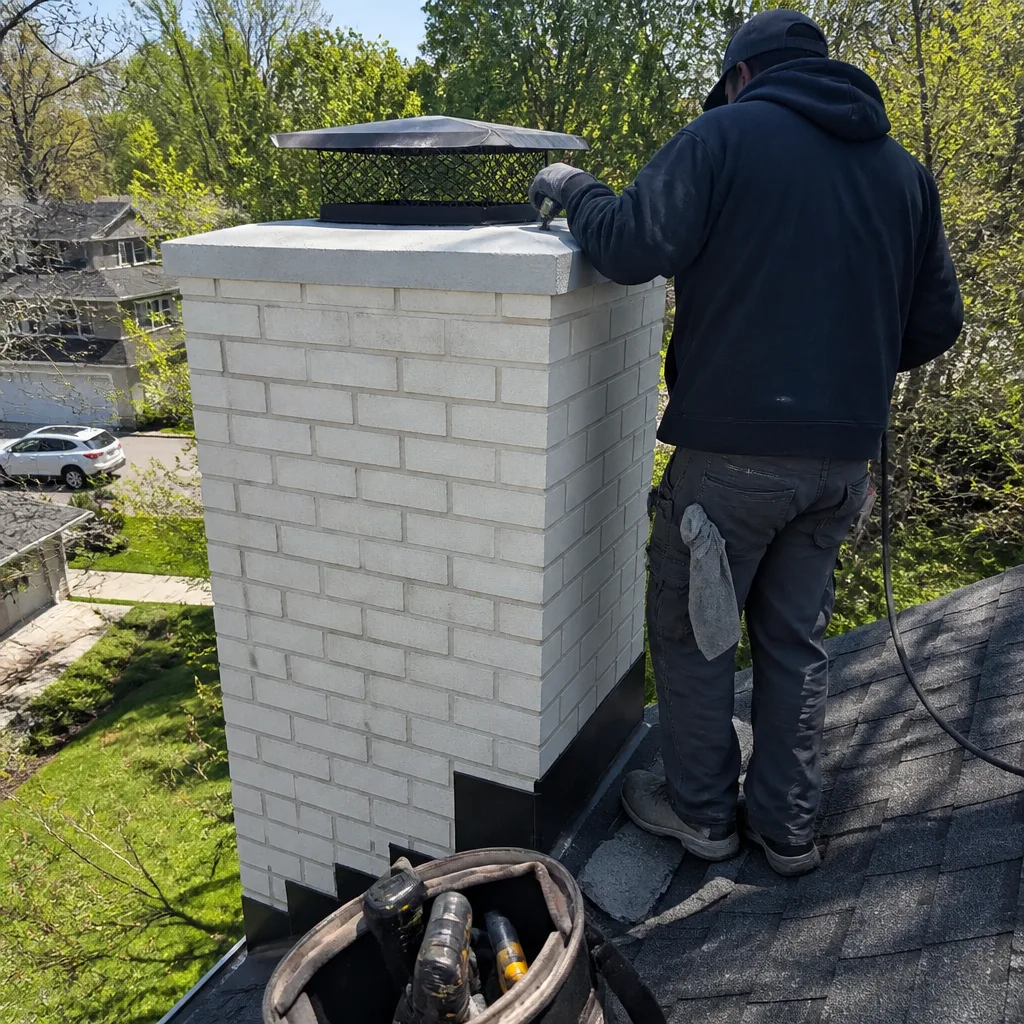
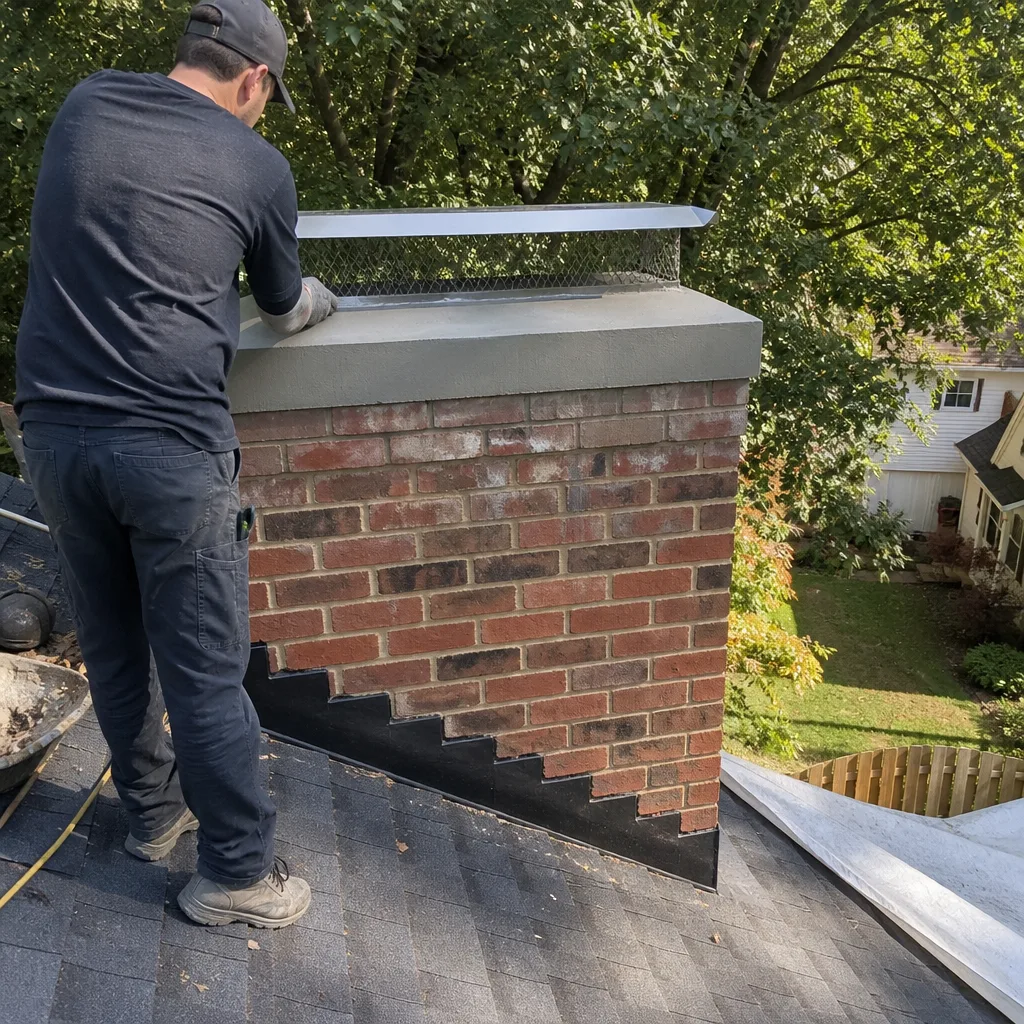
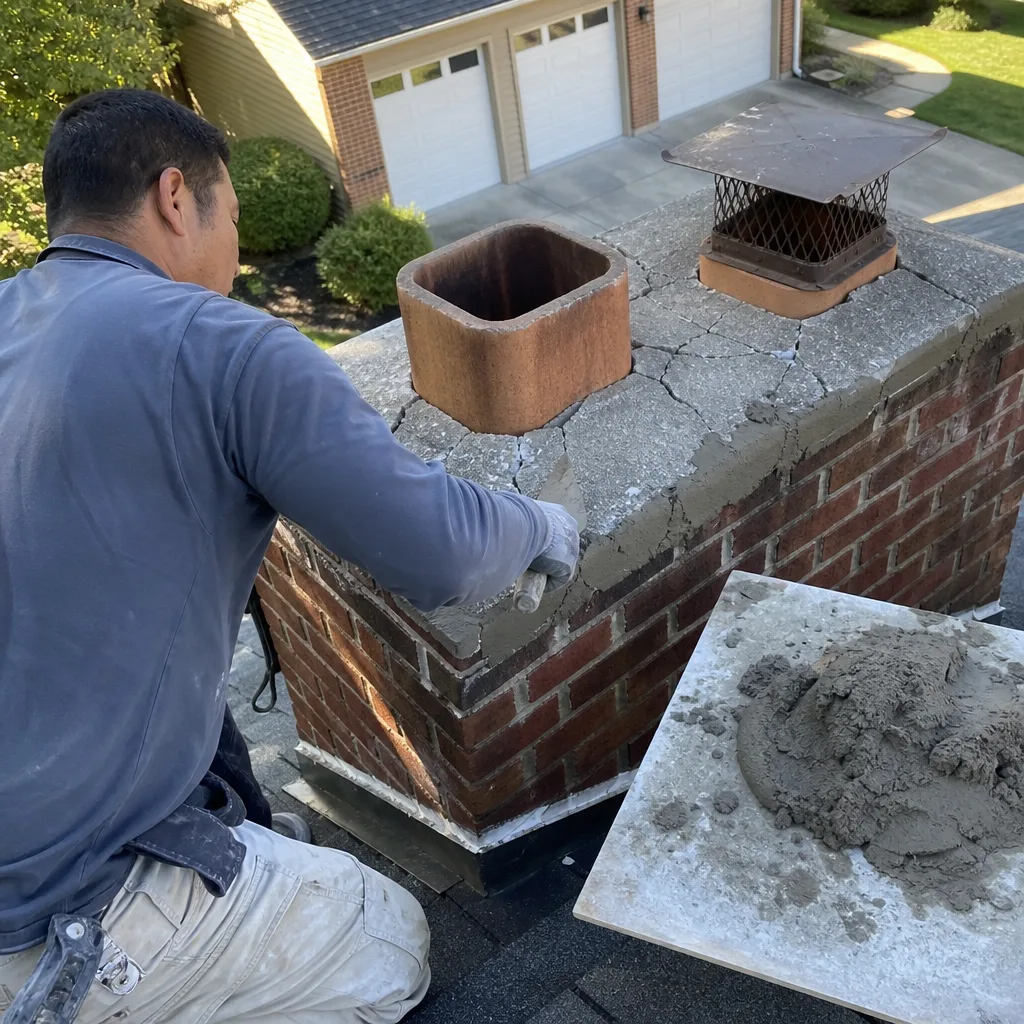
Level 1 sweep and inspection to the NFPA 211 annual standard - flue, crown, cap, and flashing checked and photographed
Chimney sweep logs do not sweep chimneys. They loosen some creosote - which then falls where a brush and vacuum still have to collect it.
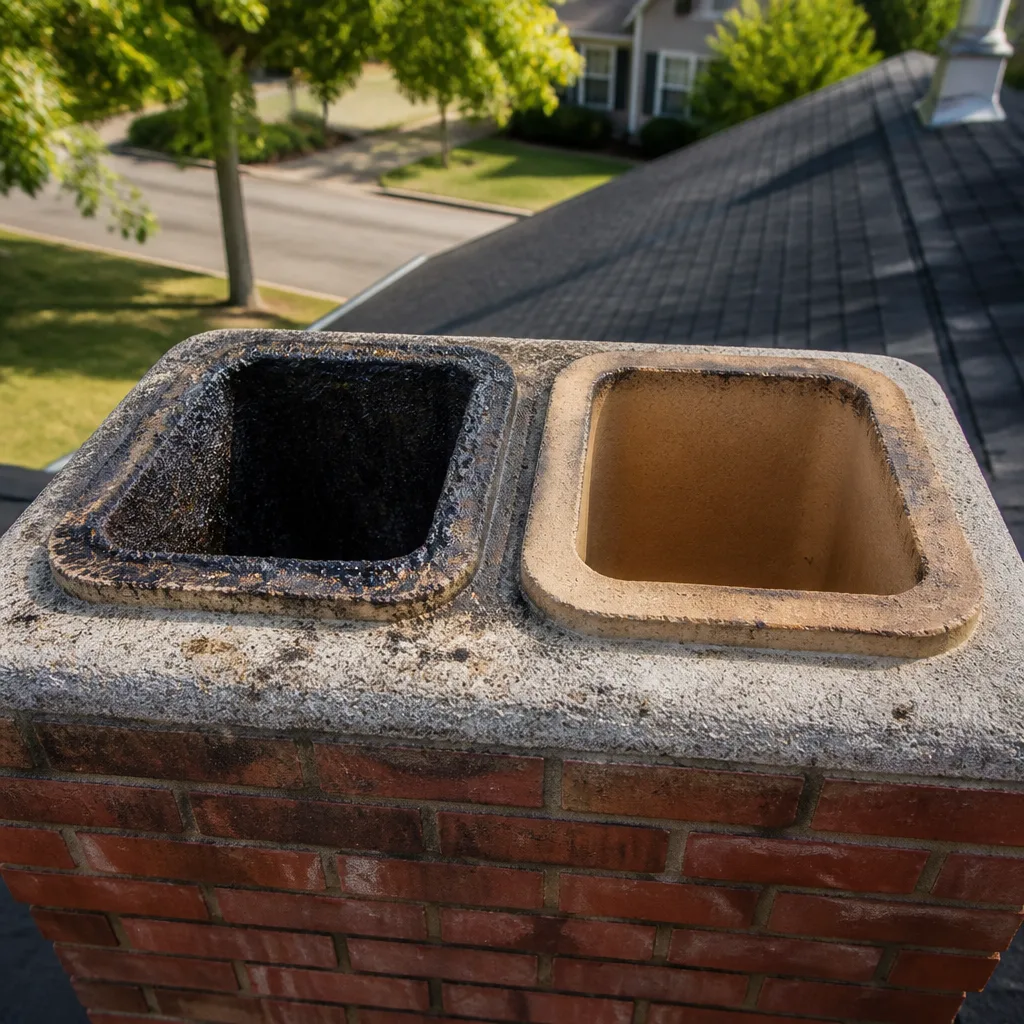
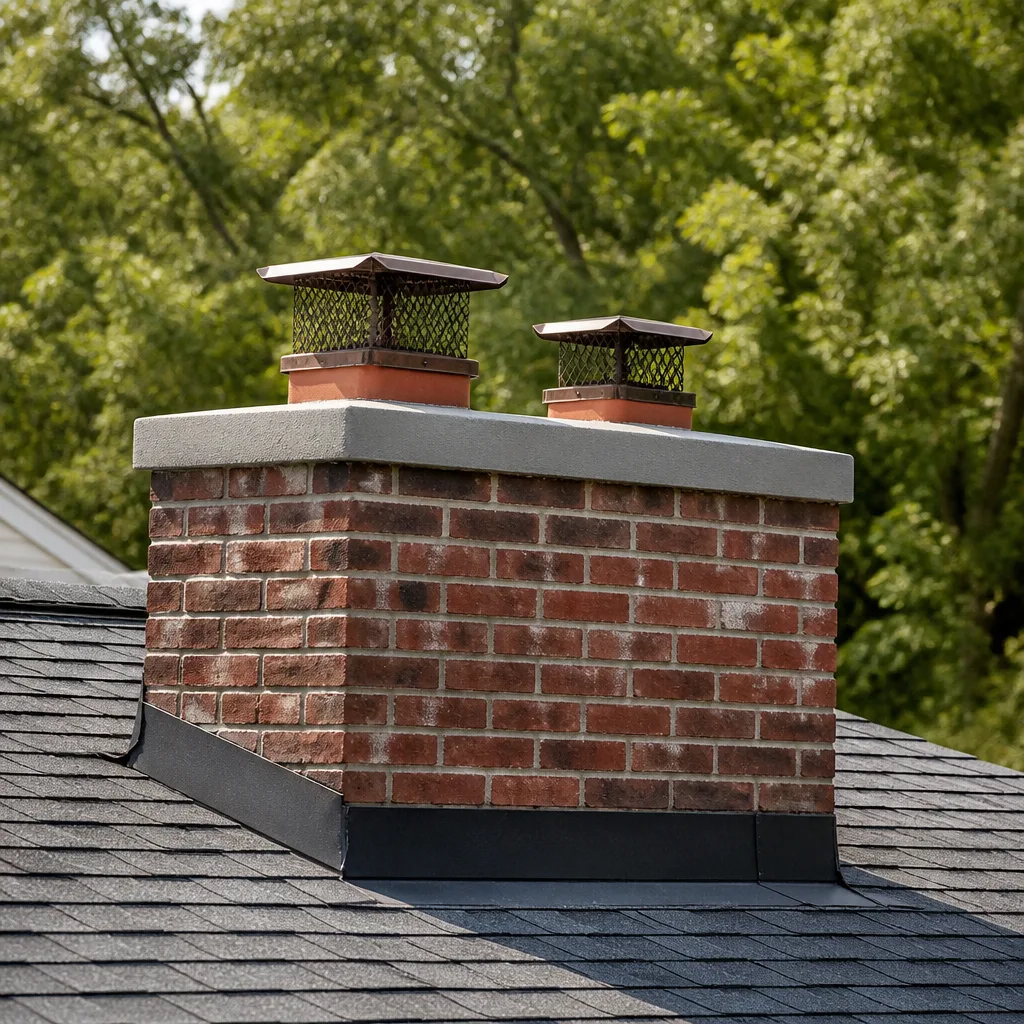
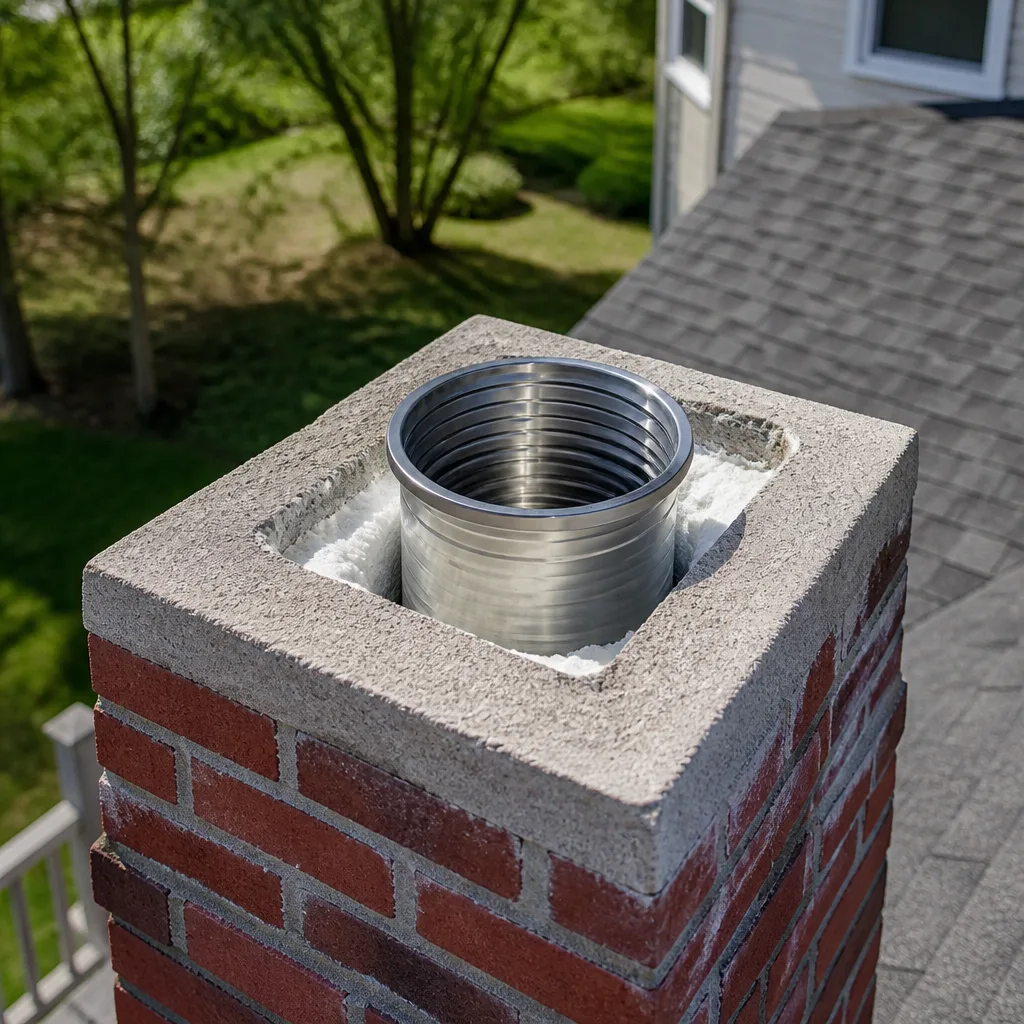
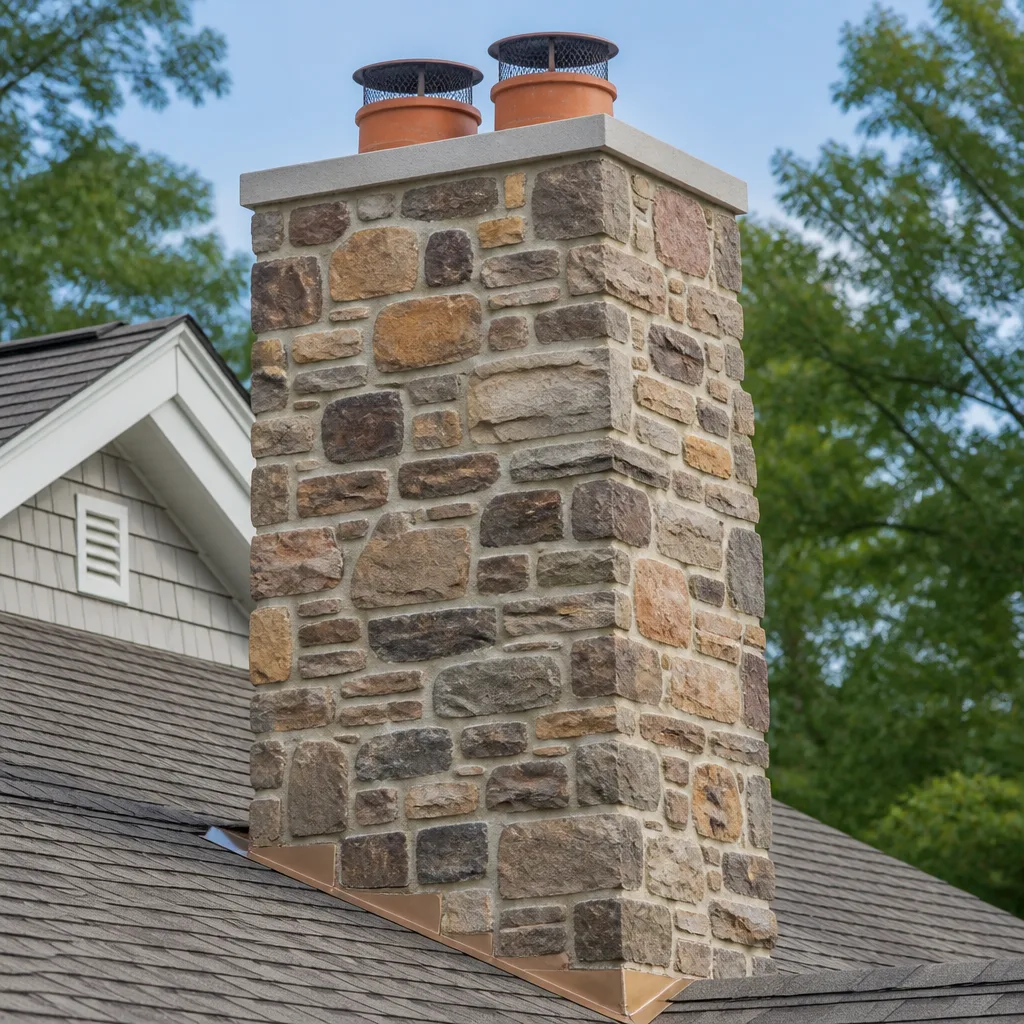
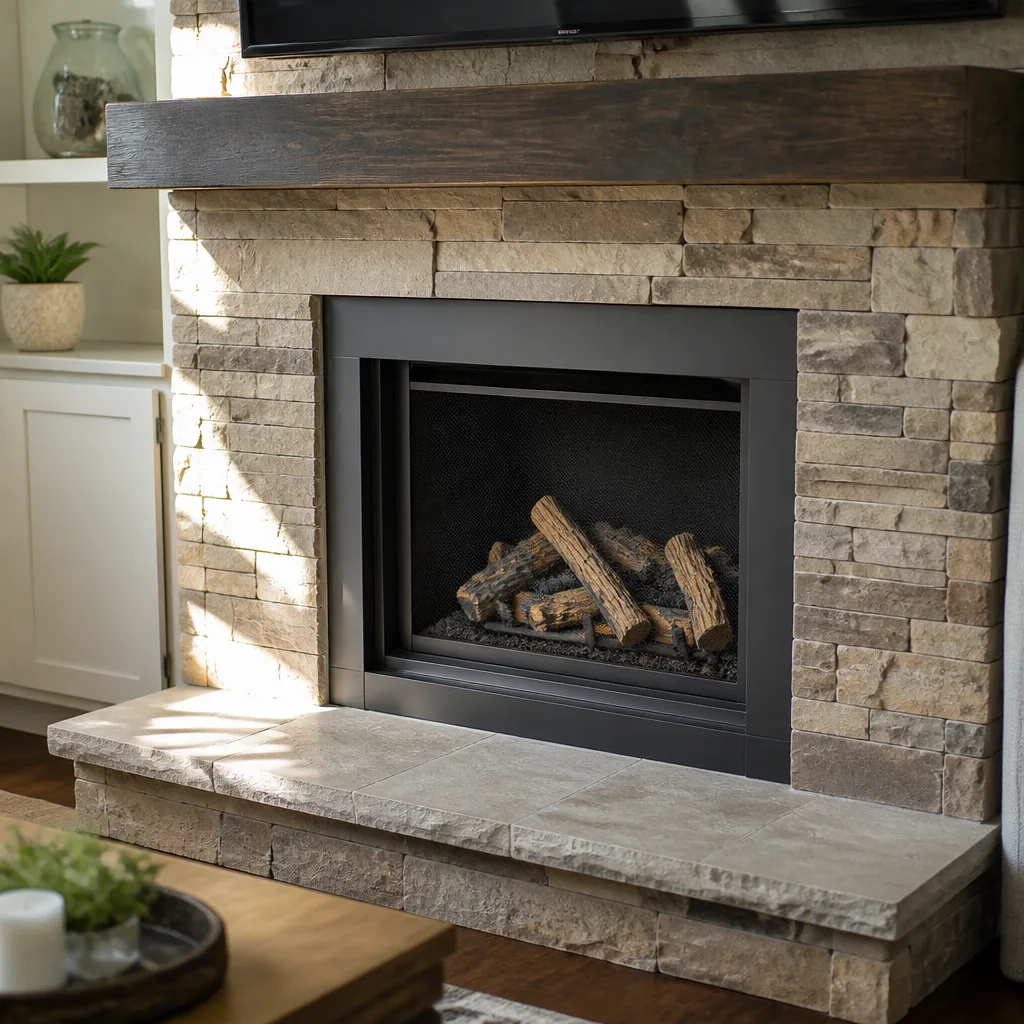
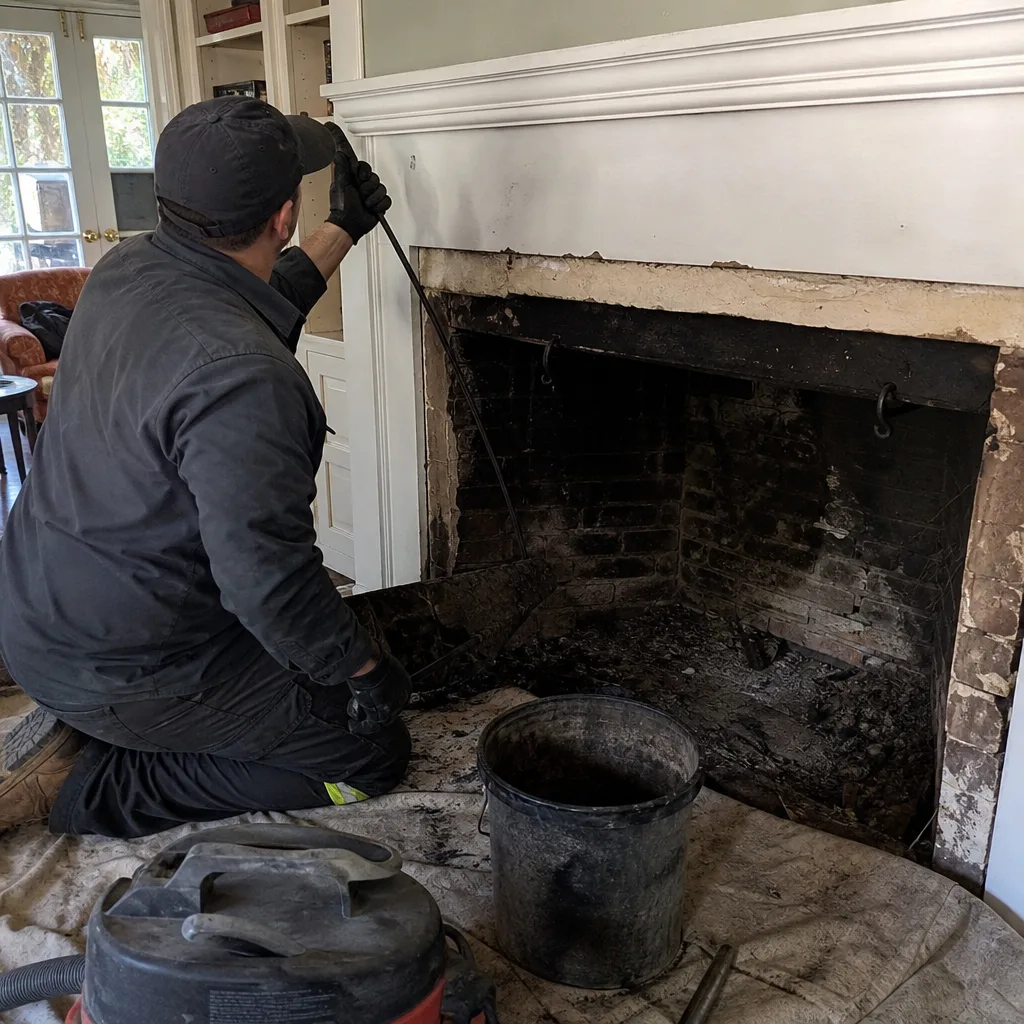 Before
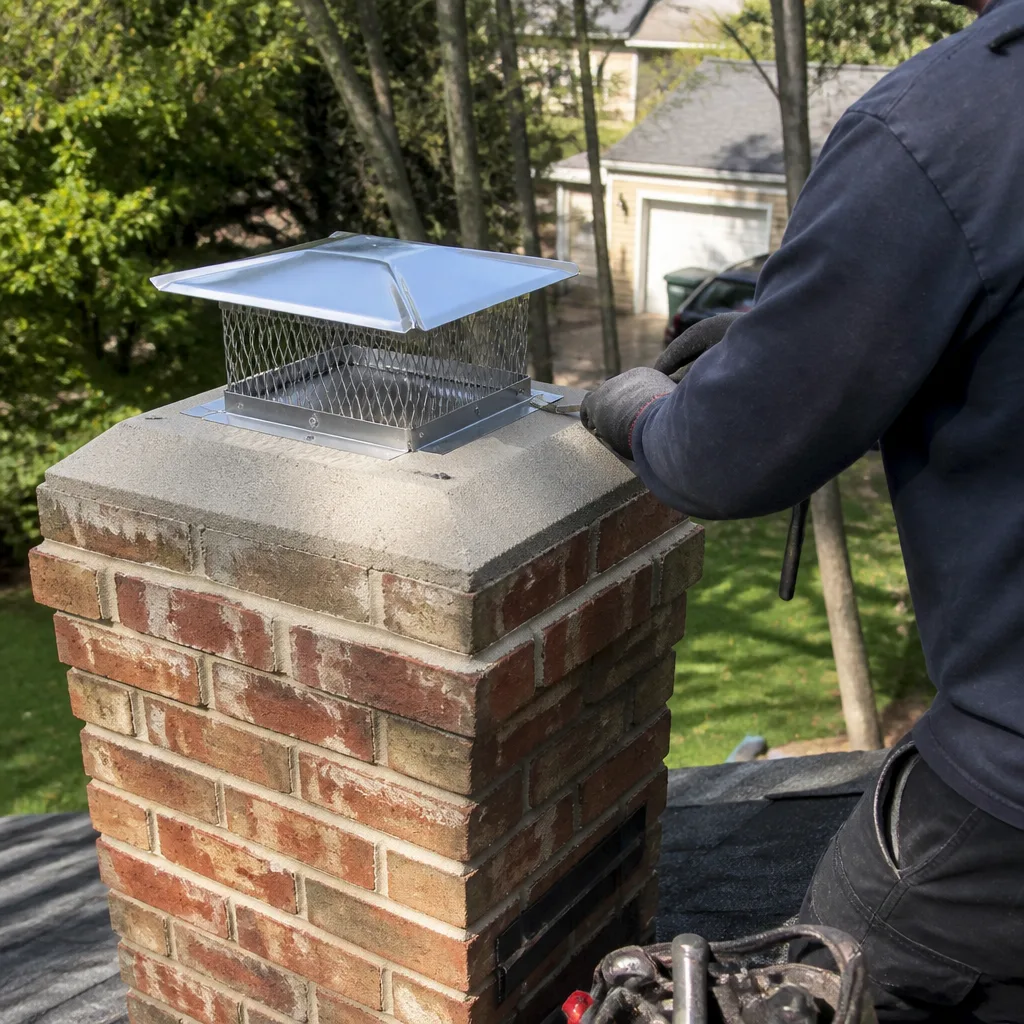 After
After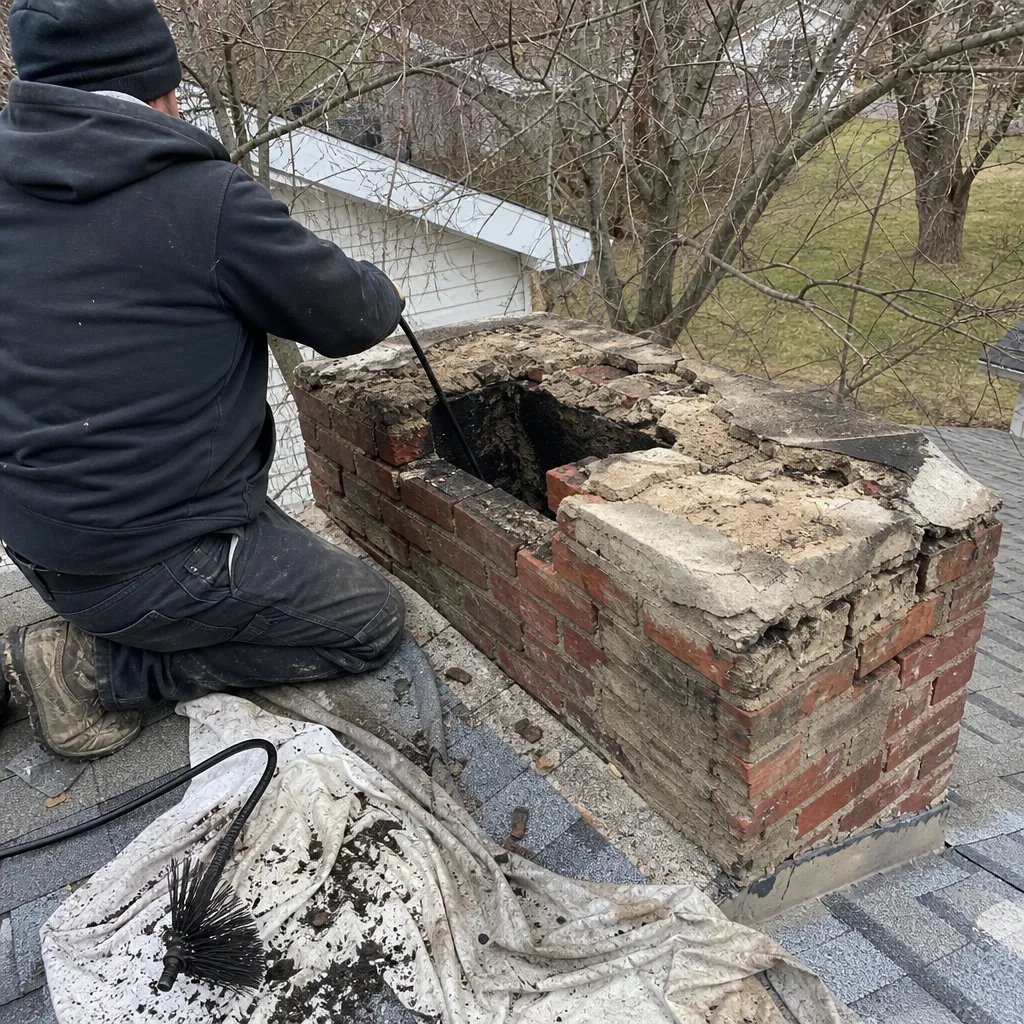 Before
 After
After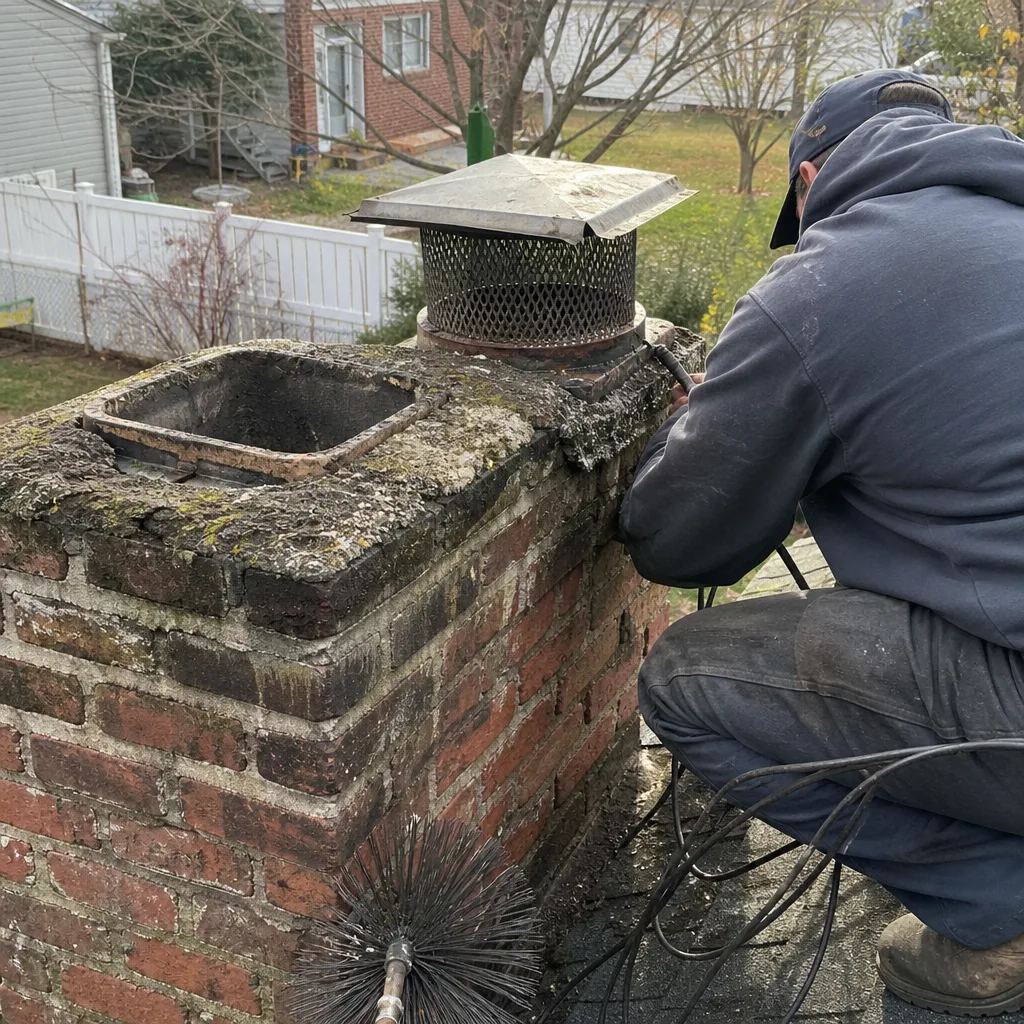 Before
 After
AfterThe Complete Guide to Chimney Cleaning in Rockville
The CSIA estimates that roughly 25% of home heating fires involve chimneys that were, by the homeowner’s account, “recently cleaned.” Recently by whose account, with what evidence, nobody can say. This guide is written for Rockville homeowners who want to understand what actually happens inside a chimney flue before, during, and after a cleaning, what documentation should exist when the job is done, and what a legitimate chimney cleaning invoice in Rockville should show before any work begins. For more guides & resources, see our blog. You’ll learn the difference between a cleaning receipt and a cleaning record, how Rockville’s specific tree canopy affects creosote buildup, and why the before-photo of your flue matters as much as the after-photo.
Quick Answer
A professional chimney cleaning in Rockville typically costs between $189 and $389 for a standard single-flue sweep, with camera-scan inspection and a documented photo record included on every visit. The cleaning itself takes 45 to 90 minutes, and the written price, written scope, and written warranty should be delivered before any work starts. What separates a legitimate Rockville chimney cleaning from a verbal pat on the back is whether you walk away with camera footage, dated photos, and a record your insurer or a future home buyer can actually read.
Table of Contents
- What a Rockville Chimney Cleaning Actually Involves
- What NFPA 211 Level 2 Requires a Sweep to Document
- How Rockville’s Tree Canopy Accelerates Creosote Staging
- The Difference Between a Cleaning Receipt and a Cleaning Record
- Camera Footage as the Baseline: Before and After
- What Line Items Belong on a Legitimate Rockville Chimney Cleaning Invoice
- How Much Does a Chimney Cleaning Cost in Rockville?
- Common Mistakes to Avoid
- When to Call a Professional
- Frequently Asked Questions
- The Bottom Line
BeforeAfterWhat a Rockville Chimney Cleaning Actually Involves
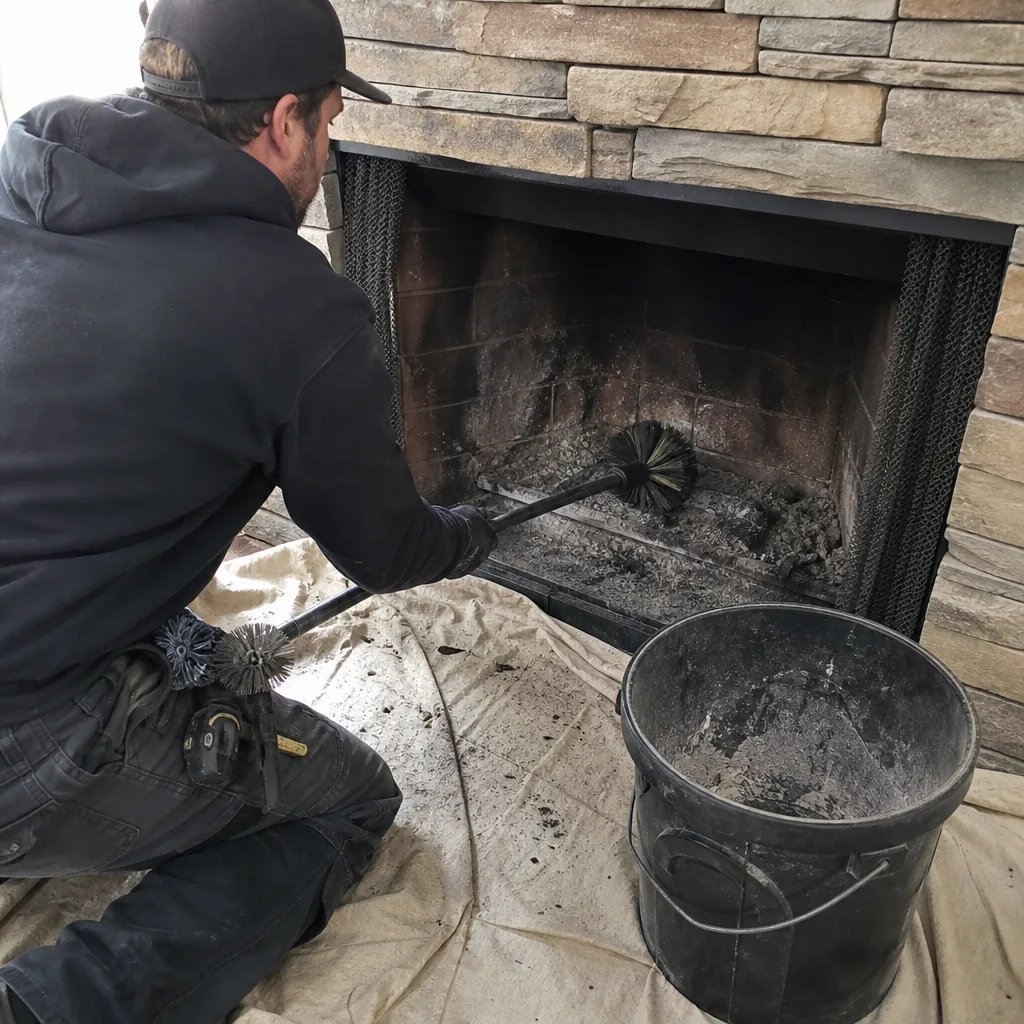
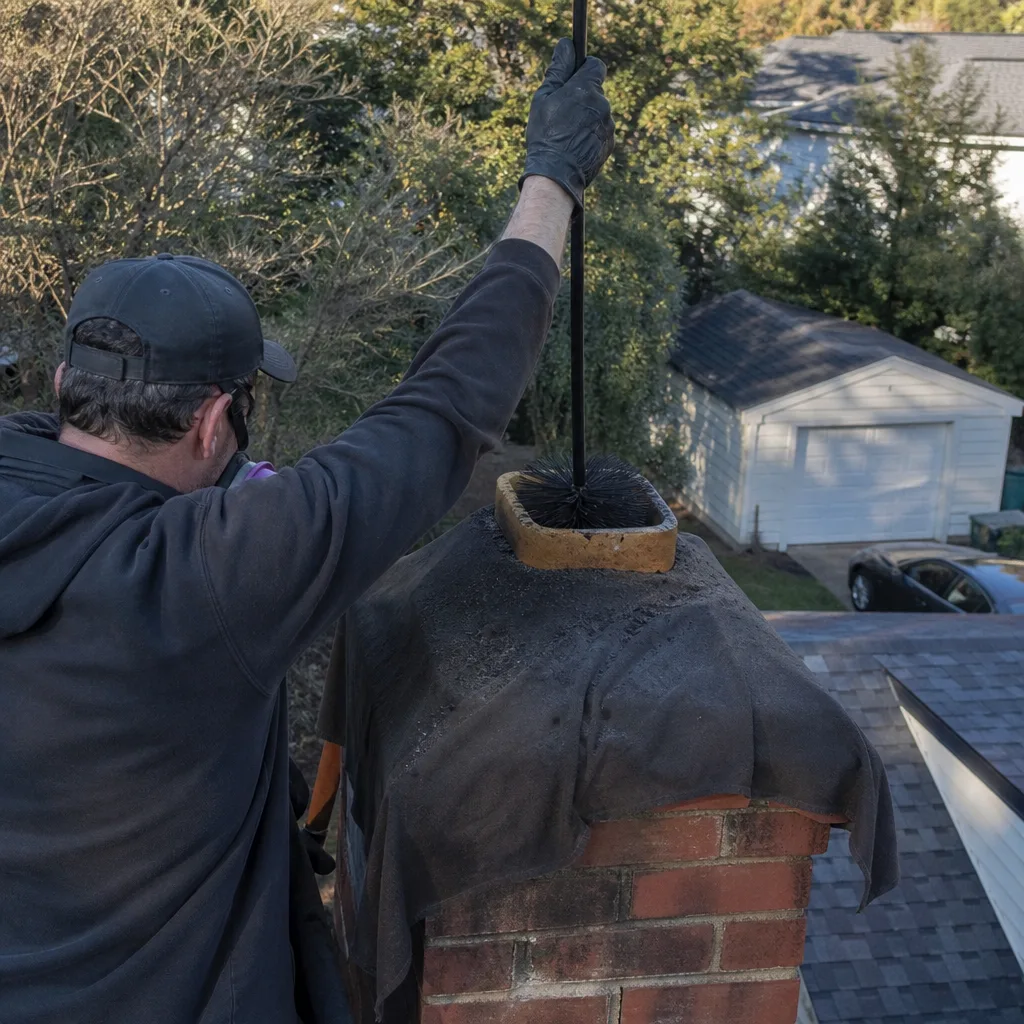
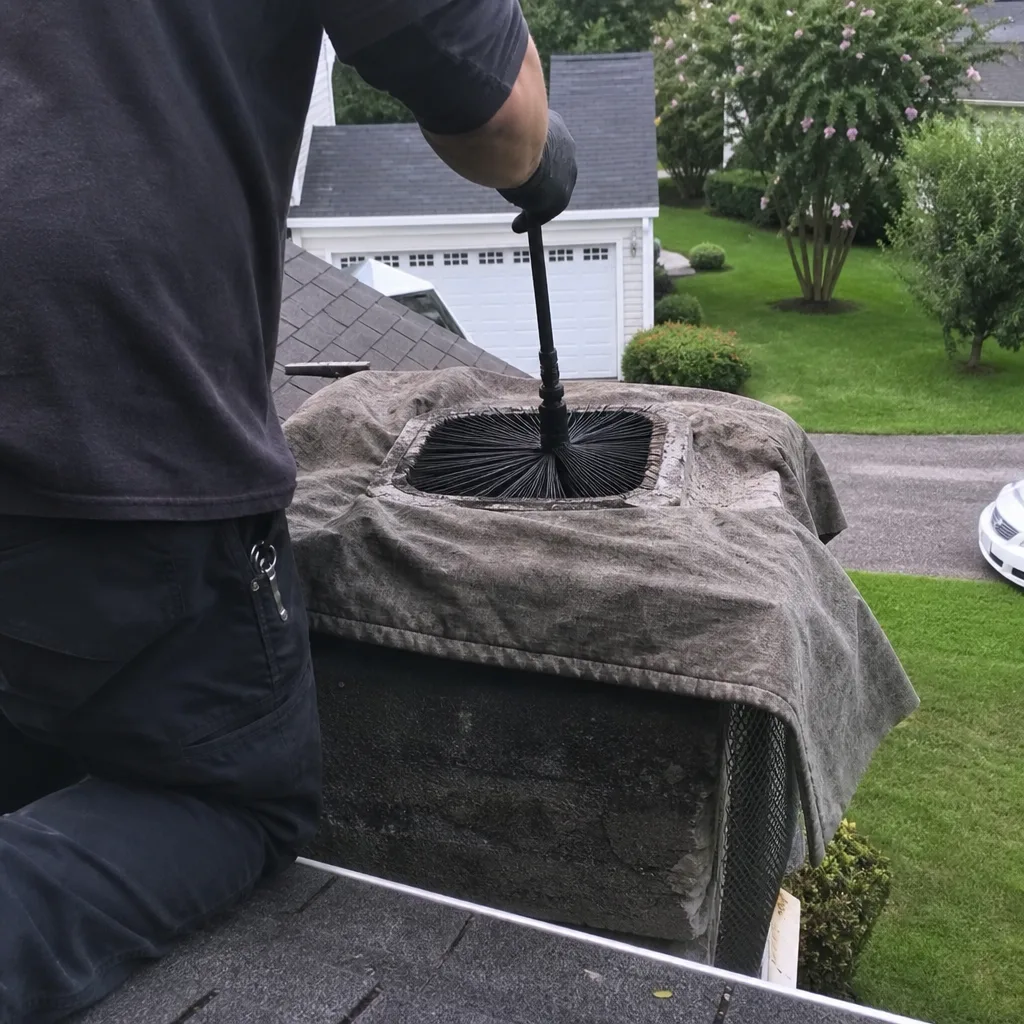
A chimney cleaning is not a guy with a wire brush showing up for twenty minutes. A legitimate sweep in Rockville involves a specific sequence: the technician lays drop cloths from the entry door to the hearth, seals the fireplace opening with a high-powered vacuum running to maintain negative pressure, and works a rotary brush or cable-driven whip system from either the top of the flue or up from the firebox. The goal is to remove creosote, soot, and any debris that has accumulated on the flue walls since the last cleaning. In our experience across Rockville, a standard single-flue cleaning takes between 45 and 90 minutes, depending on creosote class and flue length.
After the mechanical cleaning, the technician should run a camera down the flue to inspect for cracks, gaps, spalling, or liner damage that the soot was hiding. This is where the documentation chain begins. A sweep that does not include a post-clean camera pass is leaving you with a clean flue and an uninspected chimney, which is not the same thing as a safe chimney. We’ve cleaned flues in Rockville that looked fine from the top and revealed hairline cracks in the terracotta liner only when the camera reached the smoke chamber.
Here is what the process looks like, step by step:
- Site protection: Drop cloths and shoe covers before anything else. The technician should protect the floor, furniture, and air quality.
- Negative pressure setup: A HEPA-filtered vacuum is set at the fireplace opening to keep soot and dust from entering the living space.
- Mechanical cleaning: Rotary brush or cable whip system removes creosote and soot from the flue walls.
- Debris removal: The smoke chamber, smoke shelf, and firebox are cleared of fallen debris.
- Camera inspection: A camera is run down the flue from top to bottom to document liner condition, mortar joints, and any gaps.
- Photo record: Before-and-after images are saved and dated. You receive copies.
- Written report: The technician documents what was found, what was done, and what, if anything, needs attention.
This is the sequence Clause 4 of the Haven Standard requires on every job, and it has been our default practice since 2009. A photo record is not an add-on, a “premium package,” or something you have to request. It is the baseline. If a Rockville chimney company offers a cheap sweep without camera documentation, they are selling you half the job.
What NFPA 211 Level 2 Requires a Sweep to Document
The National Fire Protection Association standard 211 defines three levels of chimney inspection. Level 1 is a visual check of the readily accessible areas: the firebox, the flue from the top with a flashlight, and the exterior. It is appropriate for annual maintenance when nothing has changed about the system. Level 2 is triggered when there has been a change: a new appliance, a new home purchase, a chimney fire, a seismic event, or a change in fuel type. Level 2 requires access to areas that Level 1 does not: the attic, crawlspace, and basement portions of the chimney, plus a camera scan of the flue interior.
Here is what a flashlight-and-verbal-report company delivers versus what NFPA 211 Level 2 actually requires a sweep in Rockville to document:
- Flue liner condition: A flashlight from the top shows the first few feet of liner. A camera shows every foot, including the smoke chamber transition where most damage hides.
- Mortar joint integrity: Camera footage allows the technician to see gaps, missing mortar, and misaligned flue tiles that a flashlight cannot reveal.
- Clearances to combustibles: Level 2 requires checking that the chimney has proper clearance from wood framing in the attic and floor systems.
- Smoke chamber condition: This is the area just above the damper, where smoke compresses and accelerates. It is a common site of creosote accumulation and masonry cracks.
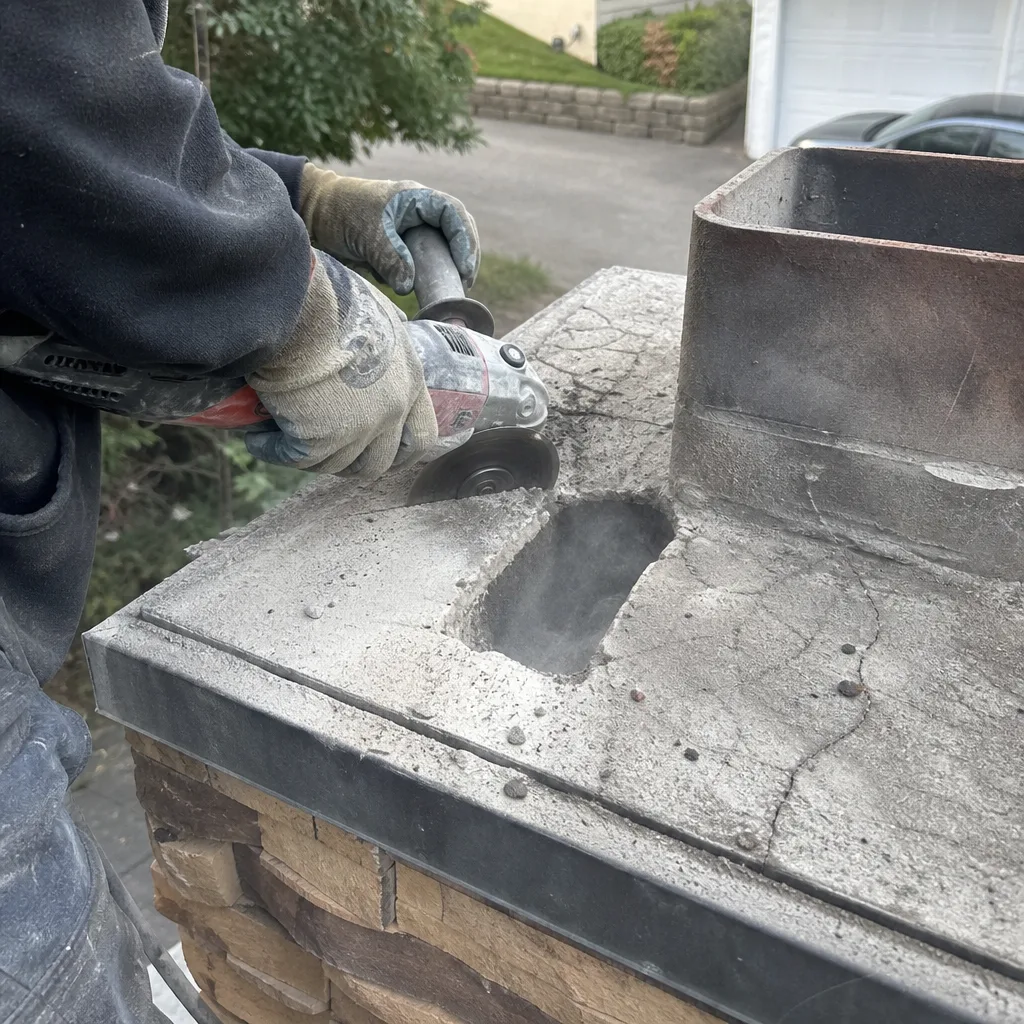
- Crown and cap condition: The crown is the concrete or mortar cap at the top of the chimney. A cracked crown lets water into the system.
- Documented photo record: Level 2 requires record-keeping. Photos with dates, not verbal descriptions.
The practical difference for a Rockville homeowner comes down to this: a Level 1 flashlight check can miss a cracked flue tile three feet below the crown. A camera scan cannot. When we scan a flue in Rockville, we see the full run from crown to smoke chamber, and we save every frame. That archive has been running continuously since 2009, and it means we can pull your chimney’s history from five years ago and compare it to today. That is not something a verbal report can ever do.
How Rockville’s Tree Canopy Accelerates Creosote Staging
Rockville is a city built under trees. Oak, maple, poplar, and hickory dominate the canopy in neighborhoods like West End, Twinbrook, King Farm, and Fallsgrove. That canopy is part of the city’s character, but it has a direct effect on firewood and on chimneys. Wood harvested from Rockville’s oak and maple stands is dense, slow-burning, and high in moisture if not seasoned properly. Burning that wood at low temperatures, which is what happens when a homeowner damps down a fire overnight, produces incomplete combustion. Incomplete combustion produces creosote.
Creosote accumulates in three stages, and Rockville’s tree species tend to push systems toward the heavier stages faster than open-suburb homes with shallower canopies or different wood sources. Here is what those stages mean:
- Class I creosote: A light, flaky, sooty deposit that forms early in the burning season. It brushes off easily and is what most annual cleanings address.
- Class II creosote: A thicker, crusty, tar-like accumulation that forms when flue temperatures drop below the condensation point. Harder to remove; often requires a rotary whip rather than a hand brush.
- Class III creosote: A hard, glossy, baked-on glaze that forms when creosote repeatedly heats and cools over multiple seasons. It is highly flammable and often requires chemical treatment or aggressive mechanical removal.
In Rockville, we regularly see Class II and Class III creosote in fireplaces that are used heavily from October through March, especially in homes with masonry chimneys that take longer to warm up than prefab metal flues. The oak in Rockville is excellent firewood once fully seasoned, but a single wet or green log can drop flue temperature enough to begin creosote condensation within minutes. The flue might look fine from the top, but a camera scan often reveals Stage II deposits starting at the smoke chamber, which is the coolest and most turbulent part of the flue. That is why we recommend a camera-scan inspection on every visit, not just when you suspect a problem.
The Difference Between a Cleaning Receipt and a Cleaning Record
A cleaning receipt says: “Swept chimney, $199.” A cleaning record says: “Swept 22-foot terracotta flue, removed Class II creosote from smoke chamber and flue walls, camera scan shows hairline crack at 14 feet from crown, no gap widening since 2022 scan, crown intact, cap intact.” One of those documents protects you at a homeowners insurance claim. The other does not.
Here is why the distinction matters in Rockville. If a chimney fire occurs and your insurer asks whether the chimney was maintained, a receipt proves you paid someone to do something. It does not prove what was done, what was found, or what condition the flue was in afterward. A record with dated photos, creosote classification, and liner observations gives an adjuster a verifiable maintenance history. We have seen insurance claims in Rockville go more smoothly when a homeowner could produce a multi-year photo archive showing consistent cleaning and documented inspections than when they could only produce receipts.
A proper cleaning record includes, at minimum:
- Date of service and technician name.
- Flue dimensions and material (terracotta, stainless, clay tile).
- Creosote class found before cleaning.
- Creosote class remaining after cleaning.
- Photos from the camera scan, before and after.
- Observations on liner condition, crown, cap, and mortar joints.
- Written recommendations for any further work, with price.
- Warranty terms, in writing.
This is what we mean when we say a clean chimney without a written record is an unverifiable claim. The record is not a favor the sweep does for you. It is the entire point of the visit. Under the Haven Standard, Clause 4 requires a documented photo record on every job, delivered to the homeowner as a matter of course. We’ve been doing this since 2009, long before insurers or regulators made it a talking point. The practice is built into the company name.
Camera Footage as the Baseline: Before and After
The before-image is the most underrated artifact in chimney cleaning. After the cleaning, the flue looks clean: smooth walls, no flaking, no thick deposits. The after-image is satisfying but it is also generic. It could be anyone’s flue. The before-image tells the story: it shows what accumulated in your flue over the last year, where it concentrated, and what class of creosote you were burning toward. It is evidence of how your burning habits and your wood source are actually affecting your chimney.
Here is what a typical before-image from a Rockville flue shows that a verbal report cannot:
- Creosote concentration zones: The smoke chamber and upper flue are usually the worst. The before-image locates the problem precisely.
- Liner anomalies: Cracks, spalling, or a shifted flue tile are visible in a camera image before cleaning, sometimes only because the soot outlines the gap.
- Moisture evidence: Efflorescence, rust on a damper, or water streaks are visible before the brush removes the surface deposit.
- Prior repair quality: If a previous crew did a liner patch or crown repair, the camera shows whether it is holding.
After the cleaning, we run the camera again. The after-image confirms the creosote is gone, but it also gives a cleaner view of the liner surface. Some cracks that were hidden by soot before cleaning become visible after. That is not a sales trick; it is the point of cleaning before inspecting. At Chimney Cleaning & Sweep in Rockville, the camera runs on every visit, not on an upsell. If we recommend a liner repair, we are prepared to show you the exact frame that justifies it. Nothing gets recommended without camera evidence you can see for yourself.
The practical takeaway: a chimney cleaning that does not include before-and-after camera footage is an unverifiable claim dressed up as a service. When you compare Rockville chimney companies, ask whether the camera footage is included or whether it is an “inspection fee” add-on. Our DIY vs Professional Chimney Cleaning: The Rockville Homeowner’s Decision Guide breaks down what to look for. If the footage is not included, what exactly are you paying for?
What Line Items Belong on a Legitimate Rockville Chimney Cleaning Invoice
A legitimate chimney cleaning invoice in Rockville should not look like a car repair estimate with 19 vague line items and a mystery total. It should have a small number of clearly named services with prices attached, and the total should match the quote you received before anyone started. You should know the price before the tech is in your home. That is the entire point of upfront pricing.
Here is what a straight, honest chimney cleaning invoice in Rockville looks like:
| Line item | What it covers | Typical range in Rockville |
|---|---|---|
| Chimney sweep (single flue) | Mechanical cleaning of one flue, from firebox to crown, including drop cloths and negative-pressure dust control | $160-$240 |
| Camera-scan inspection | Full-length flue camera pass, before and after, with photo record | $75-$125 (should be included, not separate) |
| Creosote classification | Documented Class I, II, or III classification before and after | Included |
| Smoke chamber cleaning | Debris removal and creosote removal from the smoke chamber and smoke shelf | Included in sweep |
| Cap and crown check | Visual and camera inspection of chimney cap and crown | Included |
| Written report | Dated record with photos, observations, and recommendations | Included |
The invoice should be transparent about what is included. In our practice at Level Two Chimney Rockville home, the camera scan, the photo record, the written report, and the creosote classification are all part of the standard sweep price. They are not line-item add-ons. If you see a Rockville invoice that says “sweep $99” and then a list of extras that doubles the price, you are looking at a pricing structure designed to confuse, not to inform.
Materials matter on repair work, too. If your sweep includes a recommendation for a new liner or crown repair, the invoice should name the material: DuraFlex, HeatShield, Gelco, or another traceable brand. We source from DuraFlex, HeatShield, Gelco, Olympia Chimney, Famco, and Copperfield through Haven’s buying network specifically to keep customer prices honest. A written price with a named material and a written warranty is the minimum standard. We will not do work under a “verbal estimate” and neither should you.
How Much Does a Chimney Cleaning Cost in Rockville?
A standard single-flue chimney cleaning in Rockville runs between $189 and $389, including camera-scan inspection and a documented photo record. This is not a “starting at” price designed to get a tech to your door. It is what a legitimate, fully documented cleaning costs in this market. Multi-flue homes, homes with heavy Class III creosote, and homes that have not been cleaned in many years can run higher, and a written price should be delivered before any work starts, always.
Here is what affects the price in Rockville specifically:
- Flue height and accessibility: Rockville’s older split-levels and colonials in neighborhoods like Twinbrook and College Gardens can have steep roof pitches that add time and labor.
- Creosote class: Class I brushes off easily. Class III requires aggressive mechanical work and sometimes chemical treatment. The camera scan determines the class before pricing locks in.
- Chimney type: Masonry chimneys with terracotta liners usually take longer to clean than prefab metal flues.
- Service history: A chimney that has been professionally cleaned every year is faster to sweep than one that has sat for a decade.
- Included documentation: Some Rockville companies charge extra for the report and photos. That should be included.
The price range above is honest and stable for Rockville. It is not the “cheapest in town,” and it is not the $99 special that gets a tech in the door who then “finds” $2,000 of liner work. Given the cost of chimney repair and the value of a documented record, the price is reasonable. Our favorite comparison: a chimney cleaning costs less than a single service visit for a furnace, and it produces a far more useful piece of documentation. If you want an exact quote for your flue, call us at (571) 376-7052. Estimates are free, they are in writing, and no work starts until you see the price.
Common Mistakes to Avoid
- Hiring a sweep who gives a verbal price after the work. A price delivered after the tech has already been in your home is not a quote; it is an invoice. In Rockville, the written price, written scope, and written warranty should be delivered before anyone starts. That is Clause 1 of the Haven Standard.
- Accepting a “flashlight inspection” as a camera scan. A flashlight from the roof shows the top three feet. It cannot see the smoke chamber or the middle flue. If the company does not show you footage, they did not inspect the flue.
- Paying for a sweep without getting the photo record. If the job produced no dated photos, then as far as your insurer or a buyer is concerned, the job did not happen. Demand the record.
- Burning green oak from your own Rockville trees. Oak is excellent firewood after seasoning for 12 to 24 months, but a single wet log can spike creosote condensation. If you cut your own wood, season it under cover off the ground for at least a full summer.
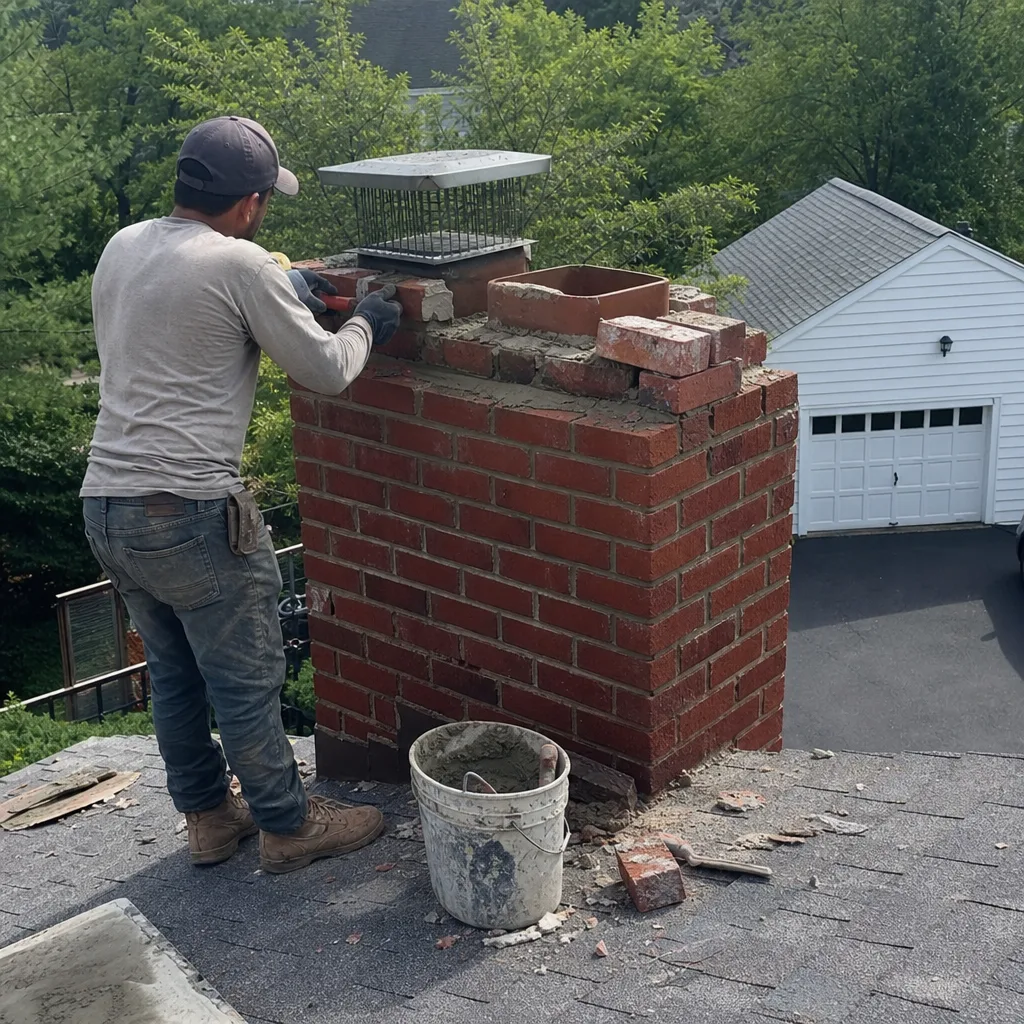
- Ignoring the cap and crown because the flue is clean. A clean flue with a cracked crown is still a water-damaged chimney in the making. The crown and cap should be checked on every visit, and Rockville’s freeze-thaw cycles make crown maintenance particularly important.
- Skipping the annual sweep because the fireplace “looks fine.” You cannot see the creosote in the upper flue from your living room. A camera can. Annual cleaning with documented inspection is the only way to verify condition before a problem becomes a claim.
When to Call a Professional
Call a chimney professional when you smell smoke in the house during a fire, when you see visible creosote flaking from the flue, when you hear dripping or see water stains on the ceiling near the chimney, when you have not had the chimney inspected in two or more years, or when you are buying or selling a home in Rockville and the flue condition is part of the transaction. Not sure how to choose? Read our How to Hire a Chimney Cleaning Contractor in Rockville: A Step-by-Step Guide. You should also call before burning season if you have never used the fireplace since moving in. A chimney that sat unused for years may have hidden blockages, cracked liners, or animal nests. None of these are visible from the hearth. Level Two Chimney Rockville offers free estimates in Rockville - call (571) 376-7052.
Frequently Asked Questions
A professional chimney sweep in Rockville typically costs between $189 and $389 for a standard single-flue cleaning with camera inspection and photo documentation included. The exact price depends on flue height, creosote class, and chimney type, and a written price should be delivered before any work starts. Call (571) 376-7052 for an exact quote - estimates are free and in writing.
The NFPA recommends an annual inspection and cleaning as needed, and for Rockville homes burning wood regularly from October through March, that translates to a sweep every year. For a full maintenance calendar, see our Seasonal Chimney Cleaning Care for Rockville: Year-Round Homeowner’s Guide. If you burn every weekend or use the fireplace as a primary heat source, you may need a mid-season check. The camera scan tells you whether the flue needs attention before the next fire, not after a problem develops.
You need a new liner only if the camera scan shows cracks, spalling, gaps, or deterioration that compromises the flue’s ability to contain heat and combustion gases. If a sweep tells you the liner needs replacing, ask to see the footage. A legitimate recommendation will point to a specific frame, a specific location in the flue, and a specific reason. We will never recommend liner work without showing you the evidence.
Creosote builds up in stages, and Class II and III creosote are combustible. If it ignites, you get a chimney fire, which can crack the liner, damage the masonry, and spread to the house. Even without a fire, accumulated creosote restricts airflow, pushes smoke into the home, and accelerates liner corrosion. The annual cleaning with documentation is the cheapest insurance you can buy for the system.
Rockville’s mature oak, maple, and poplar canopy produces dense firewood that burns hot but slow, and when that wood is not fully seasoned or the flue cools too quickly, creosote condenses faster. Older masonry chimneys in Rockville’s established neighborhoods also warm up slower than modern prefab systems, which gives creosote more time to form. The camera scan on every visit tells you exactly what class you are dealing with.
You should receive a dated written report with before-and-after photos from the camera scan, creosote classification, liner condition notes, and any recommendations with a written price. That documentation is the record that protects you at an insurance claim and helps a future buyer understand the chimney’s history. It is the difference between a sweep receipt and a maintenance record.
The Bottom Line
A chimney cleaning in Rockville is only as good as the documentation it produces. The sweep itself removes creosote and soot, but the record, the photos, the camera footage, and the written price are what make the service verifiable. Rockville’s trees, older housing stock, and freeze-thaw cycles make an annual documented cleaning the sensible default for any home with a wood-burning fireplace. Demand a written price before work starts, camera footage on every visit, and a dated photo record in your hands when the job is done. If a company can’t show you the flue, they didn’t really clean it. For more on our process, see our Chimney Repair in Rockville and Fireplace Services in Rockville pages, or call (571) 376-7052 for a free estimate.
Written by Corrine Halstead, Owner at Level Two Chimney Rockville, serving Rockville since 2009.