
Last updated September 20, 2026
Level 1 sweep and inspection to the NFPA 211 annual standard - flue, crown, cap, and flashing checked and photographed
Chimney sweep logs do not sweep chimneys. They loosen some creosote - which then falls where a brush and vacuum still have to collect it.
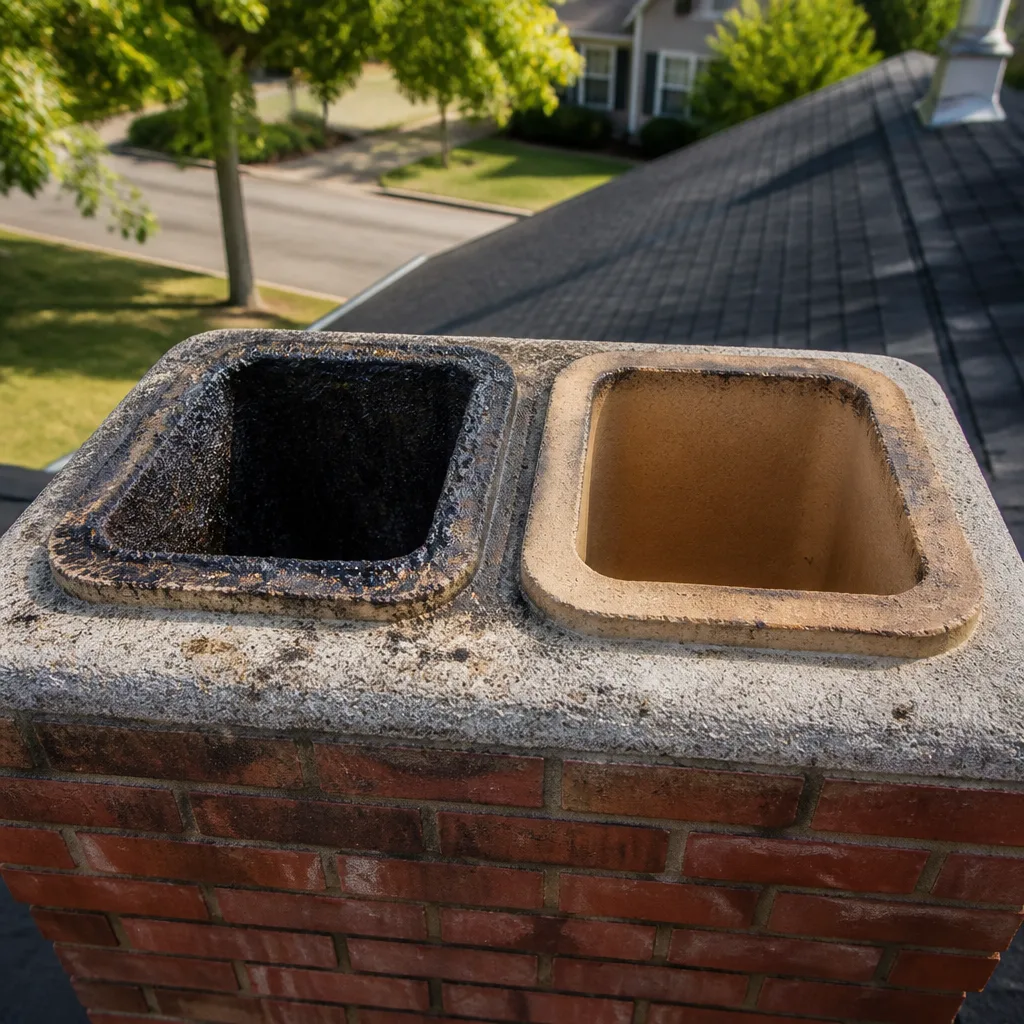
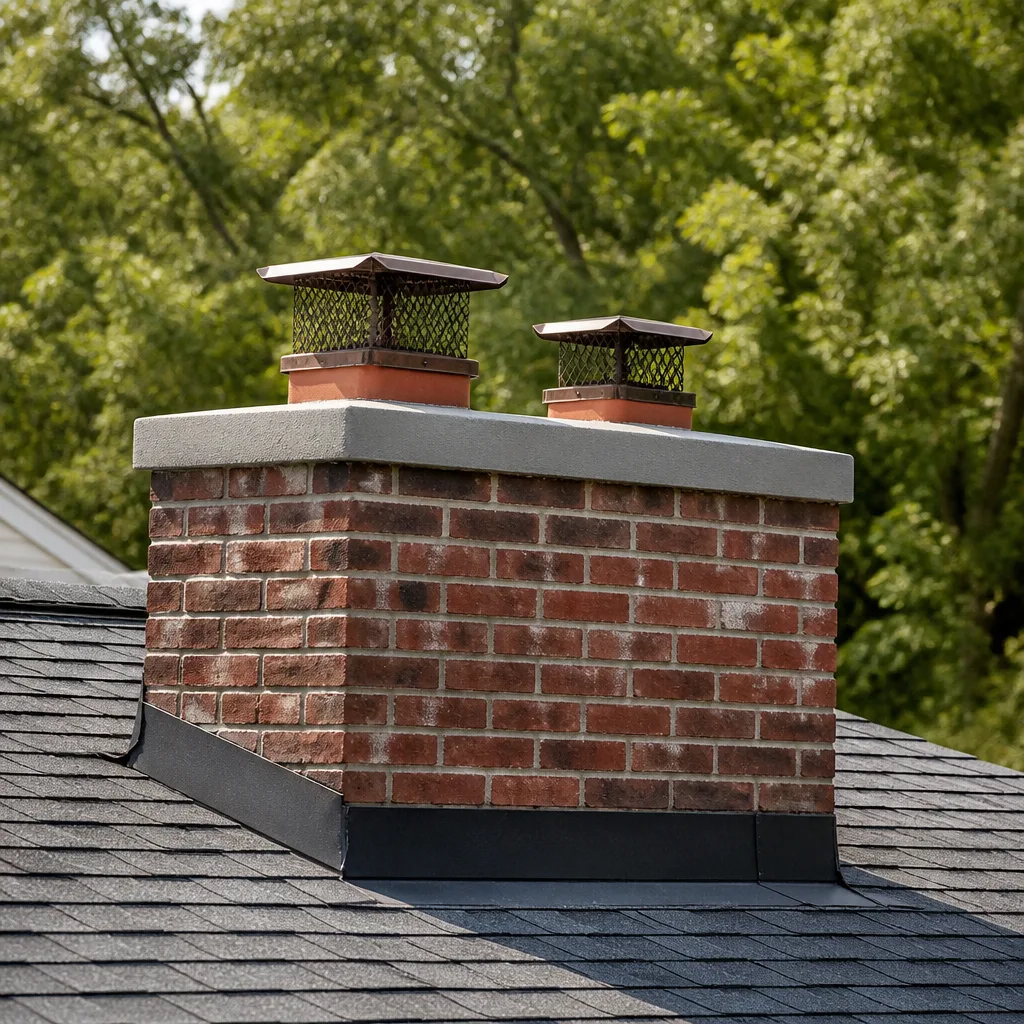
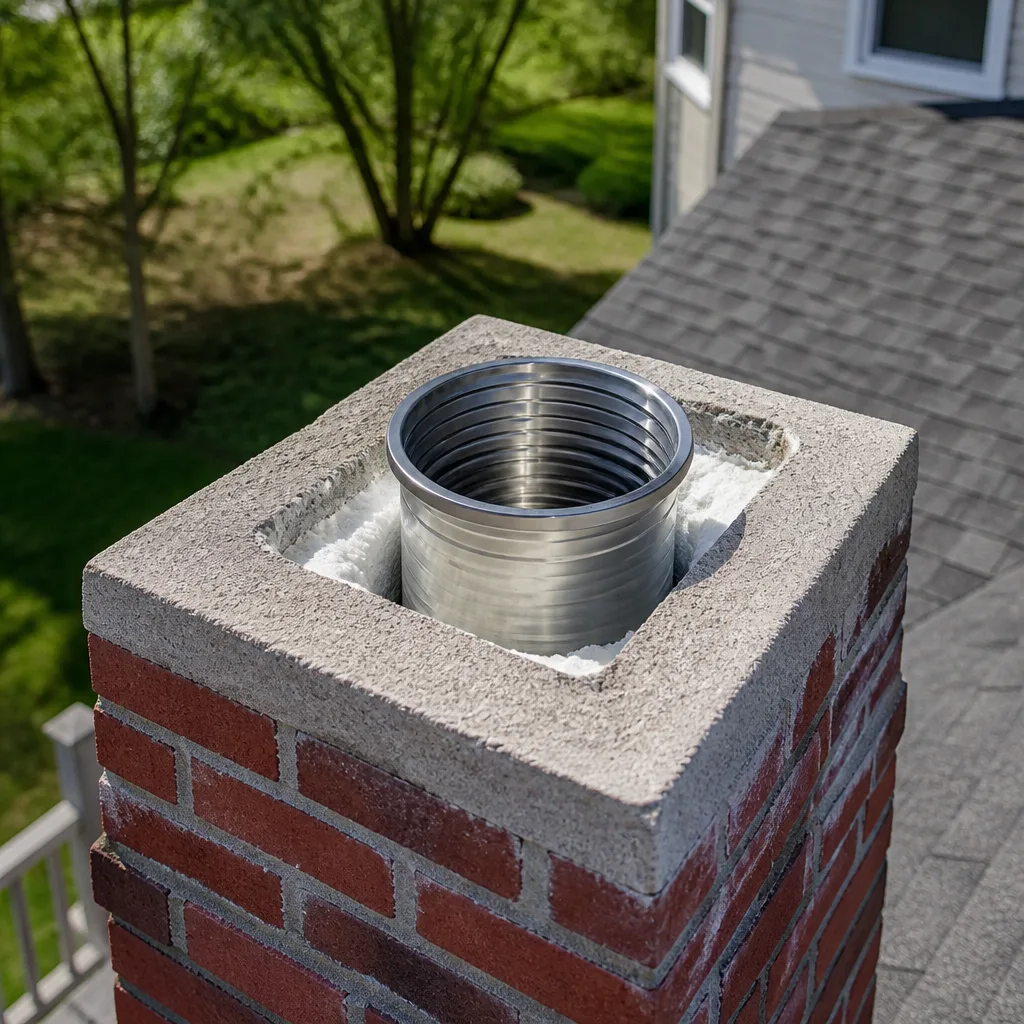
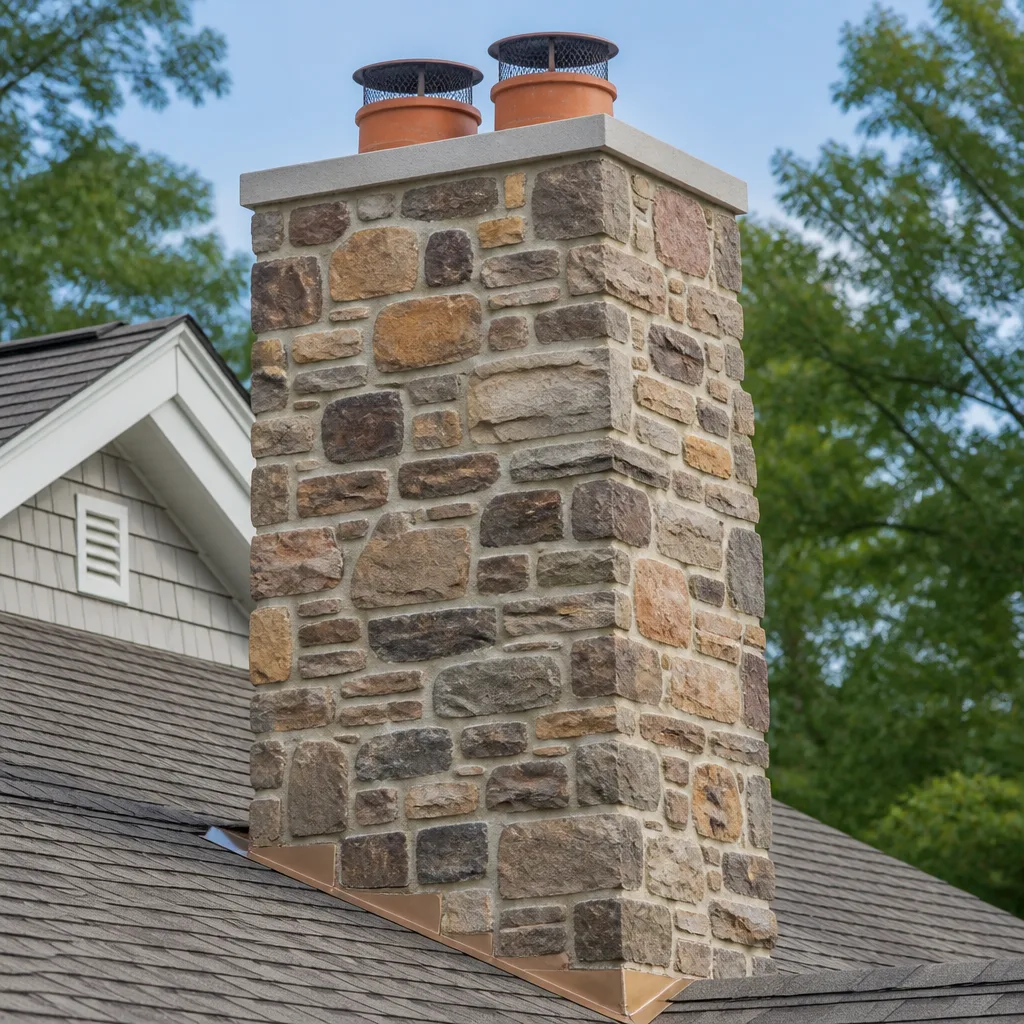
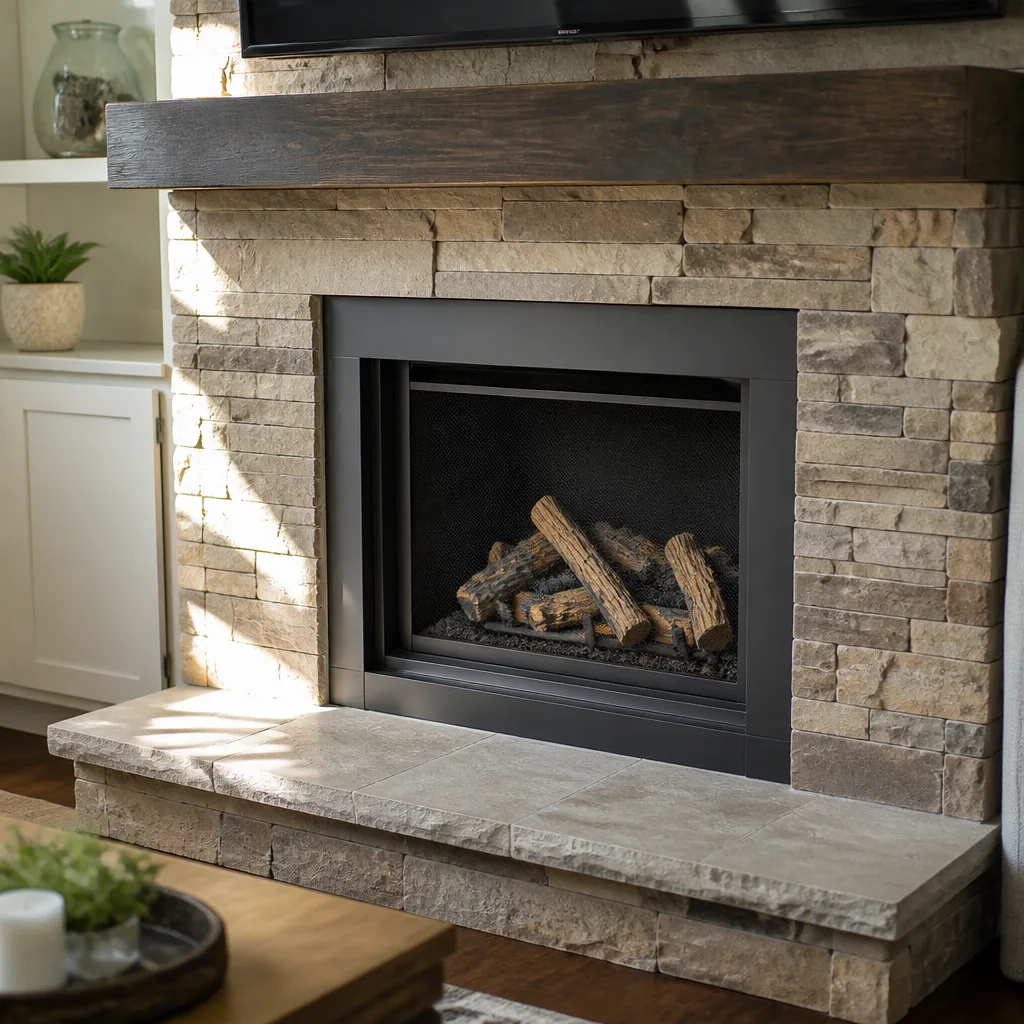
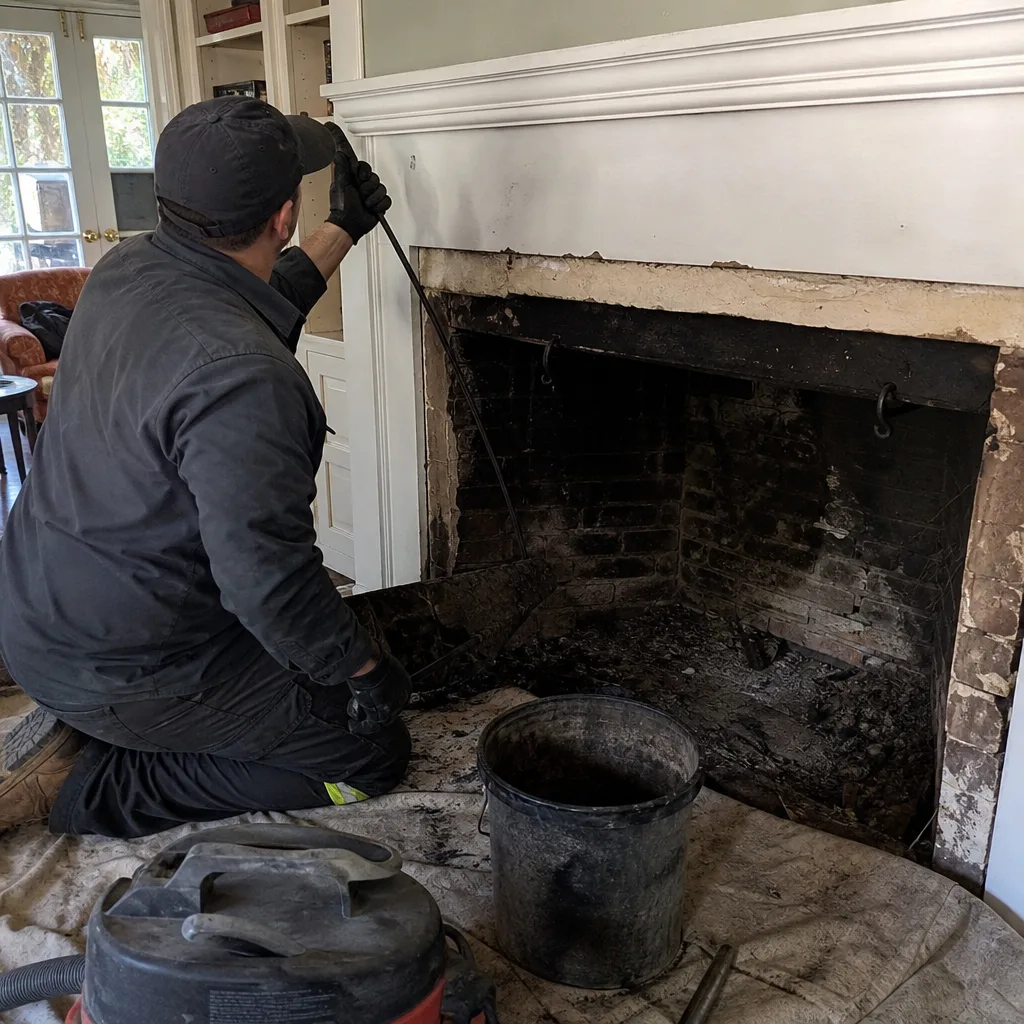 Before
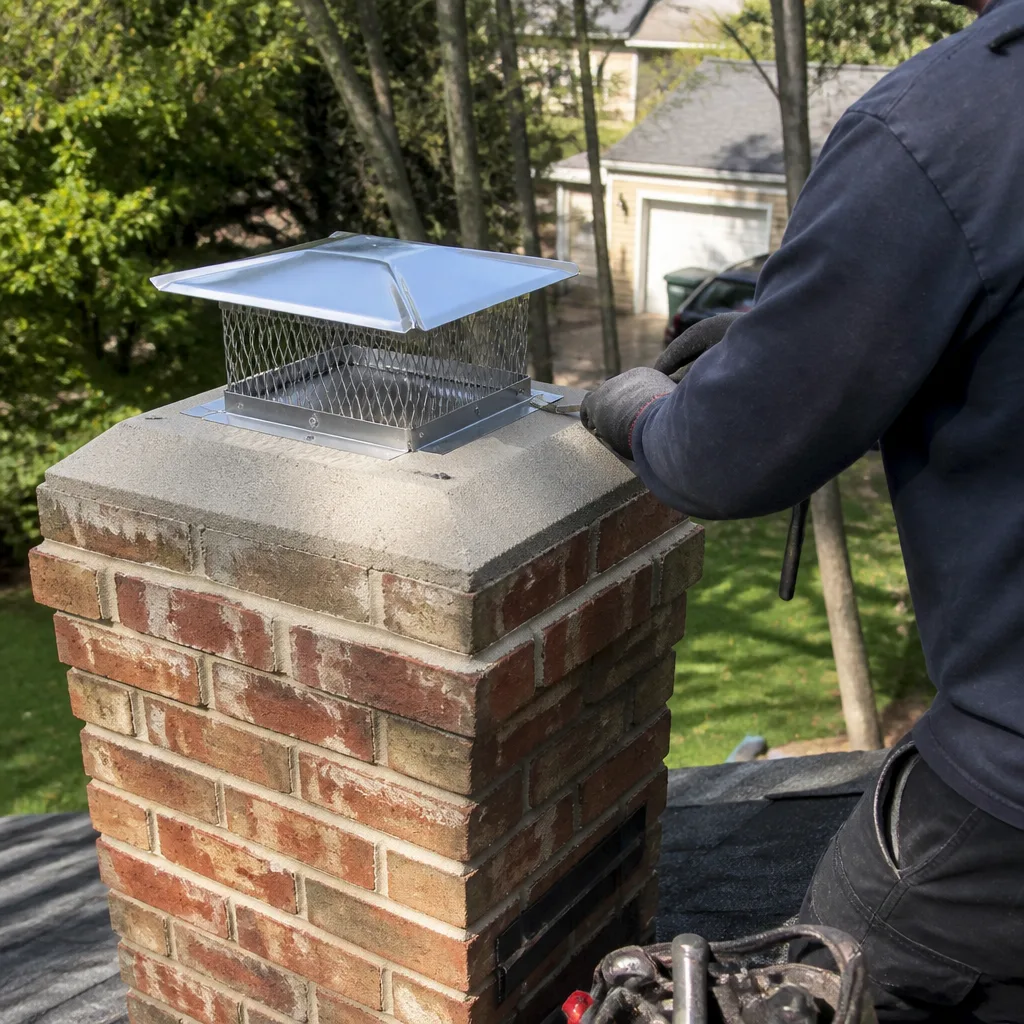 After
After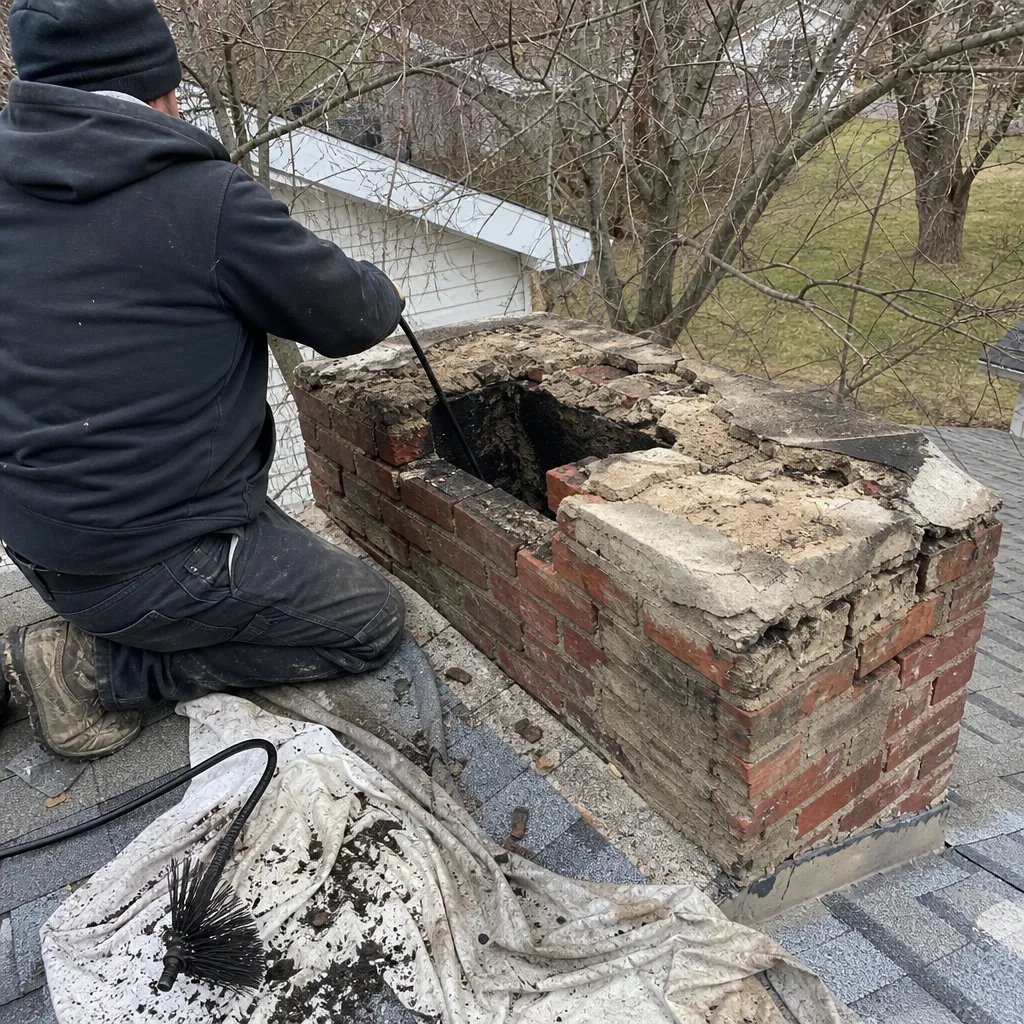 Before
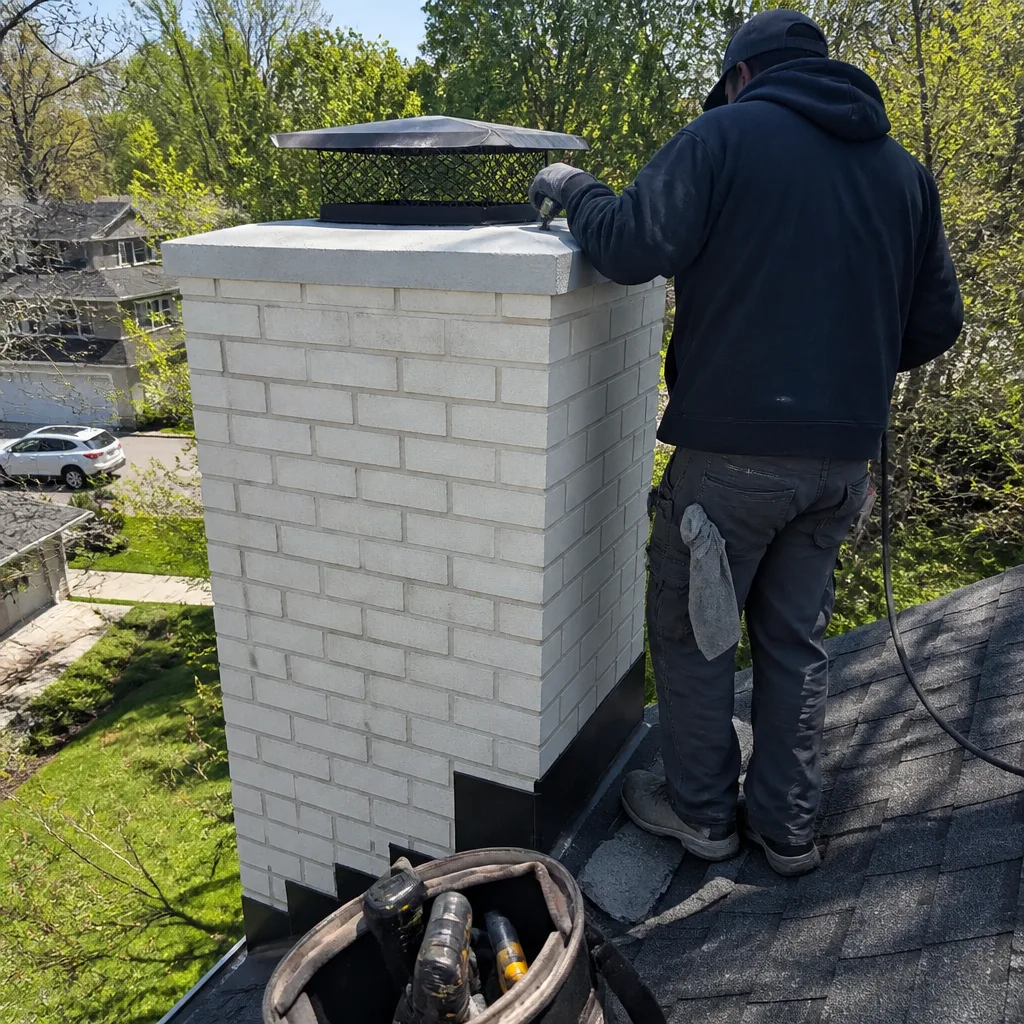 After
After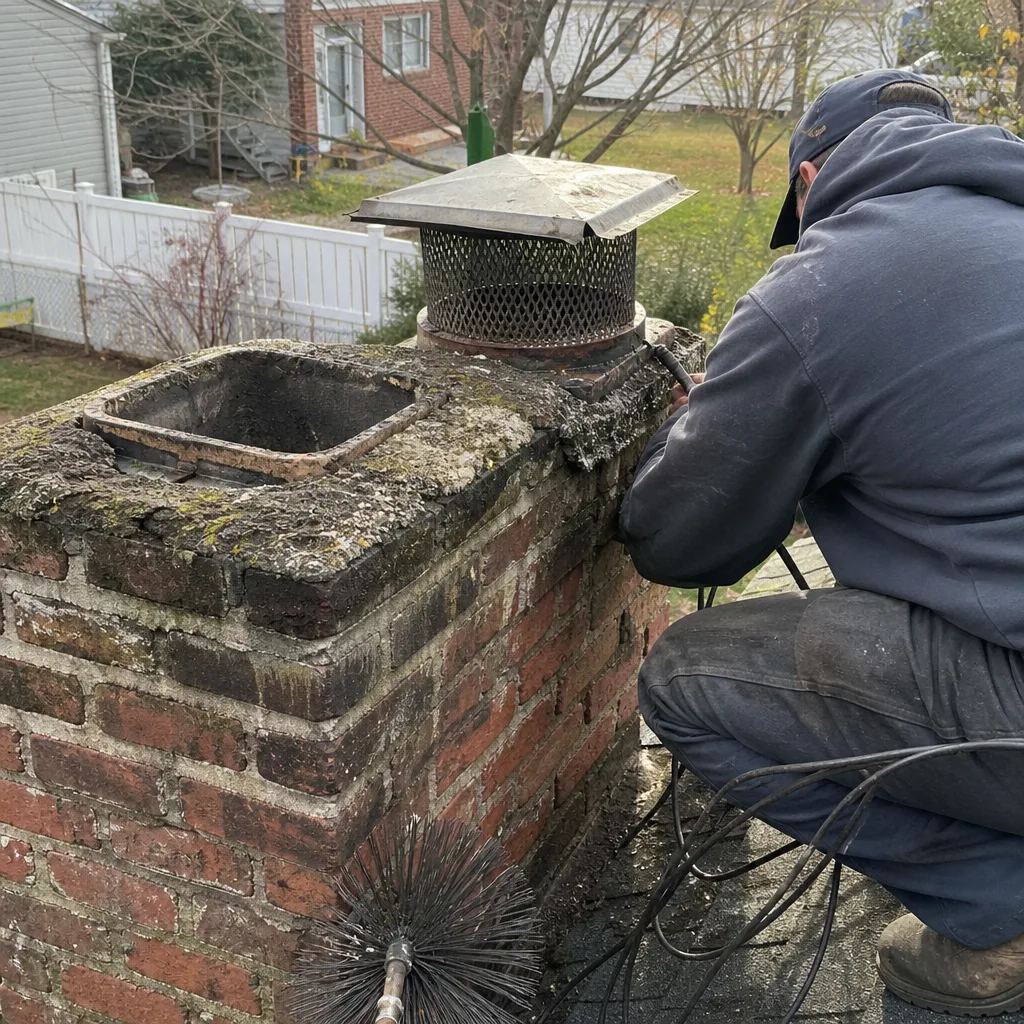 Before
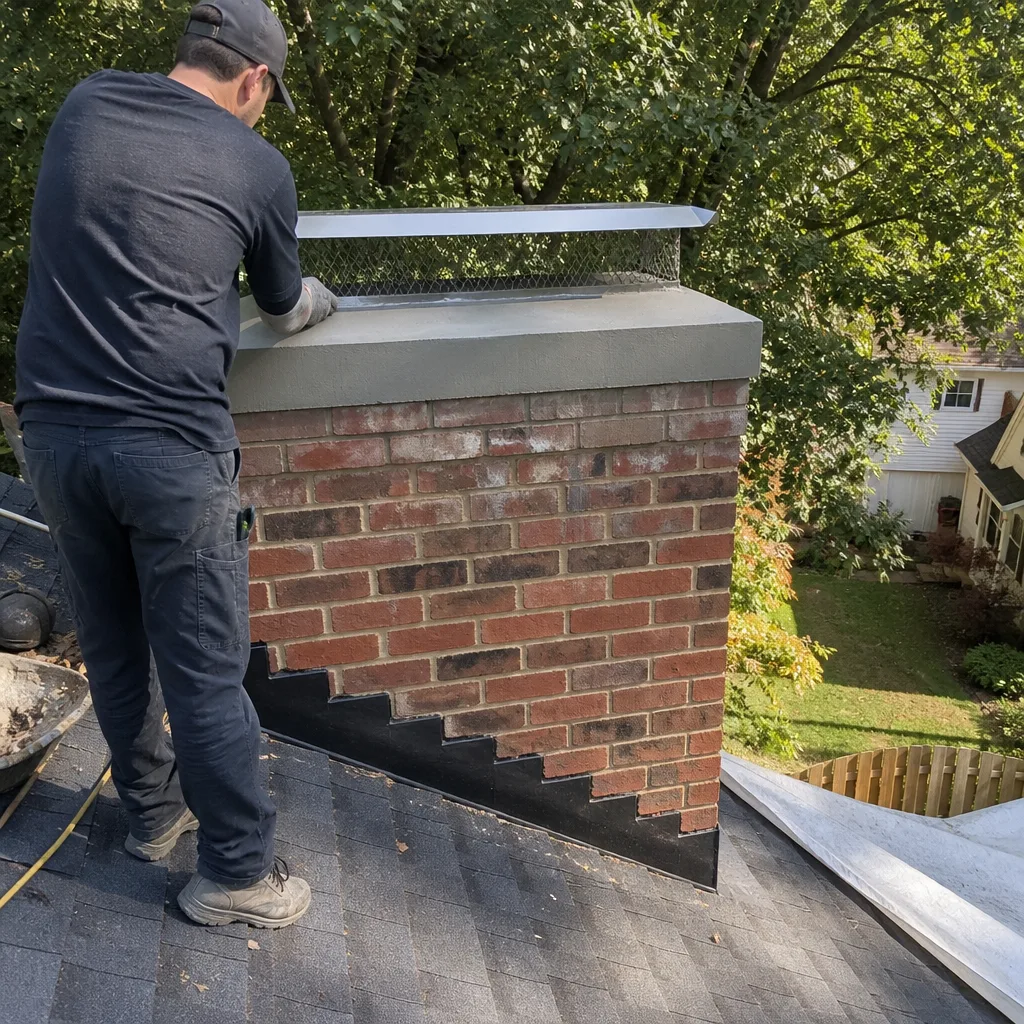 After
AfterHow to Hire a Chimney Cleaning Contractor in Rockville: A Step-by-Step Guide
Here’s a number that should reframe how you hire a chimney sweep in Rockville: roughly forty percent of CSIA member companies default to a Level 1 inspection, which is a flashlight and a trained eye, and nothing more. A Level 2 inspection, the kind that puts a camera down the flue and produces written, photographic findings, costs more and is rarely volunteered unless you ask for it by name. This guide walks you through the exact sequence we’ve learned matters most after 38,000 inspections: scope first, vendor second. For more guides & resources on chimney care, visit our blog. You’ll learn the four questions to ask before scheduling, how to verify credentials through Maryland state records, the red flags in a phone quote, and what a genuinely useful post-service report must contain.
Quick Answer
Hiring a chimney cleaning contractor in Rockville starts with confirming the inspection method, not the company’s marketing. Ask for a Level 2 camera-scan inspection based on NFPA 211, request a written price and written scope before any work begins, verify the contractor’s Maryland Home Improvement Commission license and CSIA certification number online, and keep a documented photo record of the findings. The company that answers these four checks plainly, in writing, is the one you hire.
Table of Contents
- The Four Questions to Ask Before Scheduling (Not After)
- What Legitimate Credentials Look Like on Paper in Rockville
- Red Flags in a Phone Quote: Why Verbal Pricing Fails
- Written Price Before Work Starts: How to Request It and What It Must Include
- How to Read a Post-Service Report: Five Elements That Make It Useful
- Rockville-Specific Considerations: Climate, Codes, and What We See on Site
- How to Compare Two Written Quotes Side by Side
- The Hiring Sequence, Step by Step
- Common Mistakes to Avoid
- When to Call a Professional
- Frequently Asked Questions
- The Bottom Line
BeforeAfterThe Four Questions to Ask Before Scheduling (Not After)
Most Rockville homeowners evaluate the company first, then ask about the service. The sequence is backwards. You’re not hiring a company; you’re hiring a scope of work. Until you know what the inspection actually includes, you cannot compare one quote to another. These four questions, asked before you book, filter out the flashlight-and-brush operations within ninety seconds.
1. “Is the inspection a Level 2 camera scan, and will I see the footage?”
A Level 1 inspection is visual only. A Level 2, defined by NFPA 211, includes a video scan of the flue interior, accessible attics, crawl spaces, and the exterior chimney structure. In Rockville, where winter freeze-thaw cycles and summer humidity stress masonry joints, a Level 2 is the minimum standard for any home built before 2000 or any chimney that hasn’t been inspected in three years. If the company hesitates, or says the camera is an add-on, you’ve learned what you need to know.
2. “Will I get a written price and written scope before you start?”
This is Clause 1 of the Haven Standard, the operational standard we’ve worked under since 2009: have it in writing. A written price means the number doesn’t move after the tech is already in your living room. A written scope means the document lists exactly what work is included, what is excluded, and what would trigger a change order. If a company won’t put it in writing, the price is not a price; it’s an opening negotiation.
3. “What documentation do I walk away with when the job is done?”
The answer you want is specific: dated photographs of the flue interior, a written condition report, creosote classification if relevant, moisture readings where applicable, and a written warranty. The answer you don’t want is “peace of mind” or “a clean chimney.” Those are feelings, not documentation. A sweep that produces no record produces no accountability.
4. “Can I verify your Maryland Home Improvement Commission license and CSIA number myself?”
A legitimate contractor in Rockville will give you the number and tell you where to look it up. The Maryland Home Improvement Commission maintains a public license search portal. CSIA, the Chimney Safety Institute of America, maintains a certification lookup by name or company. If a contractor deflects, claims the license is “in the truck” or “being renewed,” move on.
What Legitimate Credentials Look Like on Paper in Rockville
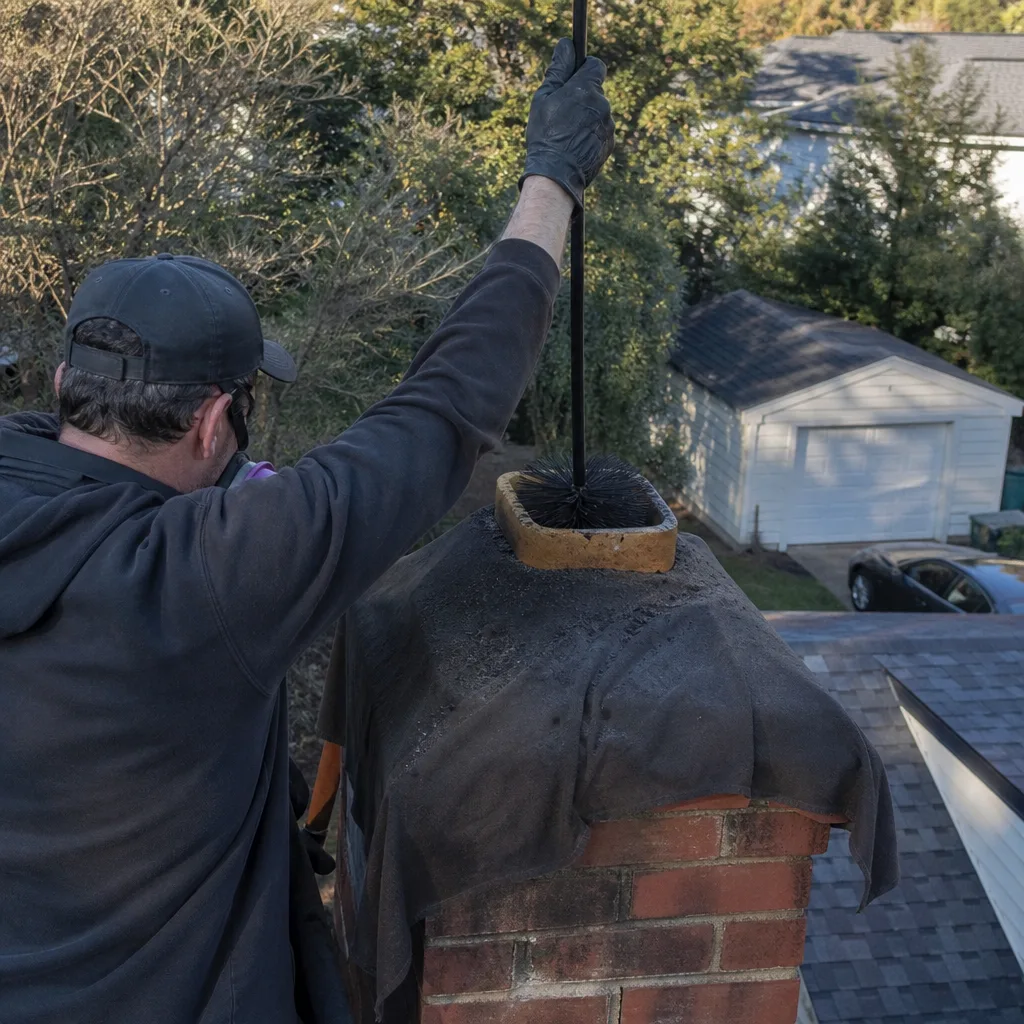
Rockville sits in Montgomery County, which means any contractor performing home improvement work over $500 must hold a Maryland Home Improvement Commission (MHIC) license. That license number should appear on the contractor’s website, on the written estimate, and on the vehicle. You can verify it on the Maryland Department of Labor’s license search portal in under two minutes. The MHIC also maintains a guaranty fund, which exists to compensate homeowners for actual losses caused by a licensed contractor’s poor work or abandonment. That fund is one reason why hiring an unlicensed handyman with a ladder is a genuinely bad idea in Maryland.
Beyond the state license, look for CSIA certification. CSIA number lookup is public, and a certified sweep has passed a technical exam covering fire codes, construction practices, and safety standards. But here’s the distinction that matters most: CSIA certification proves the sweep knows the standards. It does not prove the sweep will perform a Level 2 camera scan on your chimney. Ask what the inspection includes, in writing, regardless of what certificates hang on the wall.
Since 2009, every Level Two Chimney Rockville job has included a camera-scan inspection and documented photo record as standard, not as an optional line item. That practice, adopted years before regulators asked for it, became Clause 4 of the Haven Standard: a photo record on every visit, archived and retrievable.
Red Flags in a Phone Quote: Why Verbal Pricing Fails
Any company that prices a chimney cleaning over the phone without asking about flue type, chimney height, and last-service date is not quoting; they’re guessing. A chimney in Rockville’s West End, where mid-century homes often have terra cotta liners in two-story masonry stacks, presents a different job than a newer townhome in King Farm with a prefabricated metal flue. Different access, different liner materials, different creosote risk. Here’s what a legitimate phone conversation should cover before any number leaves the agent’s mouth:
- The type of fireplace or appliance: masonry fireplace, wood stove insert, gas log, or furnace flue
- The liner material and its approximate age, if known
- The last time the chimney was swept or inspected
- Whether the home has experienced any water staining, odor, or drafting problems
- Access considerations: roof pitch, chimney height, whether a ladder or lift is needed
When a company asks those questions and then says, “I can give you a ballpark, but the written price comes after a Level 2 inspection,” that’s the honest answer. When they quote $149 flat over the phone without asking anything, what they’re really saying is that the price will change once someone is on site. Rockville homeowners consistently tell us the same story: the phone quote was low, the on-site “discovery” was expensive, and the pressure to sign was immediate.
Our approach is different and specific. We deliver a written price, written scope, and written warranty before anyone starts work. Not after the tech is in your home. Never “call for a quote.” The price is on the page, in writing, before the first tool comes off the truck.
Written Price Before Work Starts: How to Request It and What It Must Include
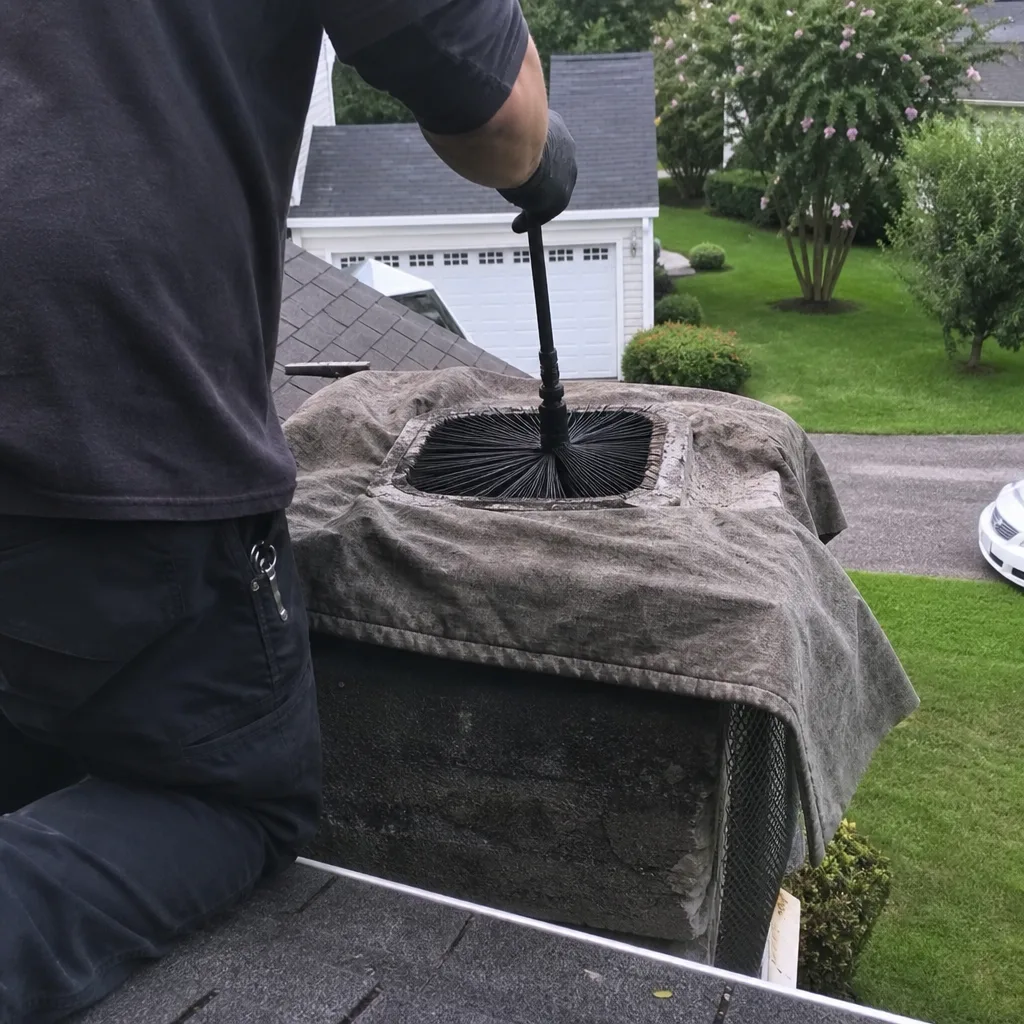
Requesting a written price is not awkward. It is the single most protective step a Rockville homeowner can take. The request is simple: “Please send me the price, scope, and warranty in writing before you schedule the service.” A legitimate company will say yes without hesitation, because they do this on every job anyway.
Here’s what a useful written price document must include, based on what we’ve refined under the Haven Standard:
- The service address and the specific chimney or flue being serviced. If you have two flues, each should be listed separately, with its own line item.
- The inspection method, named explicitly. “Level 2 camera inspection per NFPA 211” should appear verbatim. If the document says “inspection” without specifying the method, it’s not specific enough.
- Each service listed as a line item with a dollar figure. Sweeping, inspection, cap replacement, crown repair, liner work: each gets its own number, not a single bundled price with the details hidden.
- A clear statement of what is excluded. If masonry repair is not included, the document should say so. If the chimney cap is excluded, it should say so. The exclusions clause is where surprises hide.
- The warranty terms in writing. What’s covered, for how long, and what voids it. If the warranty is verbal, it doesn’t exist.
A written price is also the most honest signal of how a company operates. A company that puts numbers on paper before starting work is a company that expects to be held to those numbers. A company that refuses is signaling that the number will change once the work begins. We offer a Free Second Opinion on any written estimate: bring us a competitor’s written quote, and we’ll tell you exactly what it does and doesn’t cover, and whether the price is fair for the scope described.
How to Read a Post-Service Report: Five Elements That Make It Useful
A post-service report is either a useful document or a decoration. Most homeowners can’t tell the difference because they’ve never seen a good one. Here are the five elements that separate a real record from a printed receipt:
1. Dated, labeled photographs of the flue interior
Before and after images, with the date and the specific flue identified. If the photos are blurry, or absent, or show nothing but a dark cylinder, the “inspection” was a formality. Under Clause 4 of the Haven Standard, a photo record is required on every job, and it’s been our practice since 2009.
2. Creosote classification, in writing
Creosote is classified as Class I, II, or III. Class I is light soot, brushed away easily. Class II is flaky and crusty, requiring more aggressive mechanical removal. Class III is glazed, tar-like, and hardened, often requiring chemical treatment or mechanical removal with rotary tools. A report that says “creosote present” without classifying it is incomplete. A report that says “Class III creosote” without explaining what that means is also incomplete. The useful report names the class and states plainly what it means for your chimney’s safety and what action is recommended.
3. Written condition notes on the flue liner, smoke chamber, and crown
The flue liner is the clay, metal, or cast-in-place surface that contains the heat and gases. The smoke chamber is the angled area above the firebox that transitions smoke into the flue. The crown is the concrete slab at the top of the chimney that sheds water. Each of these should have a written condition note, even if the note is “intact, no action needed.” The absence of a note on a major component means the inspector either didn’t look or didn’t record. Both are problems.
4. Moisture readings where applicable
Water is the enemy of masonry chimneys in Rockville, where freeze-thaw cycles split bricks and spall surfaces. Spalling is the flaking or popping of brick faces caused by water intrusion and expansion. If the inspector took moisture readings, the numbers should appear in the report. If the report mentions water damage, it should be supported by a reading, not a hunch.
5. Recommendations separated by urgency, not bundled into a scare list
The useful report tells you what needs attention now, what can wait a season, and what is purely cosmetic. It does not present a $9,000 liner replacement as urgent without camera evidence showing why. And it shows you that evidence, on camera, during the service, not in a PDF you receive three days later with no context. We tell our Rockville customers this directly: nothing gets recommended without camera evidence you can see for yourself, and we’ll say plainly when work can safely wait.
Rockville-Specific Considerations: Climate, Codes, and What We See on Site
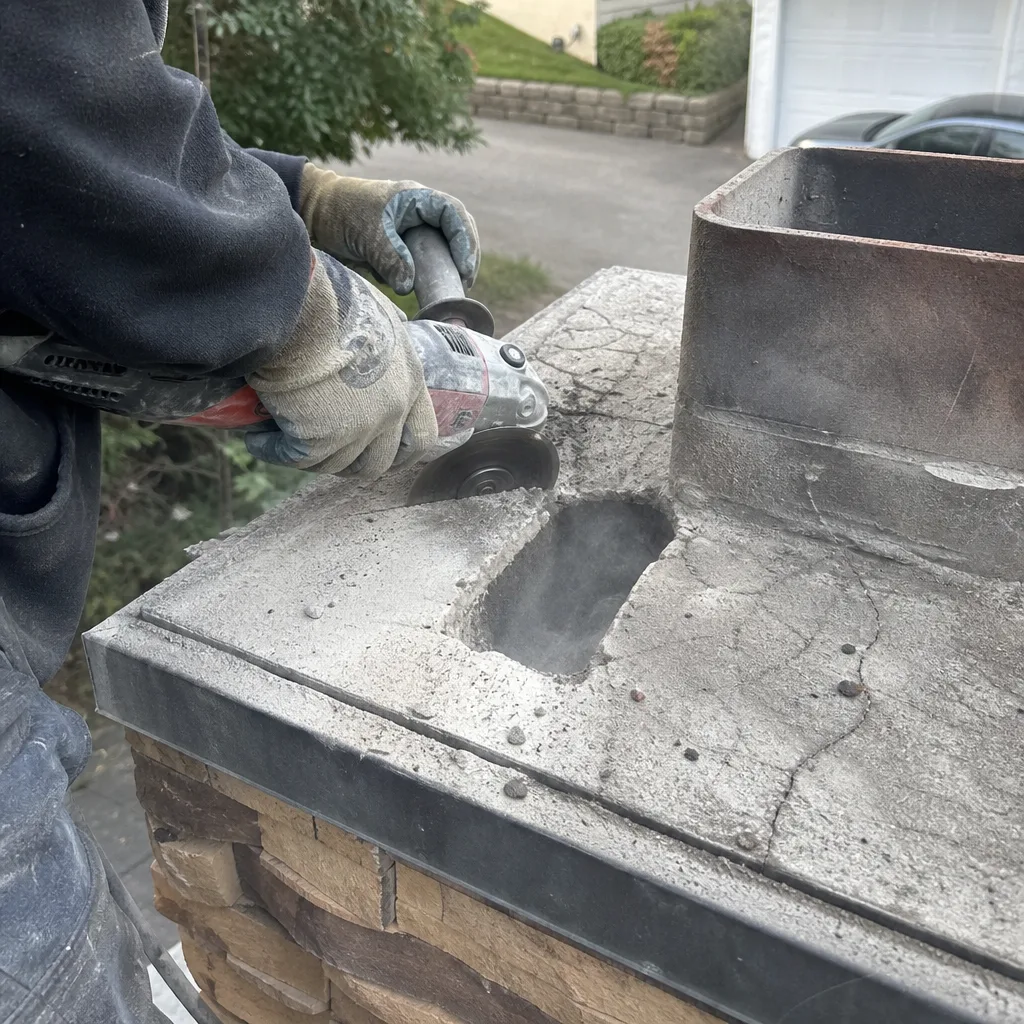
Rockville’s location in Montgomery County means specific climate stresses on chimneys. We see it consistently across the city’s neighborhoods: the older colonials and split-levels in Twinbrook and Hungerford, the mid-century brick homes around Rockville Town Center, the newer construction in King Farm and Fallsgrove. The pattern is the same everywhere: freeze-thaw cycling between December and March drives water into hairline cracks in crowns and mortar joints. That water freezes, expands, and widens the crack. Repeat for a decade, and you get spalling brick faces and deteriorated mortar joints.
Summer brings humidity that accelerates rust on steel chimney caps and damper assemblies. We regularly replace caps in Rockville that have rusted through because the original cap was made from thin-gauge steel without a proper weather seal. A chimney cap is not decorative; it is the first line of defense against water entry, animal intrusion, and downdrafts. We source our caps and crown materials from Copperfield and Olympia Chimney, and our liners from DuraFlex and HeatShield, procured through Haven’s buying network specifically to keep customer prices honest.
Montgomery County also enforces chimney cleaning permits, codes & inspections in MD: what you need to know, which affect chimney work. When a liner replacement or full rebuild is necessary, the work must meet current code for clearances, materials, and height requirements. A licensed contractor working in Rockville knows these codes and pulls permits where required. An unlicensed handyman may not even know permits exist. This is another reason the MHIC license verification step matters.
And here’s what we see most often in Rockville, in plain terms: chimneys that haven’t been swept in five or more years, accumulating Class II creosote; crowns with hairline cracks that haven’t yet caused major damage but will within a few freeze-thaw cycles; and dampers that are rusted open or rusted shut. None of these are emergencies. All of them are cheaper to address before they become emergencies.
How to Compare Two Written Quotes Side by Side
Once you have two written quotes in front of you, the comparison is straightforward. Here’s the method we recommend to Rockville homeowners, and it’s the same method we’d use on our own homes:
- Line up the line items. Does Quote A include a Level 2 camera scan while Quote B says “inspection” without specifying? That’s not a price difference; that’s a scope difference. You’re not comparing apples to apples.
- Check the exclusions clause on both documents. A lower quote often becomes a higher final bill through exclusions. If Quote B excludes the chimney cap and the crown from “sweeping and inspection,” the price is lower because the scope is smaller.
- Look at the warranty terms side by side. What’s covered, for how long, and what voids it. A one-year warranty on workmanship is meaningful. A “satisfaction guaranteed” statement with no terms is not.
- Check for the Free Second Opinion offer. Level Two Chimney Rockville offers a Free Second Opinion on any written estimate. Bring us a competitor’s quote, and we’ll tell you what it covers, what it doesn’t, and whether the price is right for the scope. This offer exists because we believe a written price should stand up to scrutiny.
The goal is not to find the cheapest quote. The goal is to find the quote that names the scope precisely enough that you can hold the contractor to it. A vague quote is cheap to write and expensive to honor.
The Hiring Sequence, Step by Step
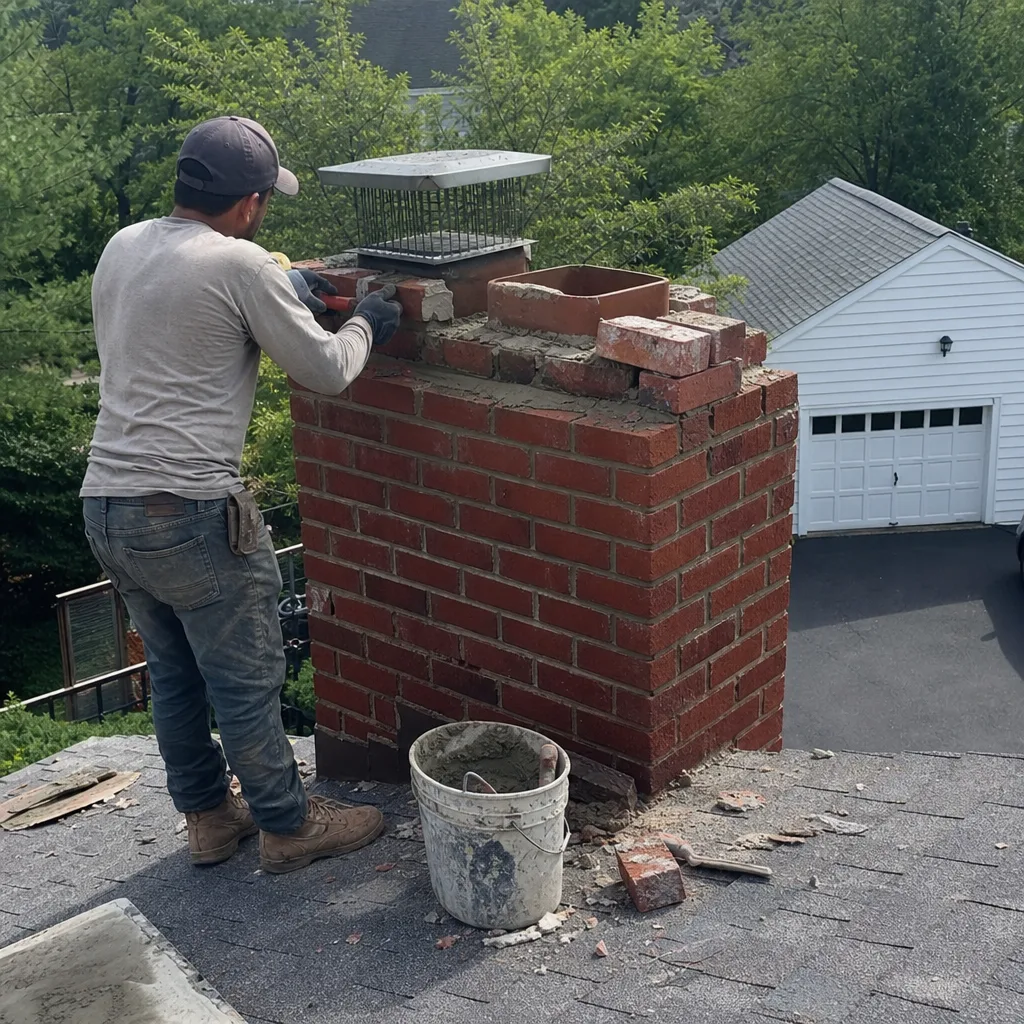
Here’s the entire process, condensed into eight steps. This is the sequence we recommend to every Rockville homeowner who calls asking how to hire a sweep. It works whether you hire us or someone else. It works because it puts scope before vendor.
- Determine the last service date. If the chimney hasn’t been swept or inspected in three years or more, you need a Level 2 inspection, not just a cleaning. If you don’t know the last service date, assume it’s time for a Level 2.
- Ask the four questions. Camera scan? Written price before work? What documentation do I get? Can I verify your license? Ask these before scheduling anything.
- Verify the license and certification. Check the MHIC license number on the Maryland Department of Labor portal. Check the CSIA certification number on the CSIA website. Do this while the company is on the phone, if possible.
- Request the written price, written scope, and written warranty. Before scheduling. Not after the tech arrives. Before.
- Schedule the service. Once you have the written documents, book the appointment. A text confirming the date and time, and a named technician assigned to the job, are both reasonable expectations under the Haven Standard’s “Arrive on schedule” and “Verified crews” clauses.
- Be present during the service. You don’t need to hover, but you should be home. You should see the camera screen. You should hear the creosote classification and the liner condition notes in real time, not read them later.
- Review the documentation before the technician leaves. Photographs, condition notes, readings, written warranty. If something is missing, ask for it on the spot. It is much harder to get documentation after the truck pulls away.
- File the report. Keep the written report with your home records. The next homeowner, the insurance company, and future-you will all want it.
That’s the full sequence. It takes about ninety minutes of your time, spread across a few phone calls and one on-site visit. It protects you from the two most common bad outcomes in this industry: paying for work that wasn’t needed, and being told you need work that no one can verify.
Common Mistakes to Avoid
- Hiring based on price alone. A $99 chimney sweep in Rockville is usually a loss leader designed to get a technician in the door to sell a liner or a rebuild. The $99 sweep becomes a $4,000 “discovery” before the tech leaves. Price matters, but scope matters more.
- Accepting a verbal quote as binding. If it’s not in writing, it didn’t happen. Verbal quotes evaporate the moment work begins. Always request the written price, written scope, and written warranty before scheduling.
- Skipping the license verification. Maryland’s MHIC license exists to protect you, and the guaranty fund provides a real remedy if a licensed contractor fails you. Hiring an unlicensed sweep forfeits that protection. The two-minute lookup is worth it.
- Assuming all inspections are the same. A Level 1 visual inspection and a Level 2 camera scan are not equivalent. Forty percent of CSIA companies default to Level 1. Ask for the method by name.
- Not being home during the service. You cannot see the camera footage if you’re not there. You cannot ask about the spalling brick or the Class II creosote in real time. Being present is part of the inspection.
- Accepting a recommendation without camera evidence. If a contractor tells you that you need a $6,000 liner replacement, ask to see the camera footage that supports it. If the footage doesn’t exist or isn’t shown, get a second opinion. Our Free Second Opinion on any written estimate exists precisely for this situation.
- Deferring maintenance because “the fireplace works fine.” A chimney can be unsafe without being visibly broken. Creosote buildup is invisible from the hearth. Crown cracks are invisible from the ground. The fact that the fire lights doesn’t mean the flue is safe. In Rockville’s freeze-thaw climate, deferral is how small cracks become full rebuilds.
When to Call a Professional
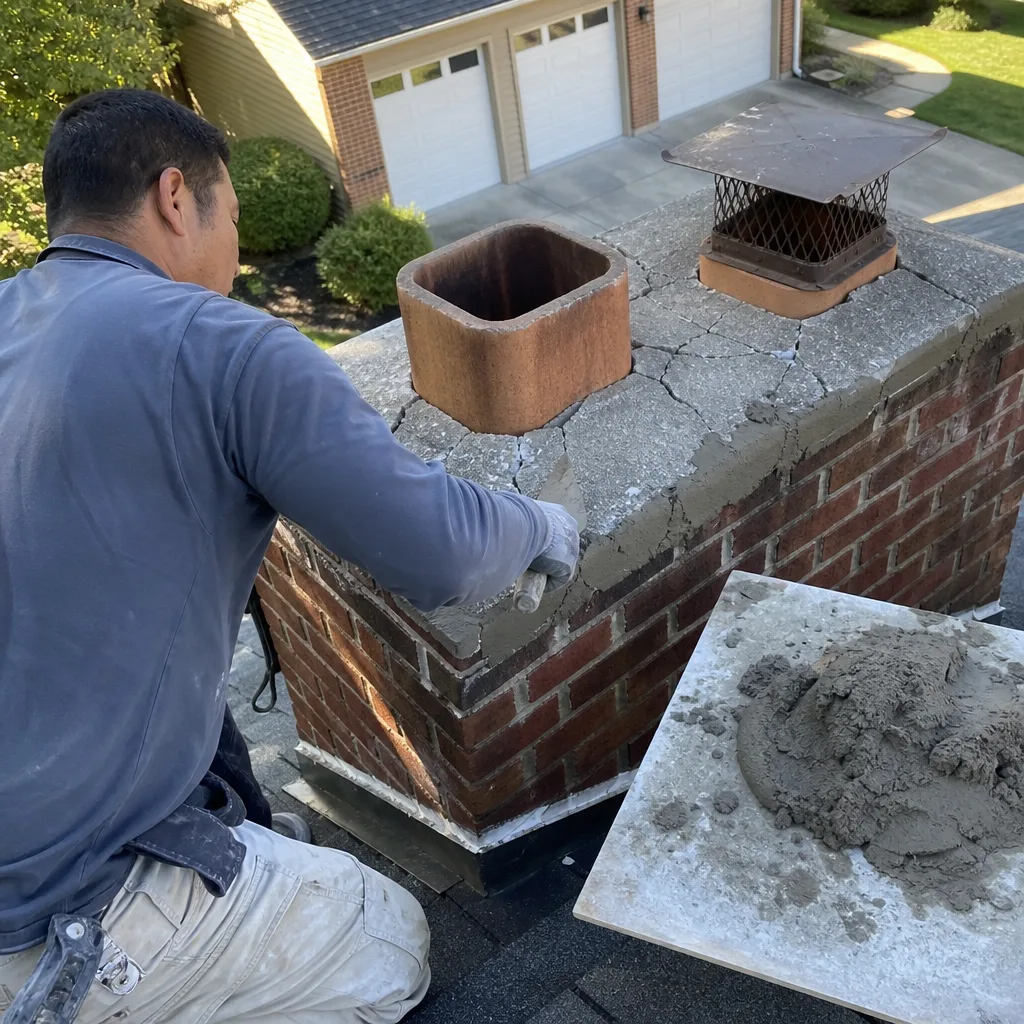
Call a professional chimney contractor when any of these conditions occur: you smell smoke or a campfire odor in the house when the fireplace is not in use; you see visible creosote buildup, which looks like dark, shiny, or crusty residue inside the firebox; you notice water stains on the ceiling or walls near the chimney; you hear animals or birds inside the chimney; you see crumbling or flaking brick on the exterior of the chimney; or it has been three or more years since the last inspection. None of these conditions resolve on their own. All of them are cheaper to address early. If you’re in Rockville and need a Level 2 inspection, Level Two Chimney Rockville offers free estimates by phone at (571) 376-7052.
Frequently Asked Questions
A straightforward chimney cleaning and Level 2 inspection in Rockville typically runs between $250 and $450 depending on the flue type, chimney height, and creosote classification. See our chimney cleaning cost breakdown: the Rockville homeowner’s reference for 2026 for detailed pricing factors. Repairs, caps, liners, and rebuilds are quoted separately as line items, in writing, after the inspection. Call (571) 376-7052 for a written price specific to your chimney.
A Level 1 inspection is a visual check of the accessible portions of the chimney, interior and exterior, with no camera and no removal of components. A Level 2 inspection, per NFPA 211, adds a video camera scan of the flue interior, plus inspection of accessible attics, crawl spaces, and the exterior structure. A Level 2 is recommended when the home is being sold, when the chimney has not been serviced in three years, or after any event like a chimney fire or earthquake. In Rockville, where most homes predate 2000, we recommend Level 2 as the default.
Not necessarily, and you should never accept a liner recommendation without seeing the camera footage that supports it. A cracked clay tile, a deteriorated mortar joint, or a corroded metal liner can require replacement, but the evidence should be visible on the camera scan, in dated photographs, and in the written report. If a contractor recommends a liner replacement without showing you the camera evidence, get a second opinion. We offer a Free Second Opinion on any written estimate for exactly this reason. Call (571) 376-7052 and bring us the competitor’s quote.
The National Fire Protection Association recommends a chimney be swept when there is 1/8 inch or more of creosote buildup, or annually for wood-burning fireplaces that see regular use. In practice, most Rockville homeowners with occasional fireplace use can go two to three years between cleanings, but the only way to know is to inspect. A Level 2 camera scan will show you the actual creosote classification, and the written report will tell you whether cleaning is needed now or can wait.
Creosote builds up inside the flue over time. Class I creosote is light and dusty; Class II is flaky and crusty; Class III is glazed and tarry. Class III creosote is a fuel source, and when it ignites, the result is a chimney fire, which can crack the flue liner, damage the masonry, and in serious cases spread to the house. Beyond fire risk, water intrusion through a cracked crown or missing cap causes spalling brick and structural damage. The inspection tells you where you stand. The cleaning addresses the creosote. Skipping both is how small maintenance becomes a rebuild.
Yes. Level Two Chimney Rockville operates under the Haven Standard, with background-checked, uniformed technicians and license information displayed on every page. We are independently owned and operated, not a franchise. Every job since 2009 has included a written price before work starts, a documented photo record on completion, and the 365-Day Done Right Promise: if it’s not done right, we make it right. Call (571) 376-7052 to schedule.
The Bottom Line
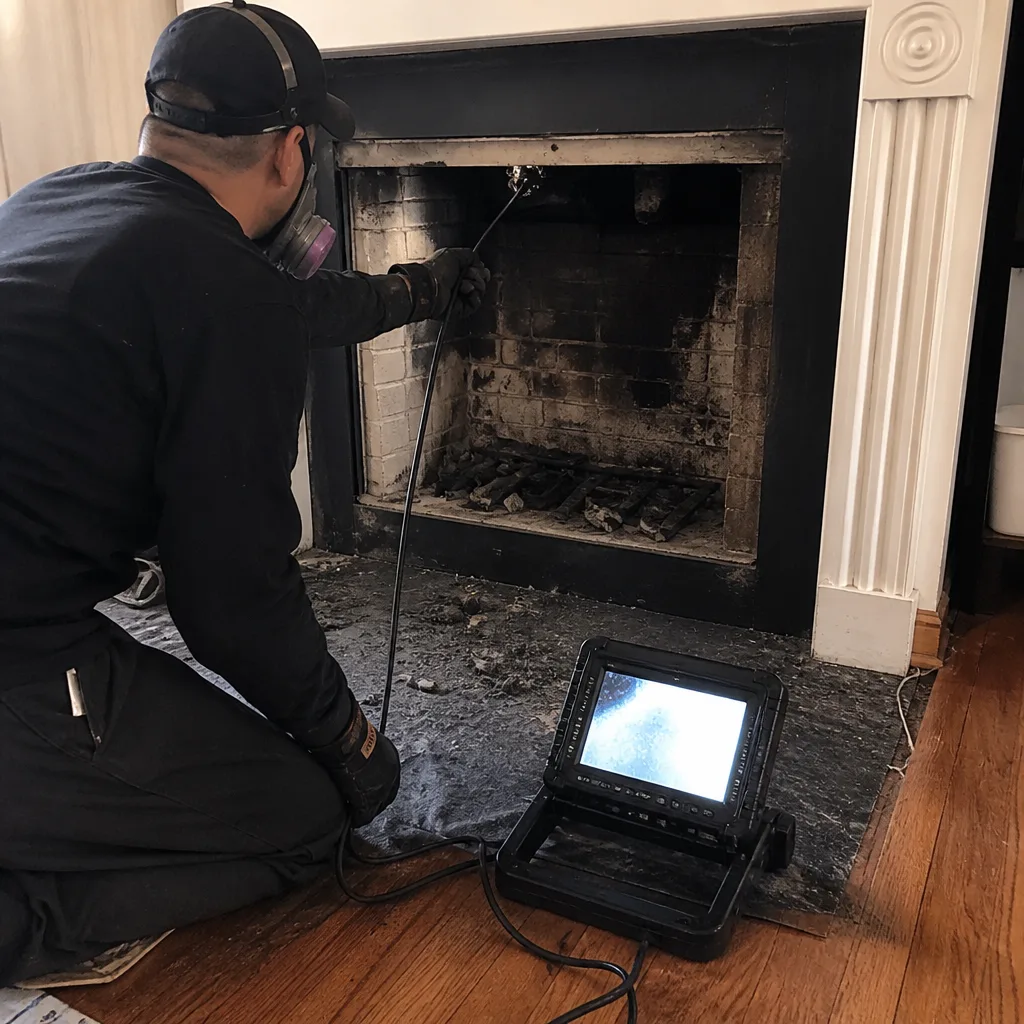
Hiring a chimney sweep in Rockville is not hard, but it does require a specific sequence. Scope first, vendor second. Ask the four questions. Verify the license through Maryland’s public portal and the certification through CSIA. Get the written price, written scope, and written warranty before anyone schedules the truck. Read the post-service report for the five elements that make it useful. And never accept a recommendation without camera evidence you can see for yourself. The right company will show you the footage, name the creosote class, write down the price, and hand you the documentation when the job is done. That’s the standard we’ve worked to since 2009, and it’s the standard any Rockville homeowner should expect to see in writing.
Written by Corrine Halstead, Owner at Level Two Chimney Rockville, serving Rockville since 2009.