
Last updated September 20, 2026
Level 1 sweep and inspection to the NFPA 211 annual standard - flue, crown, cap, and flashing checked and photographed
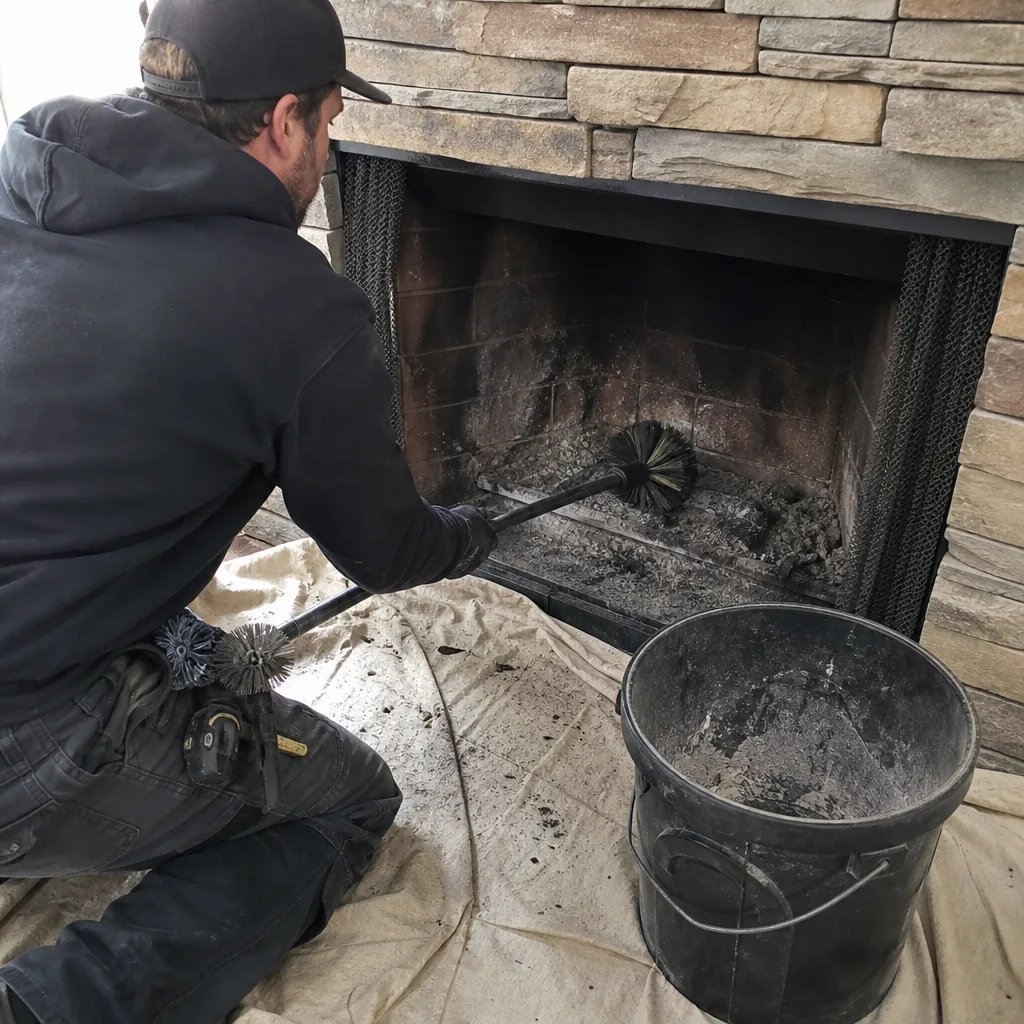
Chimney sweep logs do not sweep chimneys. They loosen some creosote - which then falls where a brush and vacuum still have to collect it.
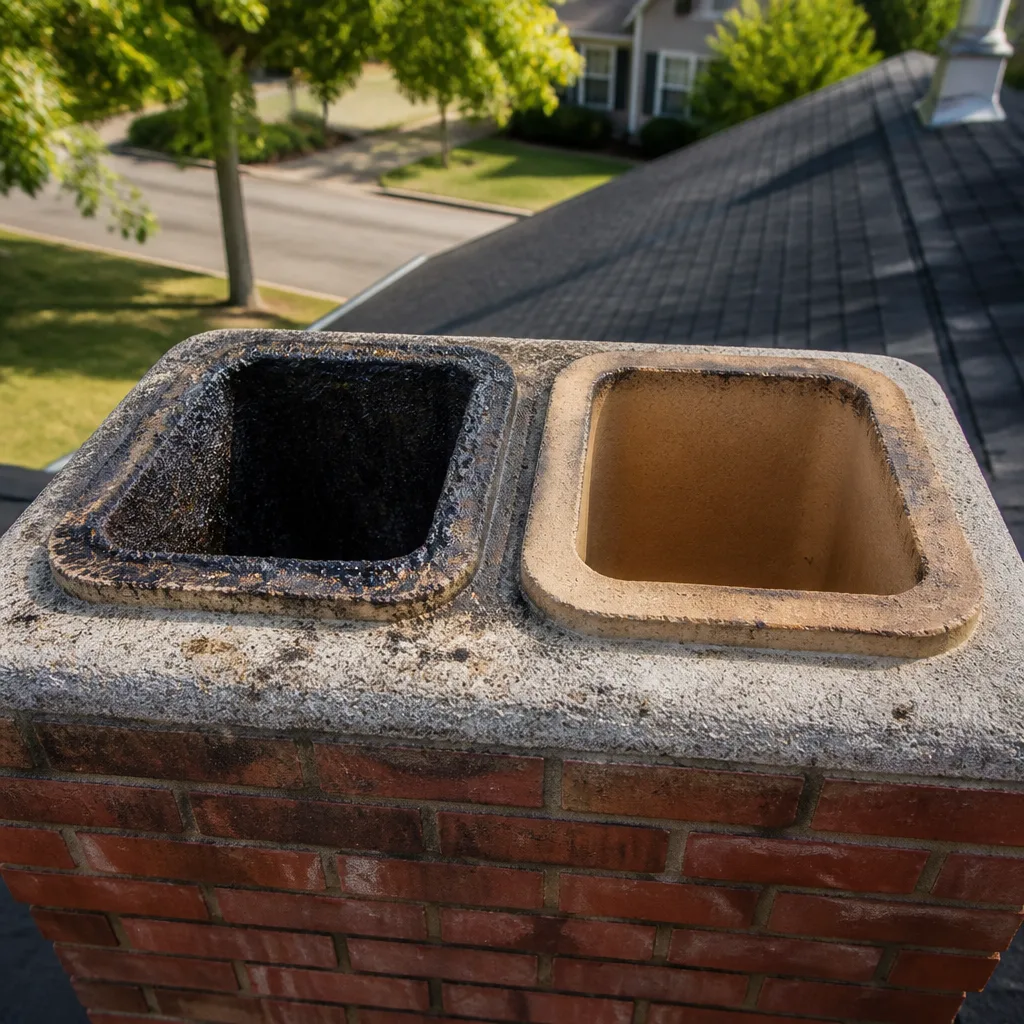
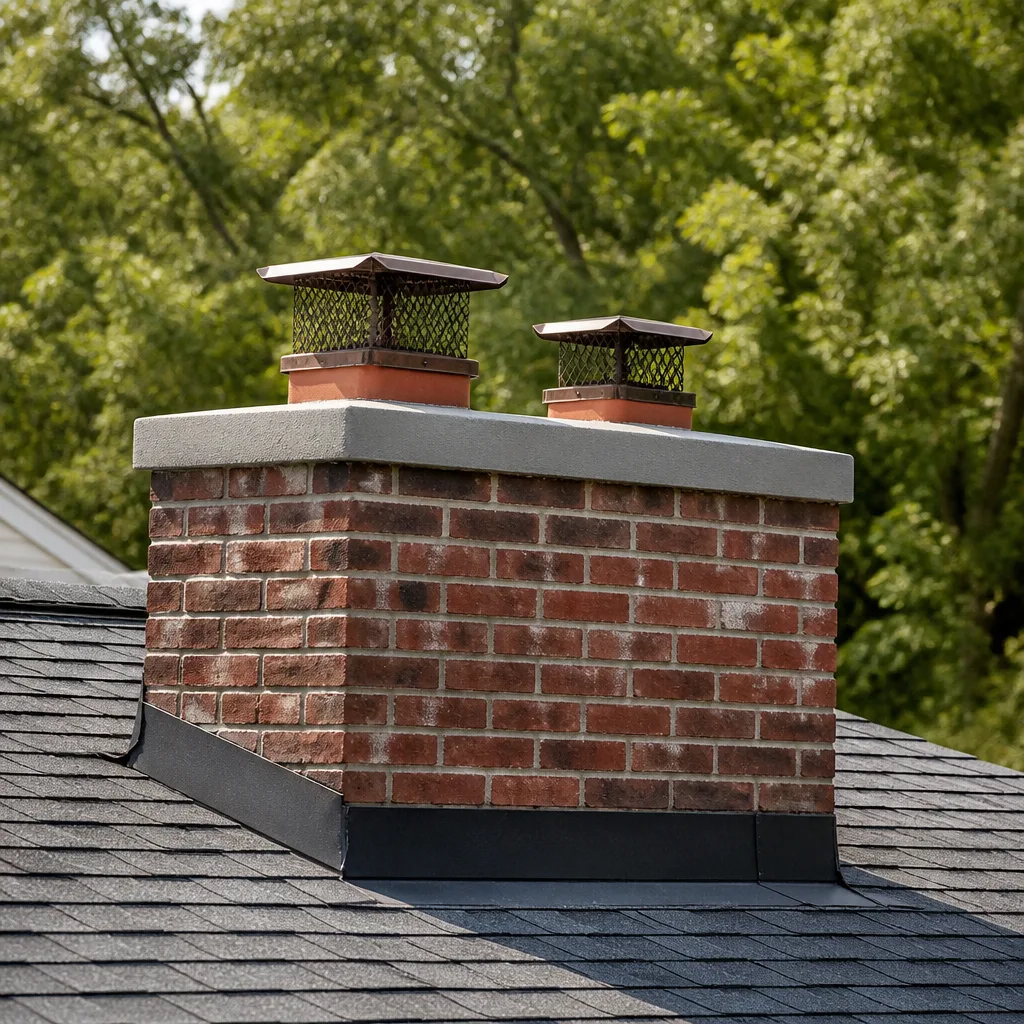
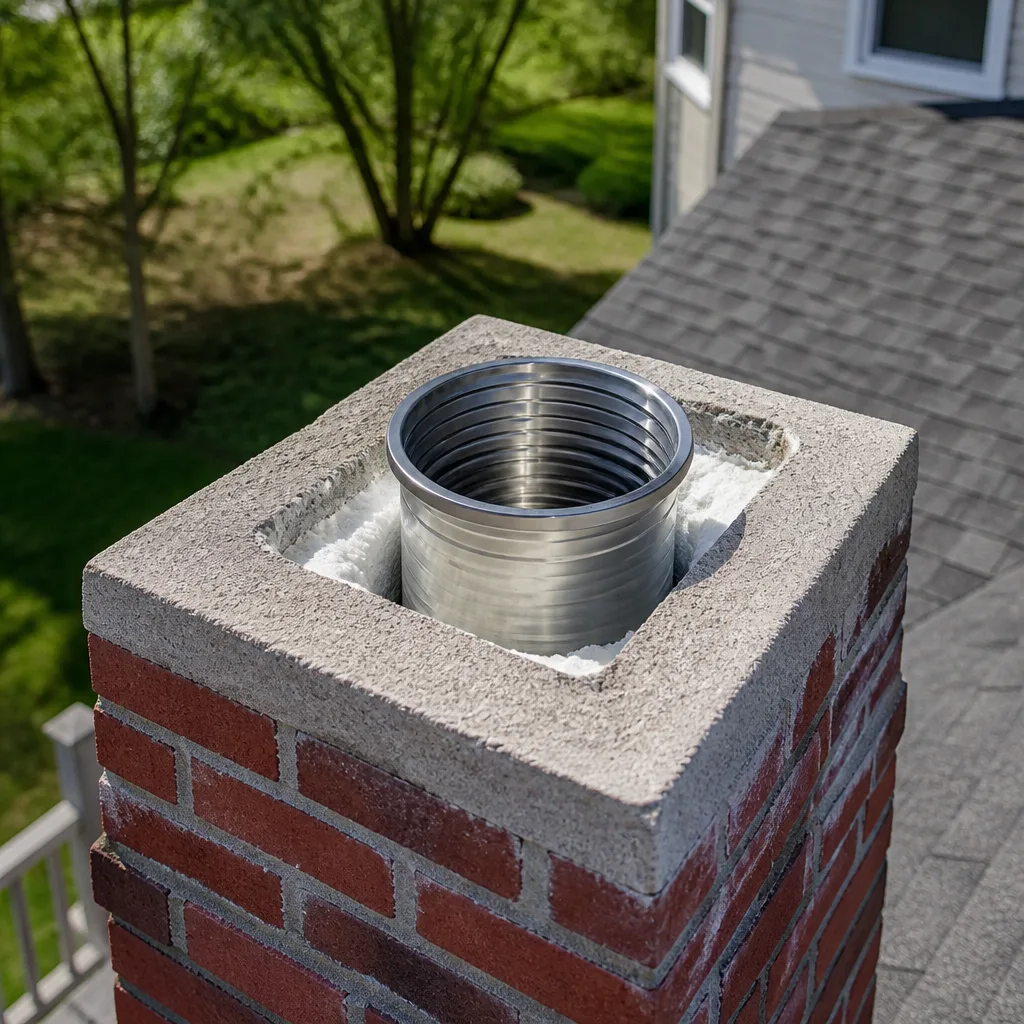
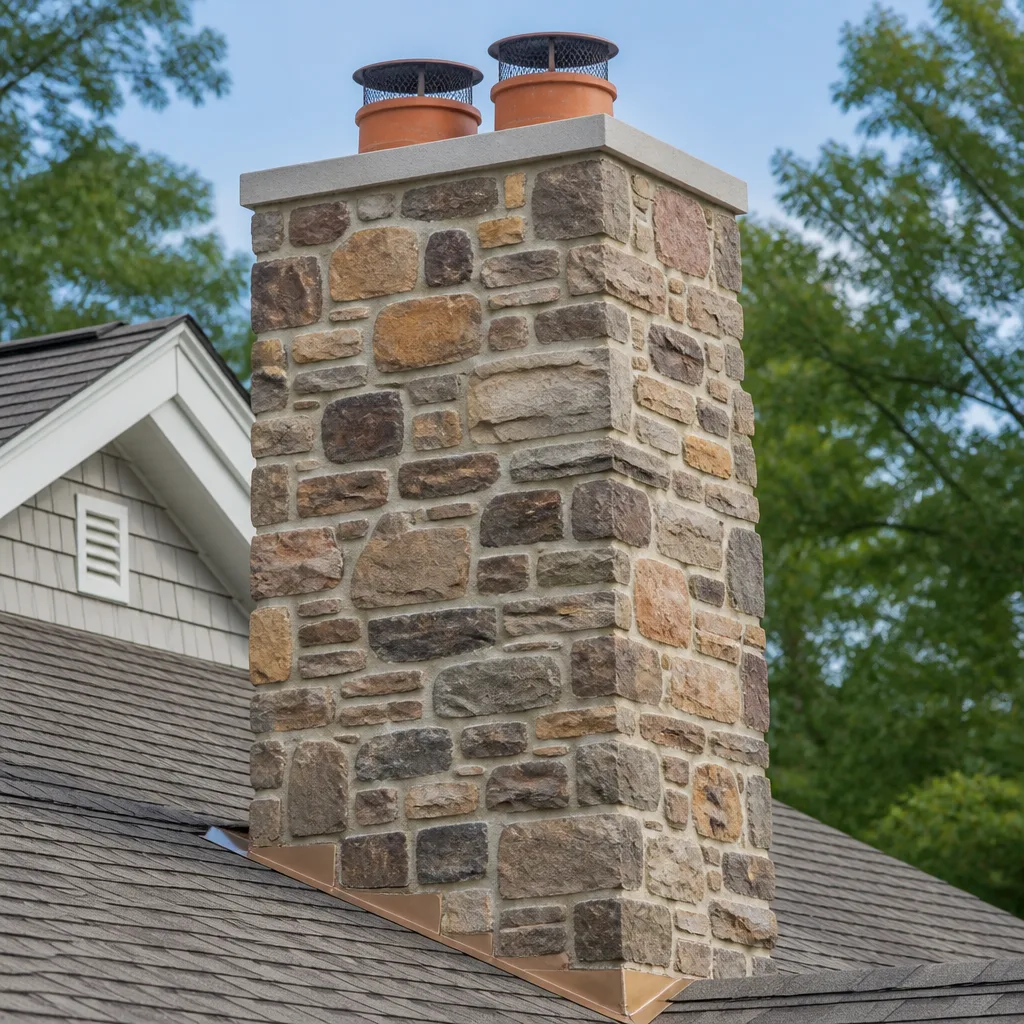
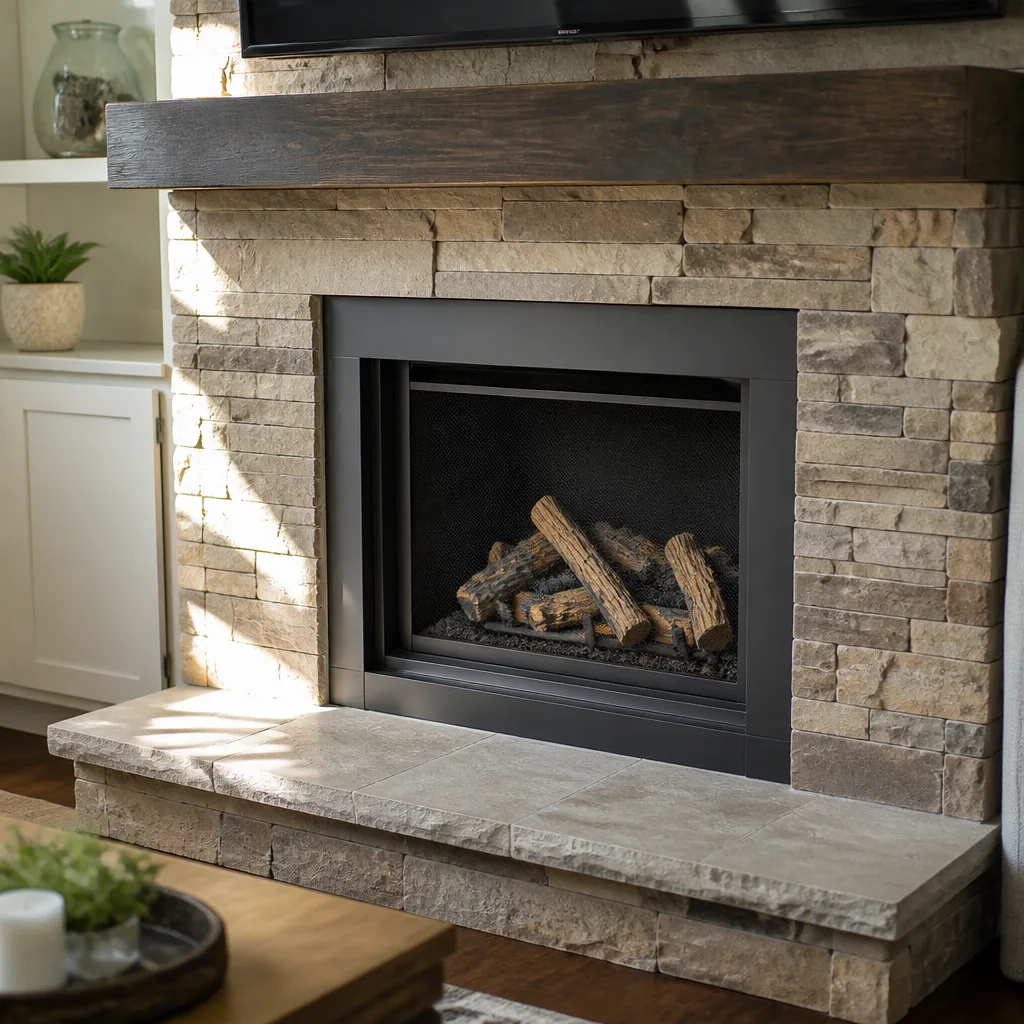
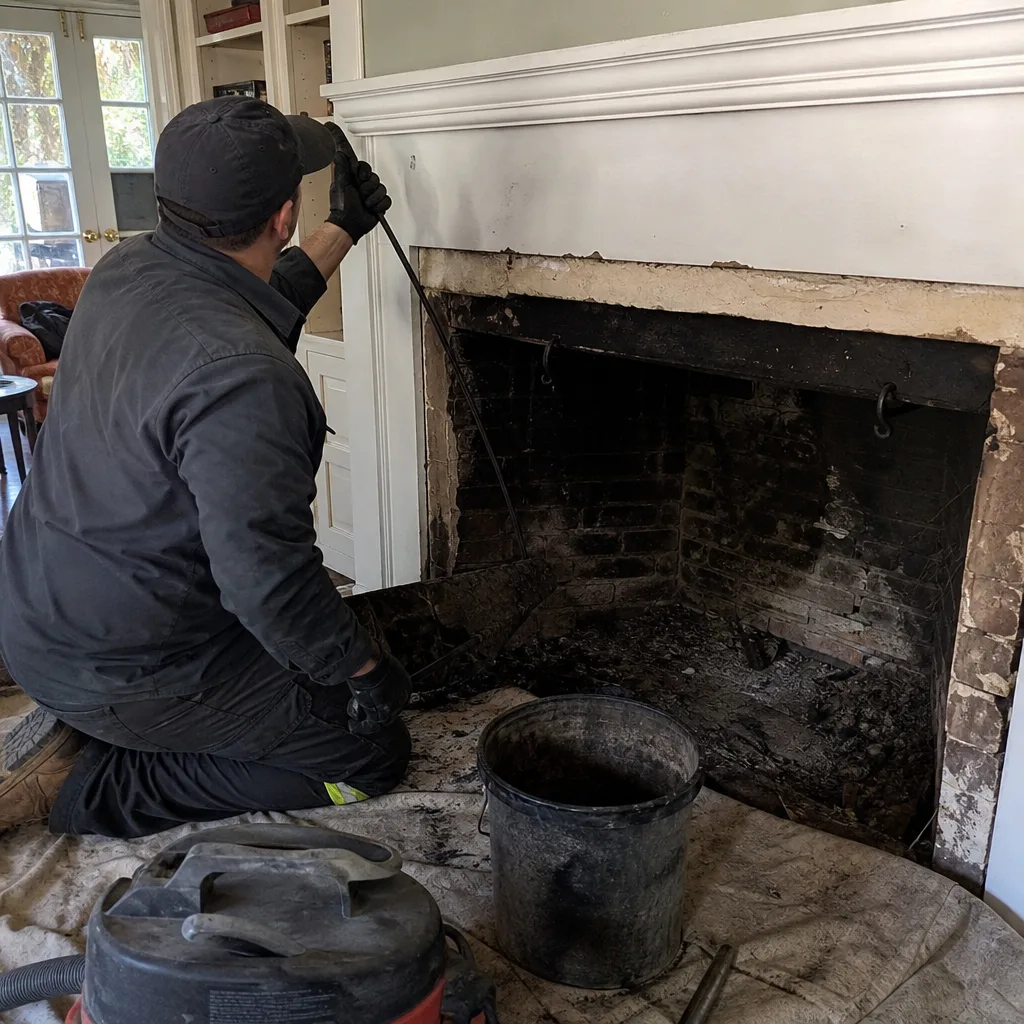 Before
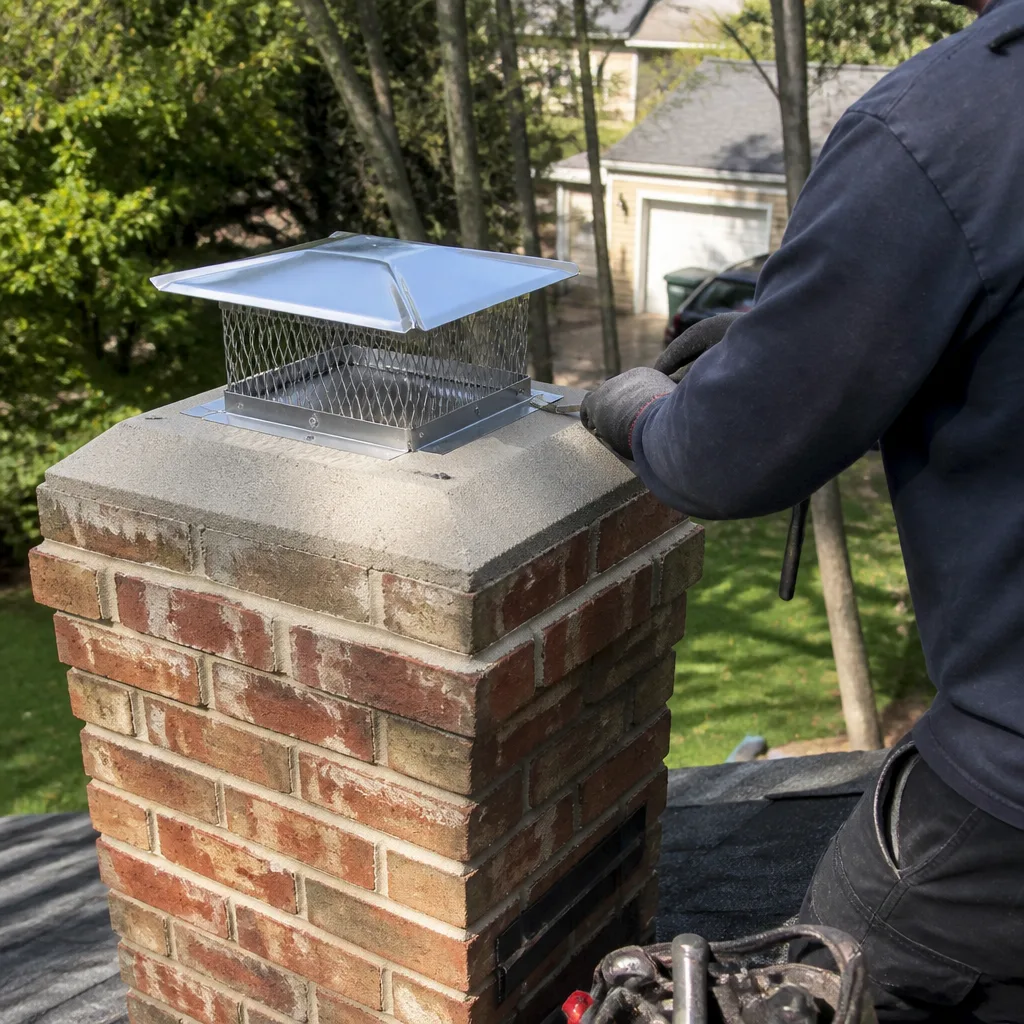 After
After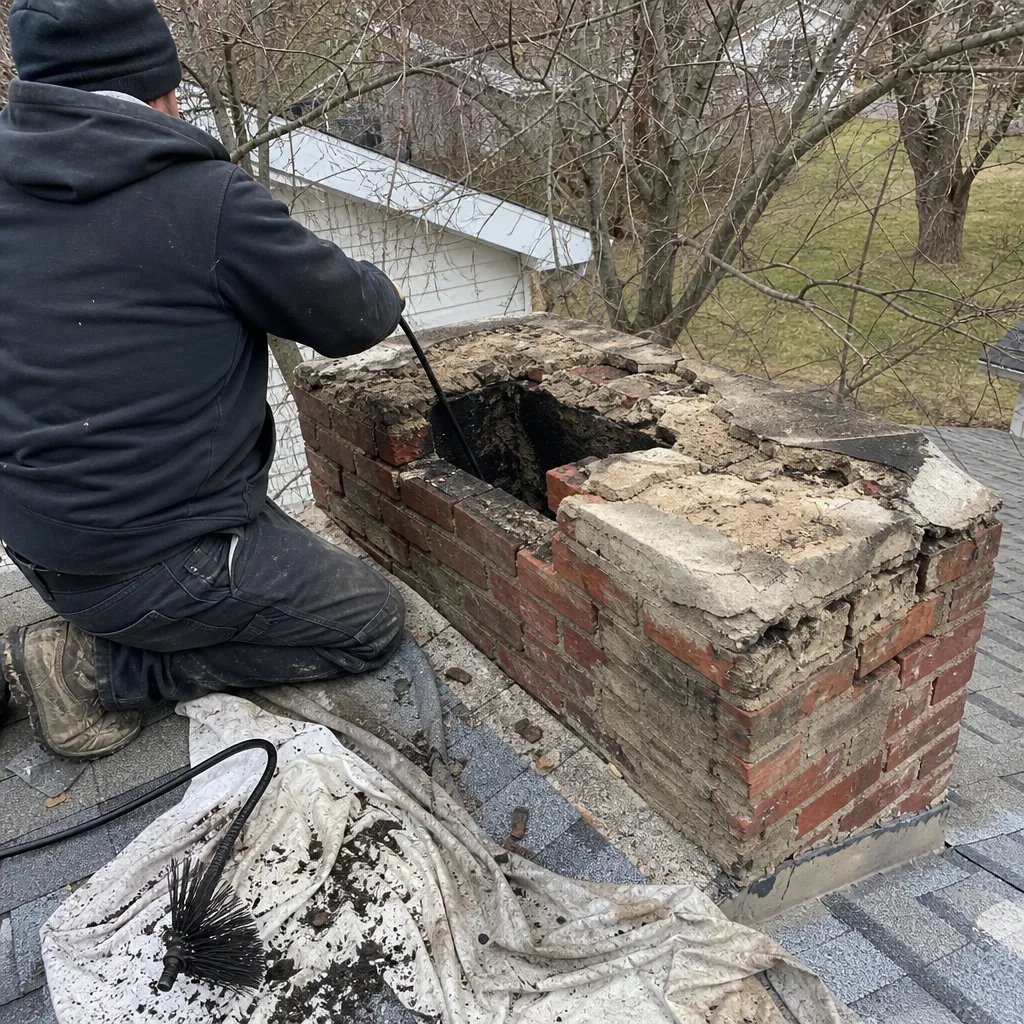 Before
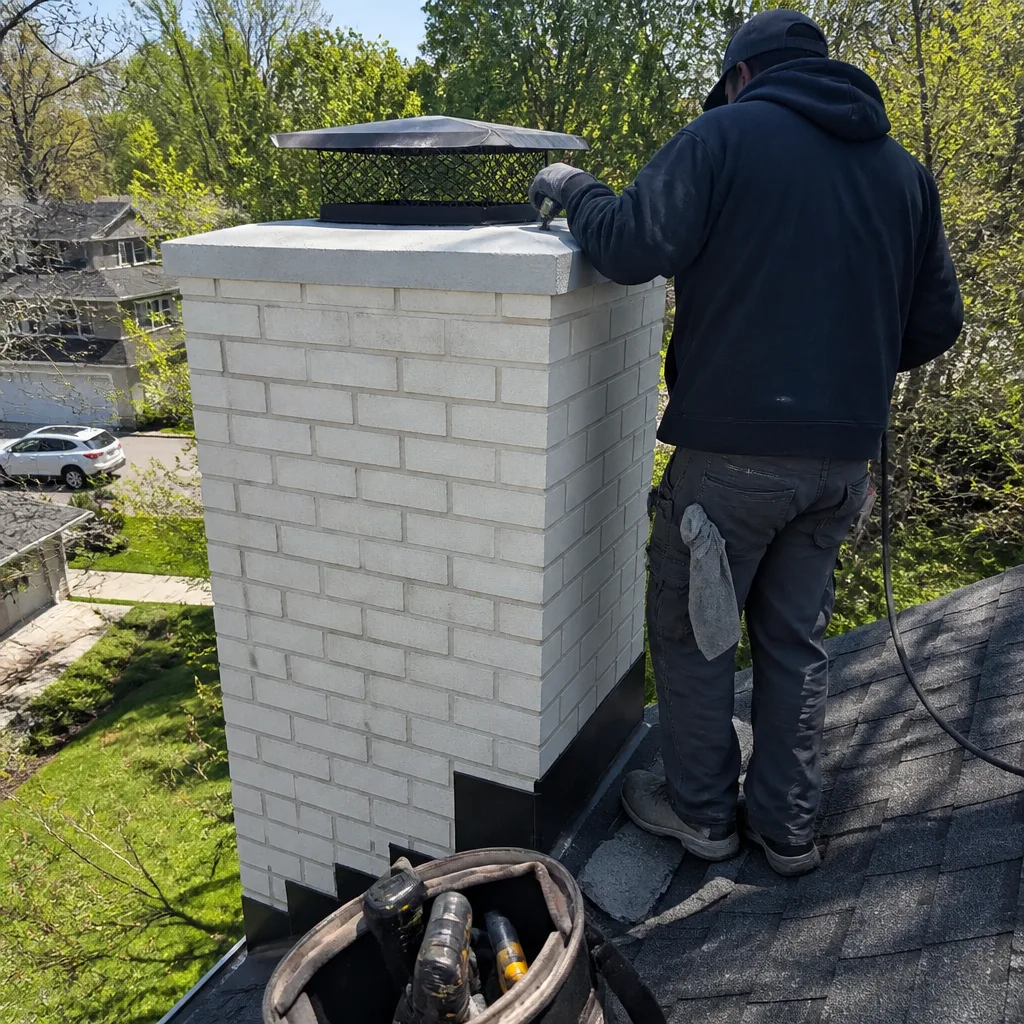 After
After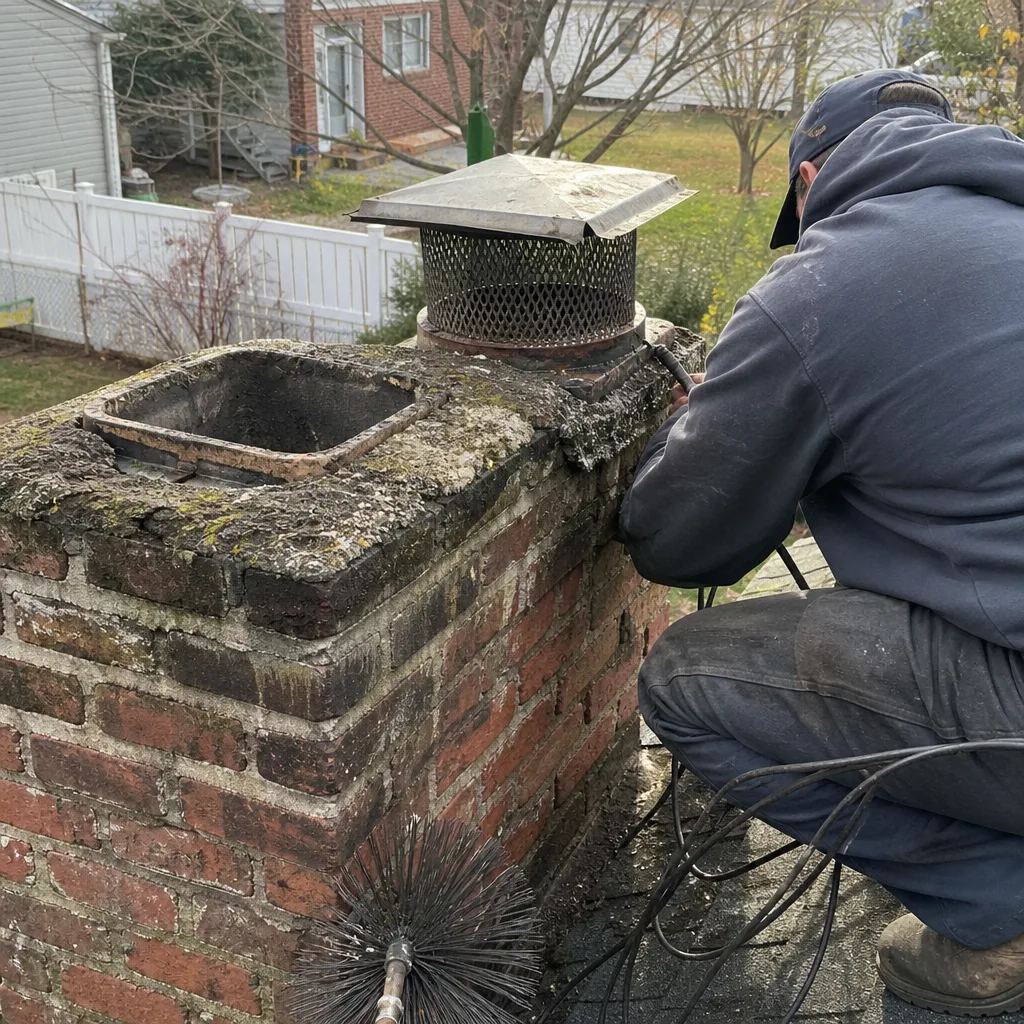 Before
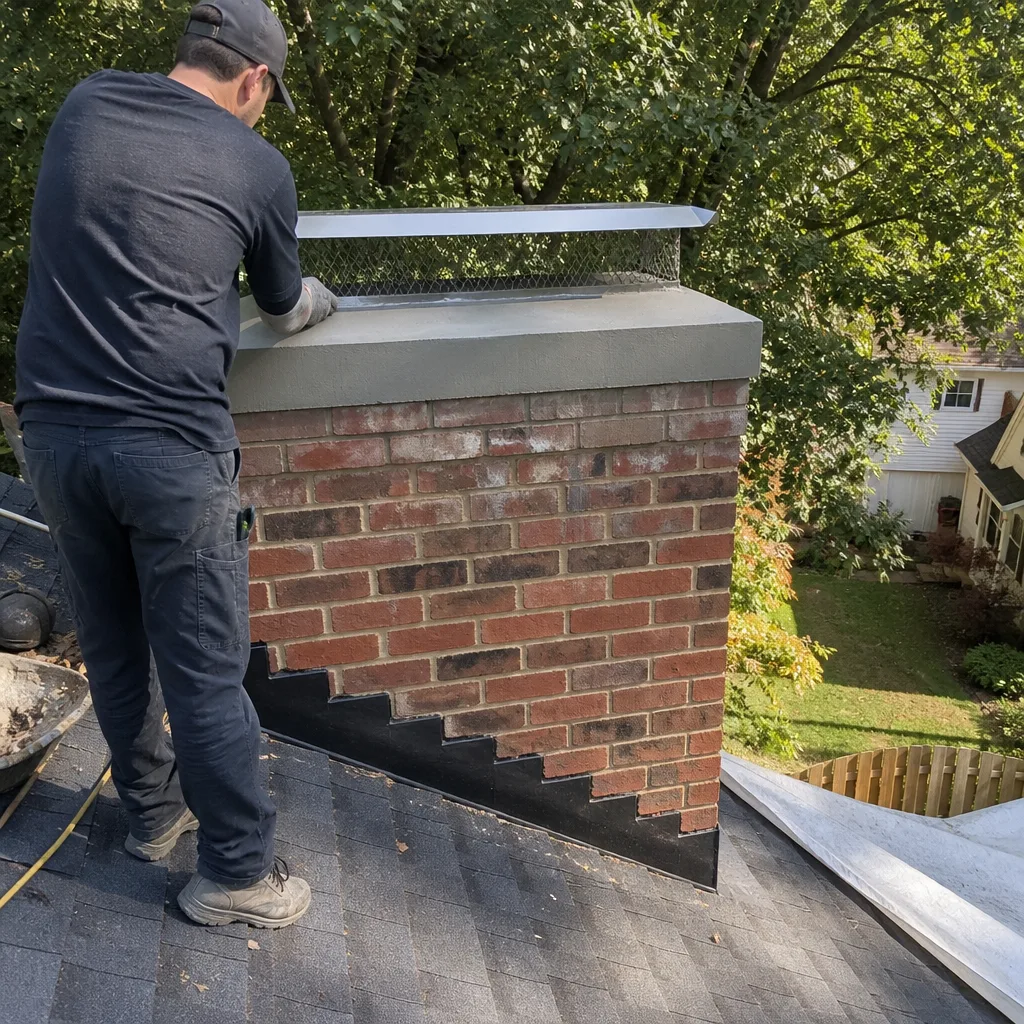 After
AfterSeasonal Chimney Cleaning Care for Rockville: Year-Round Homeowner’s Guide
More Rockville chimney liner damage is discovered in late April than in January. That is not a typo, and it is not a scheduling quirk. It happens because spring is when a camera scan finally shows what the burn season actually did to the flue, and by then most homeowners have already paid for a fall sweep and stopped thinking about the chimney entirely. Rockville’s four-season climate does not produce one chimney risk window. It produces four distinct ones, and the homeowners who treat chimney care as a once-a-year task are missing three of them. This guide maps what happens to a flue in each season, assigns the right action to the right month, and shows you how to build a 12-month chimney calendar around Rockville weather, not generic seasonal advice.
Quick Answer
Seasonal chimney cleaning in Rockville means four separate checkpoints, not one. In fall, have a chimney cleaning and camera scan in Rockville before the first fire, not after. In winter, watch for smoke backing up or a campfire smell indoors, which signal a mid-season cleaning. In spring, document the flue condition photographically while freeze-thaw damage is still visible. In summer, install or repair the cap and crown before heat expands any cracked mortar. Budget $180 to $340 for a standard sweep and inspection in Rockville, with repairs quoted separately in writing.
Table of Contents
- Fall (September-November): The Pre-Season Camera Scan Window
- Winter (December-February): Active Burn-Season Monitoring
- Spring (March-May): Post-Season Assessment and Freeze-Thaw Damage
- Summer (June-August): Animal Intrusion and Cap/Crown Repair Timing
- How to Build a 12-Month Chimney Calendar for Rockville
- What Seasonal Chimney Care Costs in Rockville
- Common Mistakes to Avoid
- When to Call a Professional
- Frequently Asked Questions
- The Bottom Line
BeforeAfterFall (September-November): The Pre-Season Camera Scan Window
Fall is the season every Rockville homeowner already knows about. It is also the season most people get the sequence backwards. The common approach is to light the first fire on a cold October night, discover the smell is wrong or the smoke is sluggish, and then schedule a sweep. By that point, the homeowner has already burned once, possibly twice, on a flue that has not been inspected in eight months. The correct approach is simpler and safer: have the chimney swept and camera-scanned before the first fire of the season. In Rockville, that window runs from early September through mid-November, and the smart homeowners are the ones who book in September before the rush that always follows the first cold snap.
Why does the camera scan matter more in fall than in any other season? Because the scan is what actually tells you what happened to the flue since the last burn. A standard sweep removes the creosote. The camera shows whether the flue liner has cracked, whether the smoke chamber has a gap that has been quietly getting worse, whether last winter’s freeze-thaw cycles did any masonry damage at the crown. That information changes what happens next. Clause 4 of the Haven Standard requires a photo record on every job, which means after a Level Two Chimney Rockville visit you walk away with images of your flue condition, not someone’s verbal description of it. That document becomes the baseline for every future season. Without it, each fall is a guess. With it, each fall is a comparison: here is the flue in 2024, here it is in 2025, here is what changed.
Fall in Rockville is also when the animal intrusion problem becomes visible. Squirrels and raccoons that nested in the flue during spring and summer have had months to build nests, and those nests become a fire hazard and a draft obstruction the moment the weather turns. A fall camera scan catches this before you light a fire under it. If the cap is missing or the mesh is torn, the fix is a simple cap replacement, not an emergency sweep after a smoky evening. The sequence matters: cap first, then scan, then burn. Not the other way around.
Winter (December-February): Active Burn-Season Monitoring
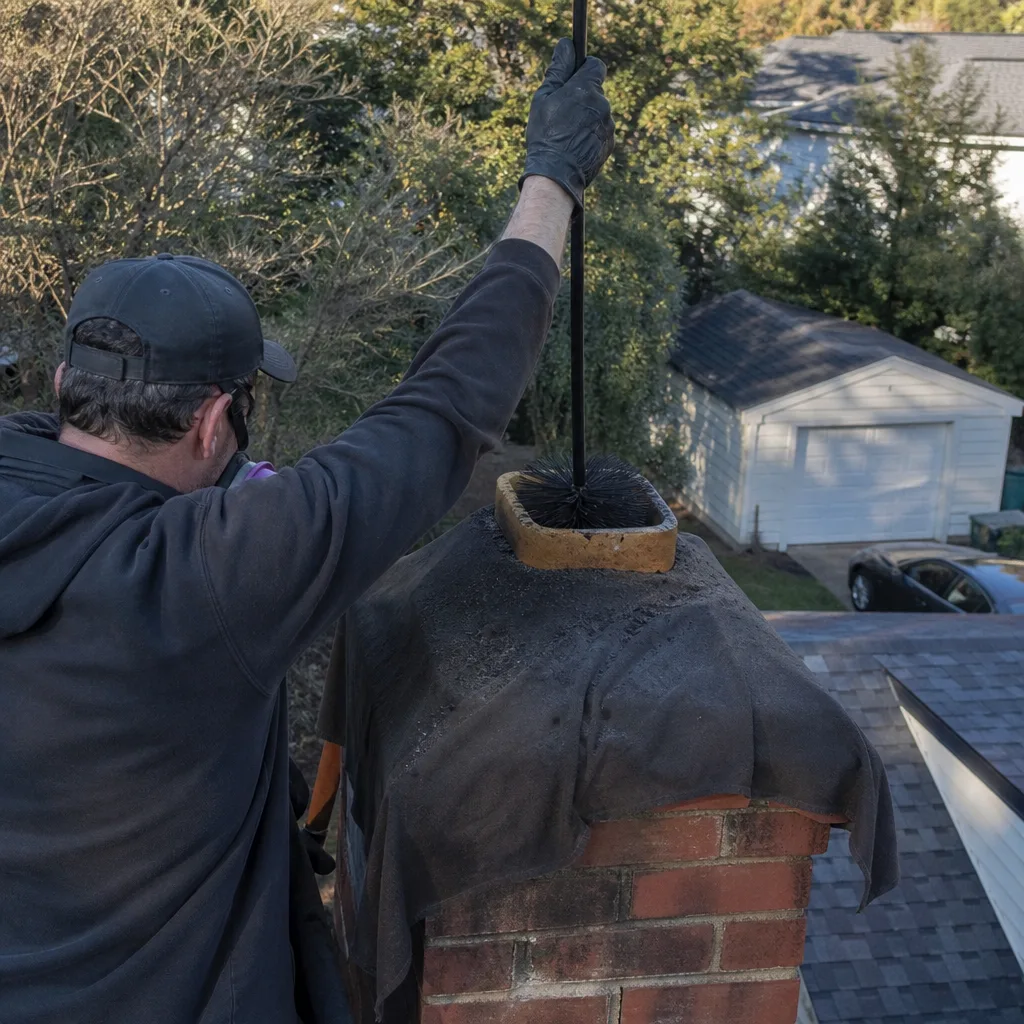
Winter is not the season for a scheduled sweep. It is the season for paying attention. If you burn wood regularly between December and February in Rockville, you are producing creosote faster than at any other time of year, especially if you are burning oak or hickory that has not fully seasoned. The National Fire Protection Association recommends a sweep once creosote reaches 1/8 inch of buildup, and in the middle of a heavy burn season that threshold can be reached in six weeks. The question is not whether you need another fall sweep. The question is whether your current accumulation is safe to keep burning on.
The signals that indicate a mid-season cleaning are specific and observable. Smoke that drifts back into the room when the fire is lit, a smell like a campfire or asphalt inside the house even when there is no fire burning, a dark, crusty glaze visible on the firebox walls, or a fire that seems to burn slower and hotter than it should. Any one of these means the flue is narrowing and draft is falling. In a worst case, the creosote catches fire, and a chimney fire in a Rockville home in January is a masonry-rupturing event, not a contained one. The flue liner is not designed to hold a chimney fire. It is designed to contain the normal exhaust of a normal fire, and when creosote ignites, the temperatures can exceed 2,000 degrees Fahrenheit, which is enough to crack a clay liner in a dozen places.
Our winter recommendation for Rockville homeowners who burn more than twice a week is simple and boring: keep a log of how many fires you burn, and if you pass roughly 40 fires since the last sweep, schedule a mid-season inspection. Do not wait for the smell. The smell is the late signal. The early signal is a careful look at the firebox and the damper with a flashlight once a month. Creosote is black and crusty or shiny and tar-like, and if you can see it building on the damper plate, it is building in the flue above it. If you are unsure, a chimney repair inspection in Rockville can tell you in 20 minutes whether you are safe to keep burning. Call us while the fire is out and the flue is cool, and we will tell you what we see, not what we want to sell you.
Spring (March-May): Post-Season Assessment and Freeze-Thaw Damage
This is the season the industry does not talk about enough, and it is the one where Rockville homeowners lose the most money. Spring is when the damage from the burn season becomes visible. The flue liner, after four months of heating and cooling cycles, has been expanding and contracting through a range of hundreds of degrees. If there was a hairline crack in October, it is a wider crack by March. If the crown had a small spall in September, winter moisture froze inside it and pried it open. And because spring is when the air temperature crosses the freezing line repeatedly overnight, the freeze-thaw cycle is still active into April. Water that entered the masonry in February is still doing damage in March, and the evidence is in front of you: efflorescence on the exterior brick, white mineral stains, damp spots on the ceiling near the chimney chase, a musty smell in the firebox after a rain.
Spring is also the best time to document the flue condition photographically, for one simple reason: the damage is as visible as it will ever be right now. A camera scan in March shows you exactly what the winter did. A camera scan in September shows you the same cracks, but by then you have lost six months of planning time, and if the liner needs replacement, you have lost the off-season window when masonry and liner work is fastest and least disruptive. More Rockville chimney liner damage is discovered in late April than in January, and the homeowners who schedule a spring camera scan are the ones who get the liner replaced in May instead of discovering the problem in November with a fireplace they cannot safely use.
The spring checklist for a Rockville chimney is four items. First, have the flue camera-scanned and the condition documented. Second, check the exterior crown for new cracks or spalling. Third, verify that the damper still opens and closes cleanly. Fourth, look for any signs of water staining on the ceiling or walls near the chimney chase. If any of the four items shows a problem, address it now, while the weather is mild and the materials are easier to work with. If they all come back clean, you have a documented baseline for the fall, and the fall appointment becomes a 45-minute sweep instead of a discovery process.
Summer (June-August): Animal Intrusion and Cap/Crown Repair Timing
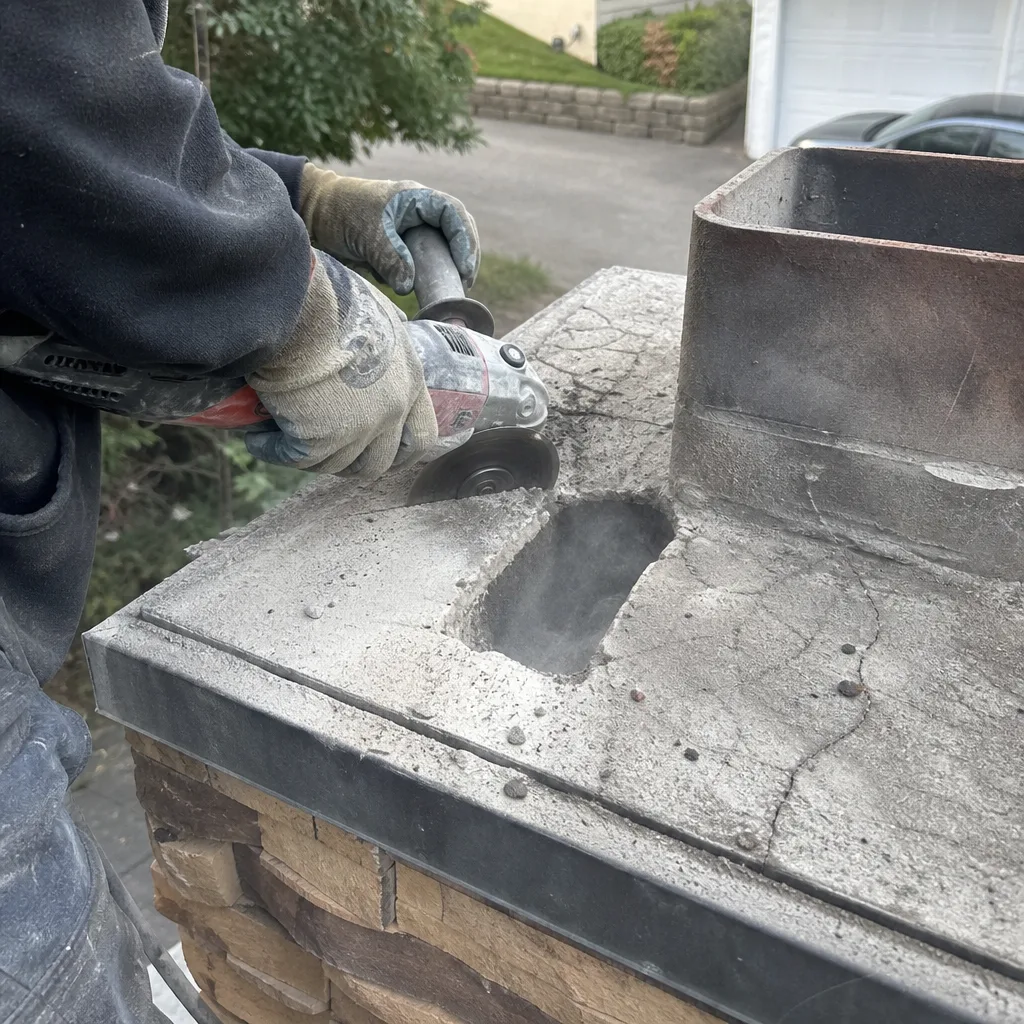
Summer in Rockville is when the chimney is most likely to be ignored, and when it is most vulnerable to two things: animals and heat-related masonry movement. The wooded corridors that run through Rockville, particularly the neighborhoods along Rock Creek and the stretches near Woodley Gardens and Twinbrook, produce a steady supply of squirrels and raccoons looking for a safe nesting site. A chimney without a properly installed cap, or with a cap whose mesh has rusted through, is a vertical tunnel with a ready-made roof. We have removed nests built from twigs, leaves, insulation, and in one memorable case a homeowner’s missing garden gloves, from flues that had been unused for a single summer. The nest blocks the flue, the blockage forces exhaust back into the house when the first fire is lit, and the homeowner is left with a carbon monoxide risk they did not see coming.
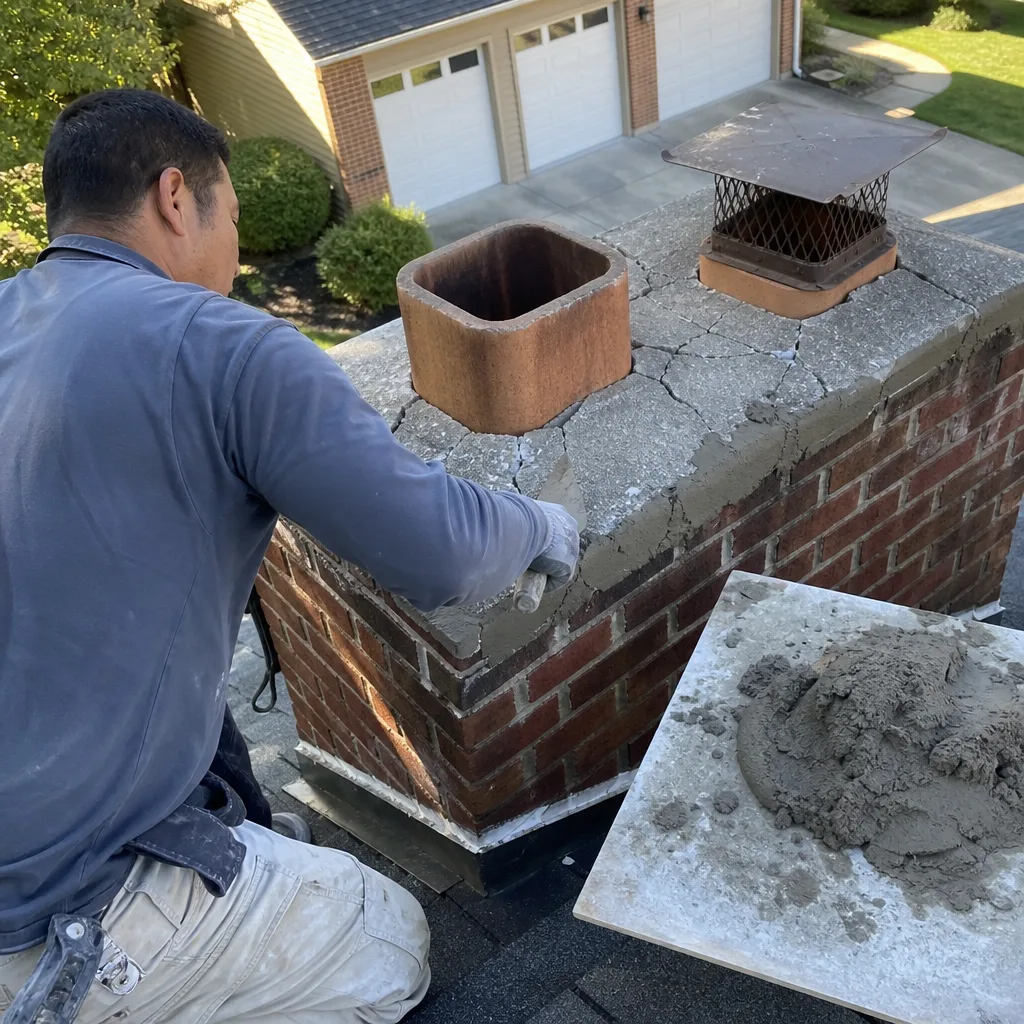
The summer fix is straightforward. Install or replace the cap now, while the animals are active and the problem is current. A cap with a stainless steel mesh and a properly fitted crown keeps out rain, animals, and debris, and it costs far less than the animal removal and flue cleaning that follows an intrusion. If the crown itself is cracked, summer is the time for crown repair, not fall. Here is why: heat causes mortar and concrete to move. In June, a cracked crown is a cracked crown. By September, after a full Rockville summer of 90-degree afternoons and 70-degree nights, the thermal cycling has widened the crack, and the first fall rain sends water into the masonry. Fixing the crown in summer stops the water before the freeze-thaw cycle of winter has a chance to exploit it. Materials like Gelco crown coat and Copperfield caps hold up well to Rockville’s specific climate profile, and a documented photo record of the repair gives you a written, visual baseline for future seasons.
Summer is also the quiet season for scheduling. Chimney companies in Rockville are busiest from September through January. If you need a fireplace service in Rockville, whether it is a damper repair, a firebox repointing, or a full Level Two Chimney Rockville home inspection, June through August is when you will get the fastest appointment and the most flexible scheduling. The work is the same quality. The calendar is simply empty, and that means less waiting and less pressure on everyone.
How to Build a 12-Month Chimney Calendar for Rockville
A seasonal chimney calendar for Rockville should be built around the city’s actual weather patterns, not a generic four-season template. Rockville gets an average of 40 inches of rain per year, with peak rainfall in May and September. It sees freeze-thaw cycles primarily between November and March. The first sustained cold snap usually arrives in early November, and the last frost is typically in late April. These weather triggers, not the calendar itself, are what should govern your chimney care schedule.
- September, first week: Book your pre-season sweep and camera scan. This is the single highest-value appointment of the year. Write down the flue condition in your own words and keep the photo record.
- October, first burn: Before lighting, verify the damper is fully open and do a quick visual check of the firebox. You already had the sweep. This is just confirmation.
- November through February: Keep a fire log. If you pass 40 fires since the last sweep, schedule a mid-season inspection. Watch for smoke, odor, or a damper that feels sticky with creosote.
- March, first week: Inspect the exterior brick for efflorescence, staining, or new cracks. Spring rain on damaged masonry is how interior water damage starts.
- April: Schedule the post-season camera scan. This is the appointment that catches winter’s damage while it is still fresh and while the off-season repair window is open.
- May through August: Confirm the cap is intact and the mesh is not rusted. Watch for animal activity near the chimney chase. If the crown shows any cracks, repair it now.
- July or August: If any repair was documented in spring, this is the time to schedule it. The crews are available, the materials are in stock, and the work is done before the fall rush.
This calendar requires roughly four points of contact with your chimney per year: one pre-season sweep, one mid-season checkup if you burn heavily, one post-season camera scan, and one cap/crown inspection in summer. That is not obsessive maintenance. It is the minimum required to catch Rockville’s four distinct risk windows as they open, rather than reacting to them after they have already done damage.
What Seasonal Chimney Care Costs in Rockville
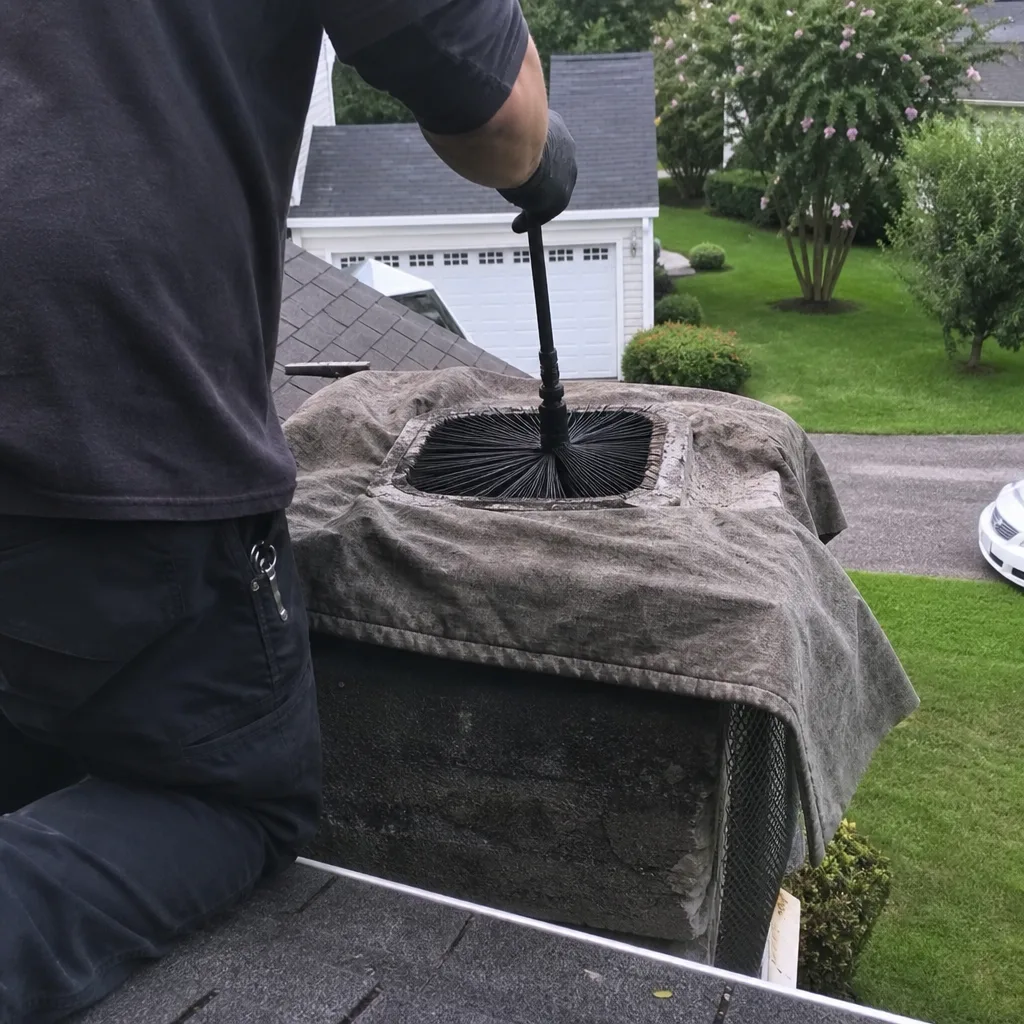
Rockville chimney pricing is more consistent than most homeowners expect, and it is useful to know the numbers before you make any calls. For a detailed breakdown, see our Chimney Cleaning Cost Breakdown: The Rockville Homeowner’s Reference for 2026. A standard chimney sweep and Level 2 camera inspection in Rockville runs between $180 and $340, depending on the height of the flue, the type of roof access, and whether the fireplace includes a separate wood stove connection. That price includes the sweep, the camera scan, and the documented photo record. It should be written down before the work begins. If a company will not give you a written price before the appointment, that is a signal, not a coincidence.
| Service | Typical Rockville Price Range | When to Schedule It |
|---|---|---|
| Standard sweep + Level 2 camera scan | $180 - $340 | September, before the first burn |
| Mid-season safety inspection | $120 - $200 | After 40+ fires or if smoke/odor appears |
| Chimney cap replacement | $240 - $650 (including cap and install) | Summer, before animal intrusion season peaks |
| Crown repair or reseal | $275 - $900 (depending on extent) | Summer, before freeze-thaw returns |
| Flue liner replacement | $1,800 - $4,500 (depending on liner type and height) | Spring, after the camera scan documents the damage |
The cap and crown numbers vary significantly based on the chimney’s height and condition, which is why a written quote with a written scope is non-negotiable. At Level Two Chimney Rockville, every job, from a standard sweep to a full liner replacement, gets a written price, a written scope, and a written warranty before anyone starts. That is Clause 1 of the Haven Standard, and it exists because a homeowner should never be asked to approve work they have not seen priced. If another Rockville company has given you a written estimate, bring it to us. We offer a free second opinion on any written estimate, and we will tell you honestly whether the work is necessary, premature, or priced too high.
On materials, we source DuraFlex liners and HeatShield resurfacing products through Haven’s buying network specifically to keep customer prices honest. That means when we recommend a liner replacement, we are quoting a specific product with a specific warranty, not a vague “new liner” line item. You should be able to see exactly what you are paying for, and you should be able to verify it in writing.
Common Mistakes to Avoid
- Scheduling the fall sweep after the first fire. By the time the weather turns cold, you have already burned at least once on an uninspected flue. The point of the fall sweep is to find the problem before the first fire, not after it has demonstrated itself.
- Treating the spring as a no-maintenance season. Spring is when freeze-thaw damage finishes its work, and a spring camera scan is often the difference between a $400 crown repair and a $2,500 liner replacement six months later.
- Ignoring animal activity in summer. Rockville’s wooded areas mean squirrels and raccoons are looking for nest sites every summer. A missing cap mesh is an open invitation, and the resulting nest becomes a draft obstruction and a fire hazard by fall.
- Believing a chimney that is not used does not need maintenance. Water enters unused chimneys through cracked crowns and missing caps, and water does more damage than fire. A chimney that never burns still needs a cap and a crown inspection.
- Accepting a verbal quote. In Rockville, a written price before work starts is the standard, not a courtesy. If a company will not put the price, scope, and warranty in writing, find one that will.
- Burning unseasoned wood and assuming the fall sweep covers it. Green wood produces creosote at two to three times the rate of dry wood. A chimney swept in October can be unsafe by February if you have been burning wet oak all winter.
- Skipping the documented photo record. Without a baseline image of your flue from one year to the next, every inspection starts from zero. A written photo record lets you compare condition over time and catch slow deterioration early.
When to Call a Professional
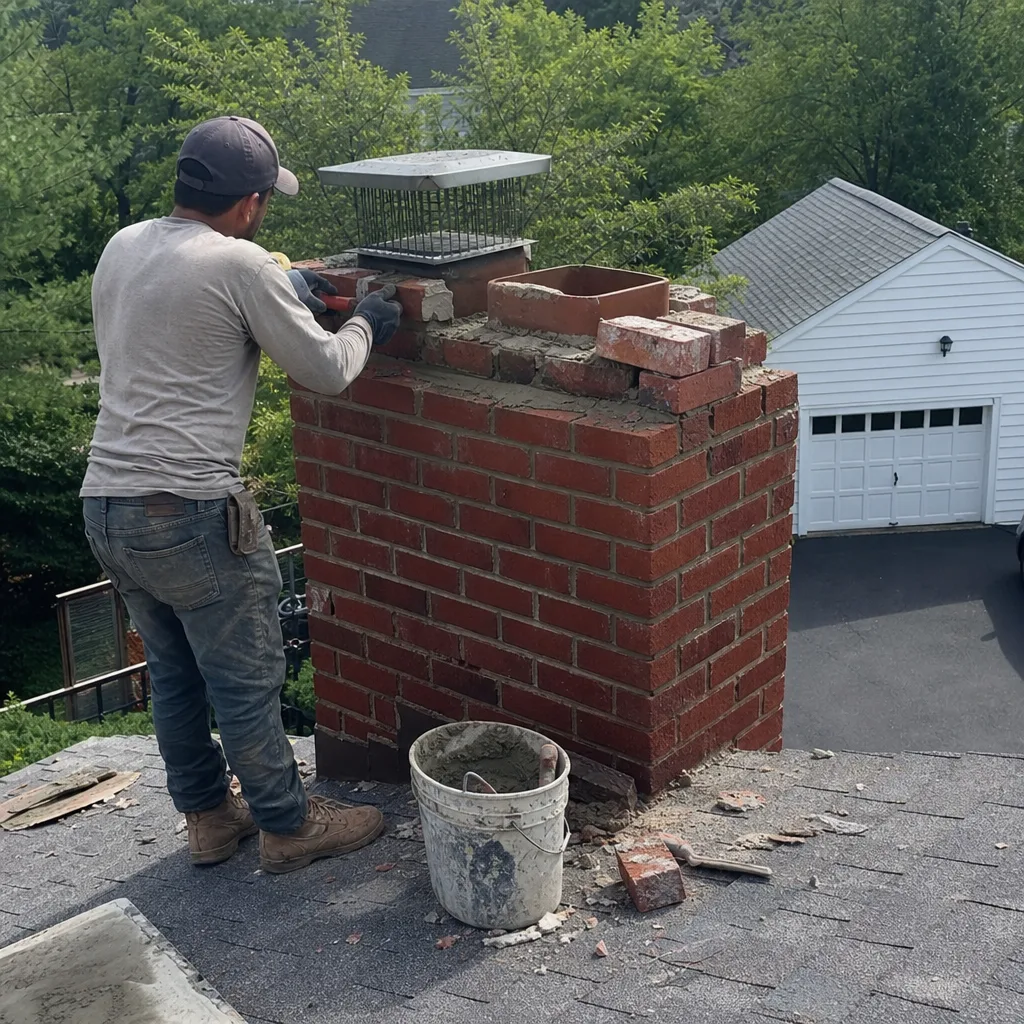
Call a chimney professional in Rockville if you see smoke backing up into the room, smell a campfire odor when there is no fire burning, notice white staining or spalling on the exterior brick, hear animals in the flue, or have not had the chimney swept in more than 12 months. If it has been more than three years since your last camera scan, schedule one now regardless of how much you burn. A flue can deteriorate without a single visible symptom. Level Two Chimney Rockville offers free estimates in Rockville, with a written price, written scope, and documented photo record on every job. Call (571) 376-7052 to speak with a live person, 24 hours a day, 7 days a week. Corrine Halstead, our owner, is the person who set the camera-scan documentation standard back in 2009, and the practice has not changed since.
Frequently Asked Questions
A standard chimney sweep with a Level 2 camera inspection in Rockville typically costs between $180 and $340, and that price should include the sweep, the camera scan, and a documented photo record of the flue condition. Repairs are quoted separately in writing, and no work should begin until you have approved a written scope. Call (571) 376-7052 for an exact quote on your chimney’s height and roofline. Estimates are free, and the price is in writing before anyone starts.
You only need a new liner if the camera scan shows a crack, a gap, or a separation that is specific and visible, and any reputable company will show you those images before recommending the work. At Level Two Chimney Rockville, we do not recommend a liner replacement based on age alone. If the camera shows the liner is intact and within spec, we say so, and we document it in writing. If we do recommend replacement, you will see the crack in the photograph, and the recommendation will be tied to that specific defect. That is why the photo record matters.
The NFPA standard is to sweep the chimney whenever creosote buildup reaches 1/8 inch, which for a typical Rockville household that burns 30 to 50 fires per season means once per year at minimum, and twice per season if the wood is unseasoned or the burn frequency is higher. The annual sweep should happen before the first fire of the season, and a mid-season sweep should happen if smoke, odor, or visible creosote appears. A camera scan should accompany every sweep so the flue condition is documented, not just the creosote removed.
If you skip a year and the flue was in good condition, you have likely lost nothing more than the documentation of that good condition. If you skip a year and the flue has deteriorated, you have lost the early detection window, and a small crack that would have cost $400 to repair may become a larger failure that costs $2,000 to replace. The problem is that you cannot know which situation you are in without the camera scan, and by the time the symptoms appear, the damage is already past the early stage. Call (571) 376-7052 to schedule a scan and find out what a year of winter actually did.
You can buy a brush and run it down the flue, but that only removes loose creosote, and it does not tell you whether the liner is cracked, the crown is spalling, or the smoke chamber has an open joint. The most dangerous chimney problems are the ones that do not announce themselves with smoke, and a brush cannot find them because a brush does not look. A professional sweep with a camera scan is the only way to actually inspect the flue, and given that a chimney fire can rupture a liner and spread into the house framing, the cost of a professional visit is a small fraction of the risk it removes.
Rockville’s specific climate profile, 40 inches of rain per year with peak rainfall in May and September, plus a freeze-thaw cycle that runs from November through late April, means water intrusion is a year-round threat, not a winter one. Moisture enters through the crown and cap, freezes in winter, and thaws in spring, and each cycle widens the crack. That is why the seasonal rhythm for a Rockville chimney has four inspection points rather than one, and why the spring camera scan matters as much as the fall sweep. Before scheduling work, review Chimney Cleaning Permits, Codes & Inspections in MD: What You Need to Know. The weather tests the masonry every single month. The chimney care schedule should answer that test.
The Bottom Line
Rockville homeowners who want to protect a chimney do not need more expensive service. They need a better calendar. The chimney requires four distinct checkpoints through the year: a pre-season camera scan in September, a burn-season monitoring habit from December through February, a post-season assessment in April, and a cap and crown check in June. Each checkpoint corresponds to a specific Rockville weather or wildlife risk, and each one is cheaper than reacting to the failure it prevents. The year-round approach costs roughly double what the once-a-year approach costs, and it catches problems roughly four times as often. Level Two Chimney Rockville has completed more than 38,000 inspections since 2009, and the camera-scan documentation standard we built into Clause 4 of the Haven Standard is the reason our customers can tell you exactly what their flue looked like last year and the year before. That is the kind of record that makes seasonal care work.
Written by Corrine Halstead, Owner at Level Two Chimney Rockville, serving Rockville since 2009.