
Last updated September 20, 2026
Level 1 sweep and inspection to the NFPA 211 annual standard - flue, crown, cap, and flashing checked and photographed
Chimney sweep logs do not sweep chimneys. They loosen some creosote - which then falls where a brush and vacuum still have to collect it.
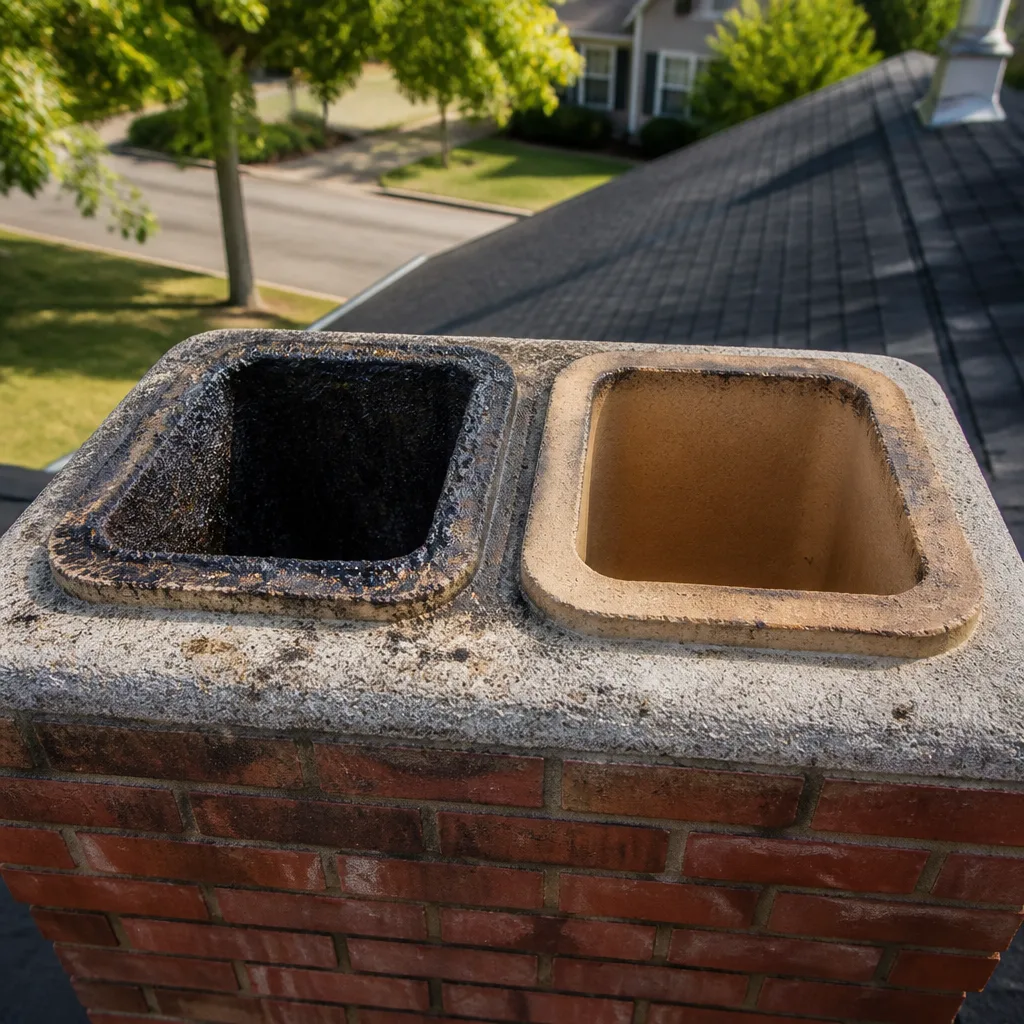
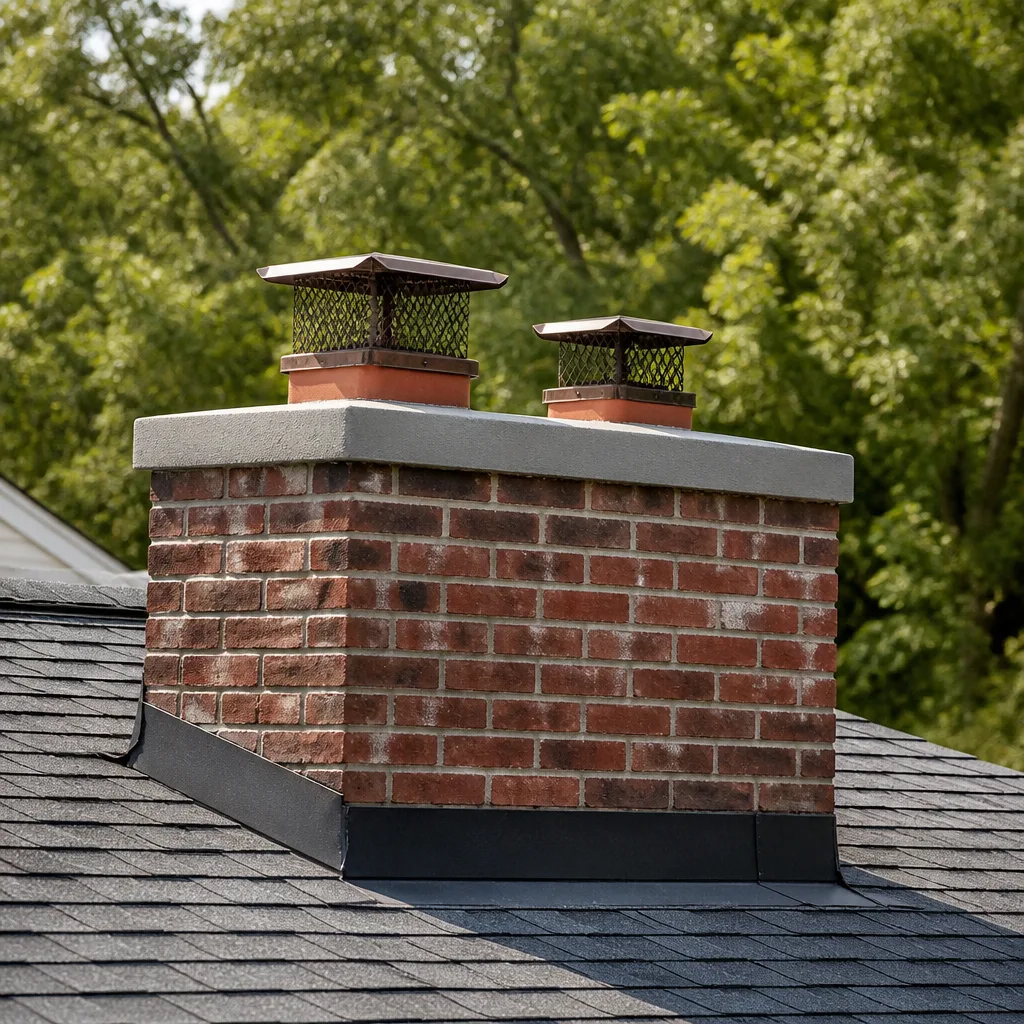
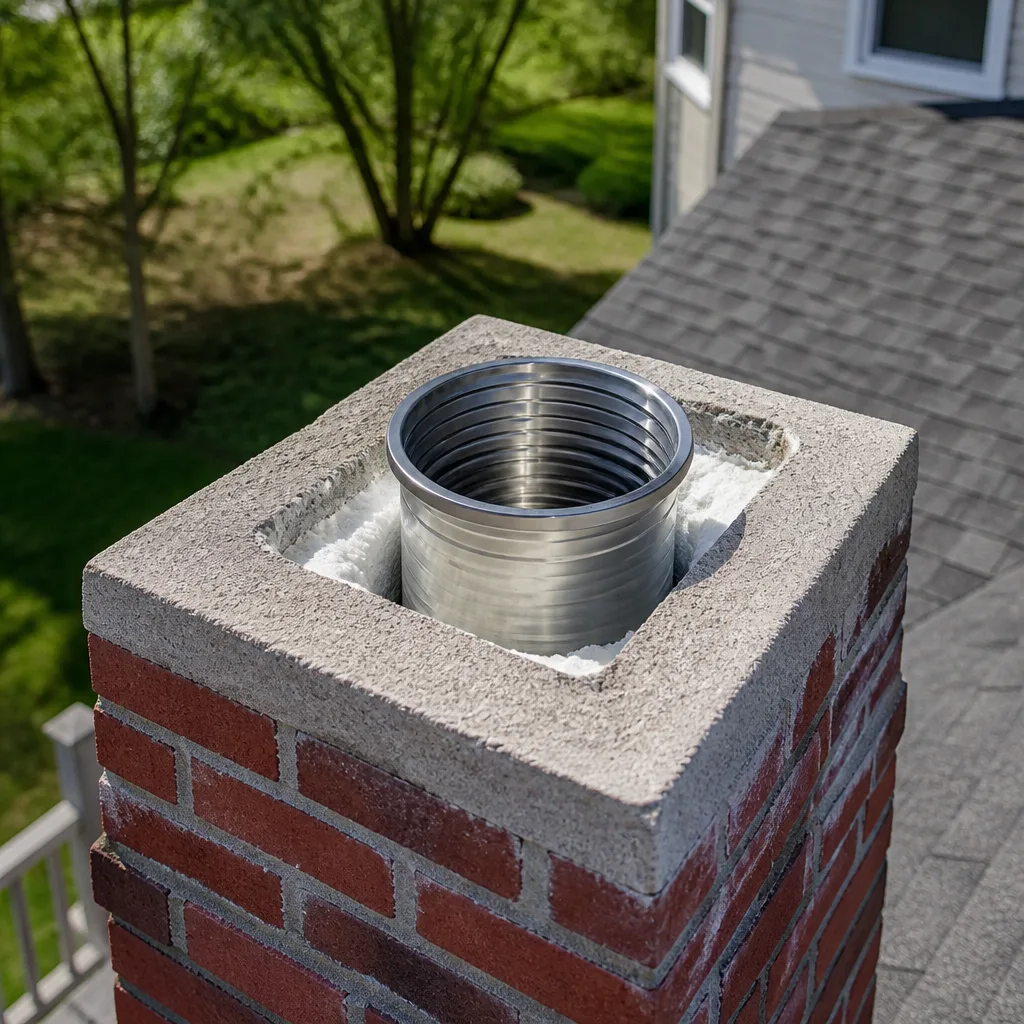
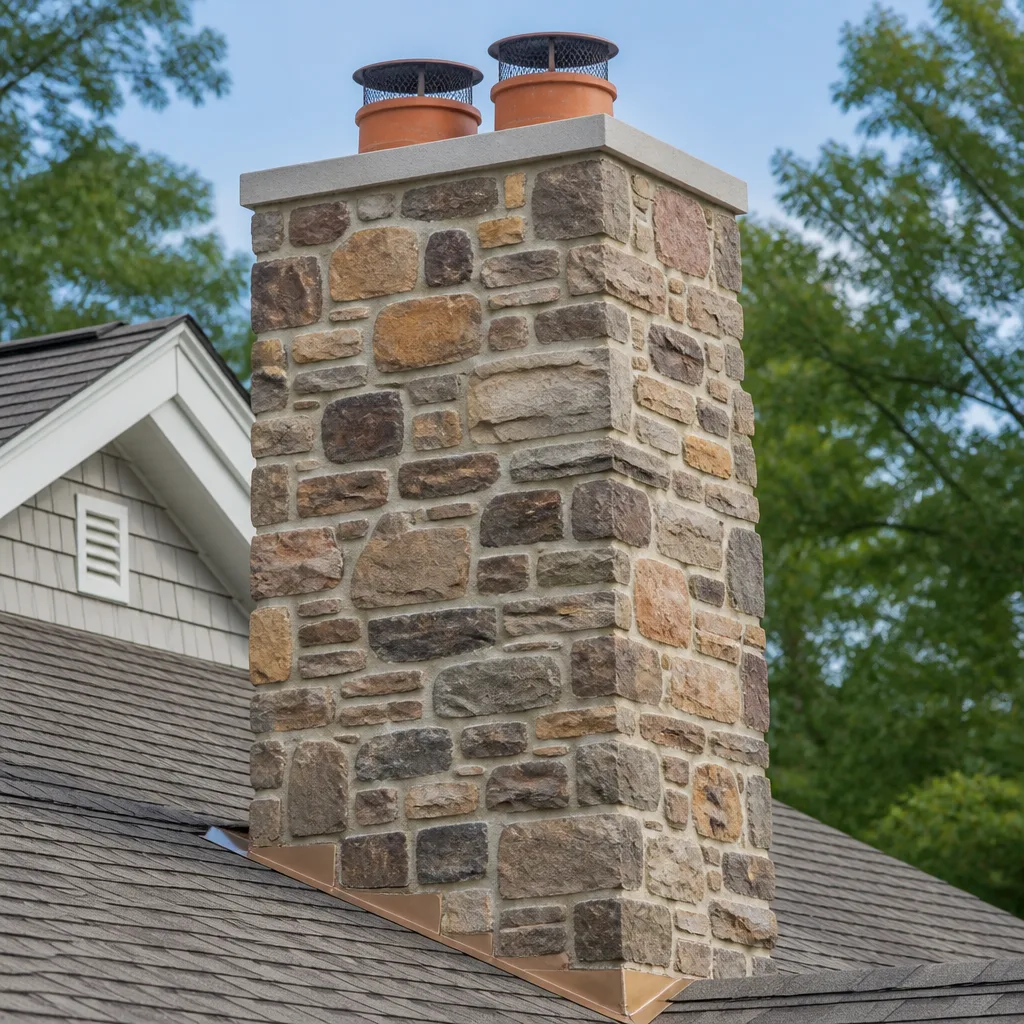
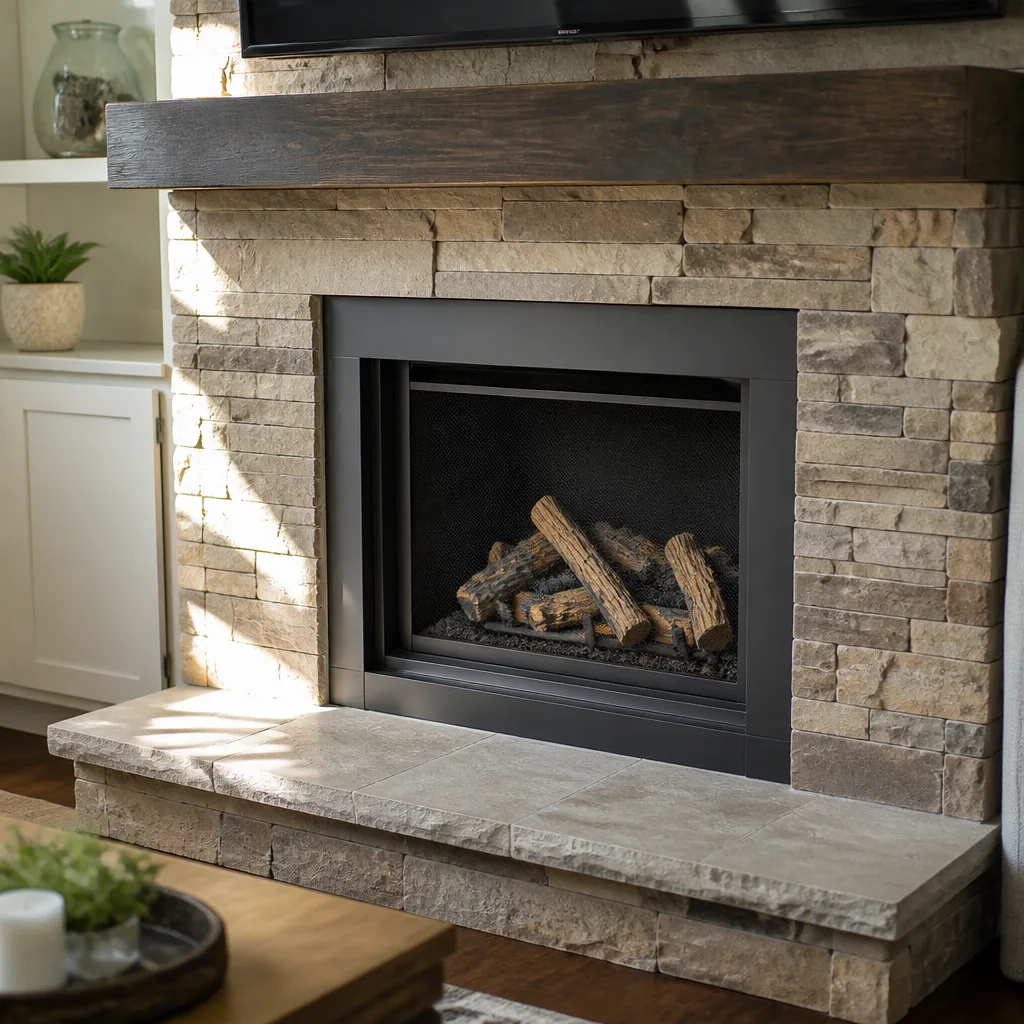
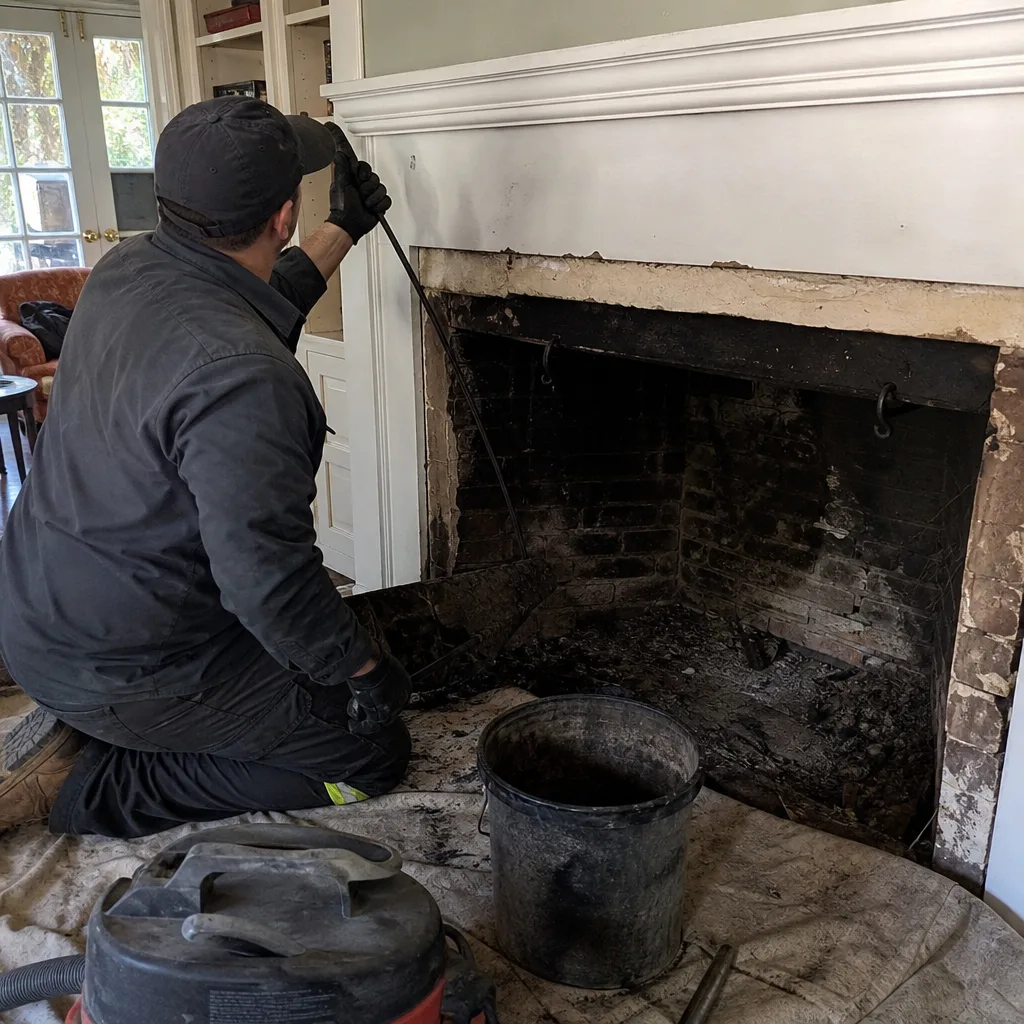 Before
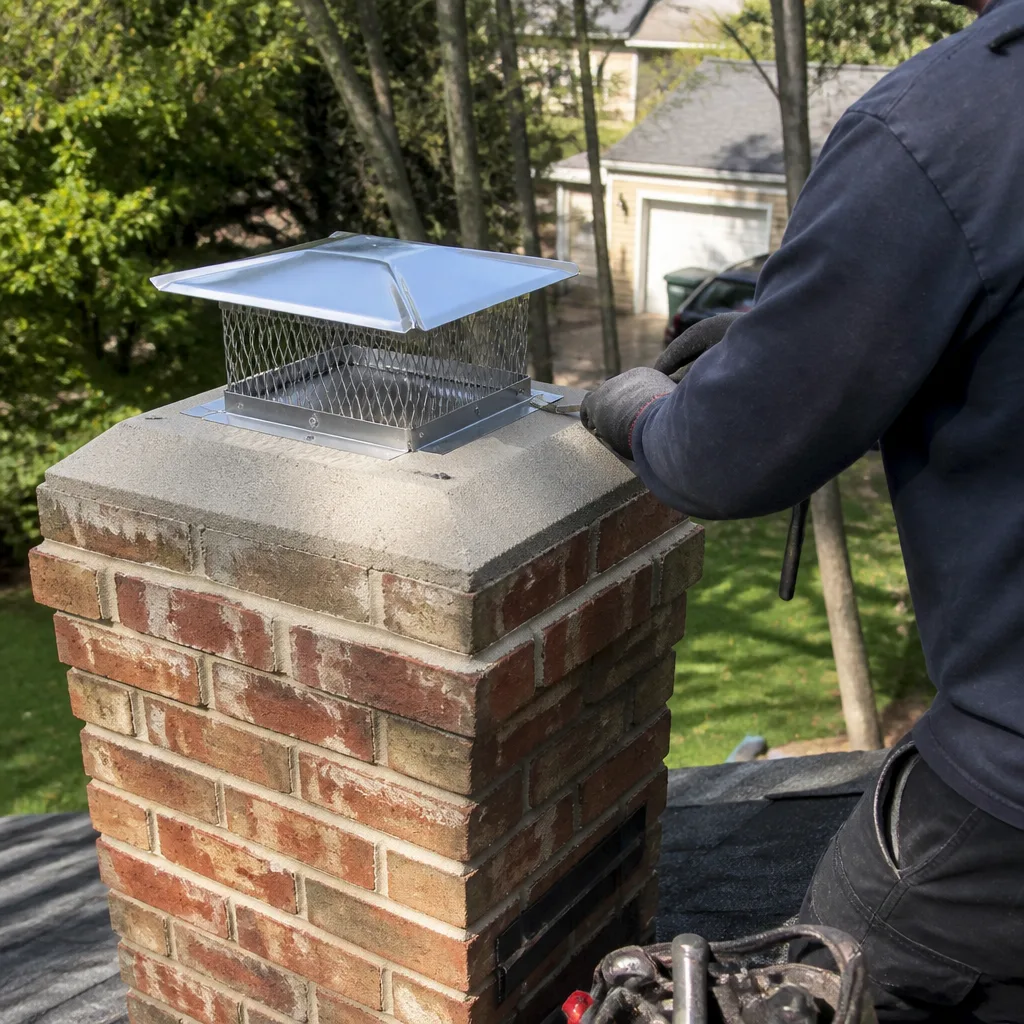 After
After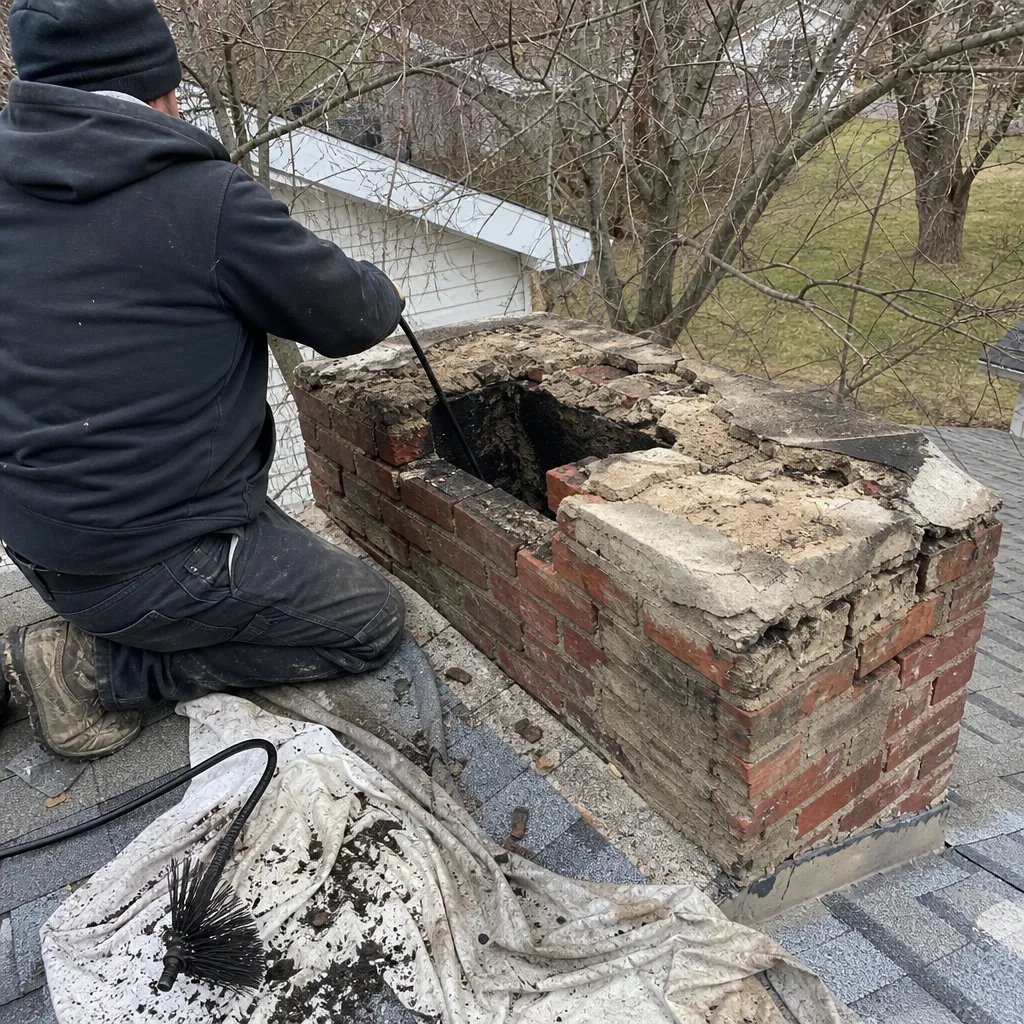 Before
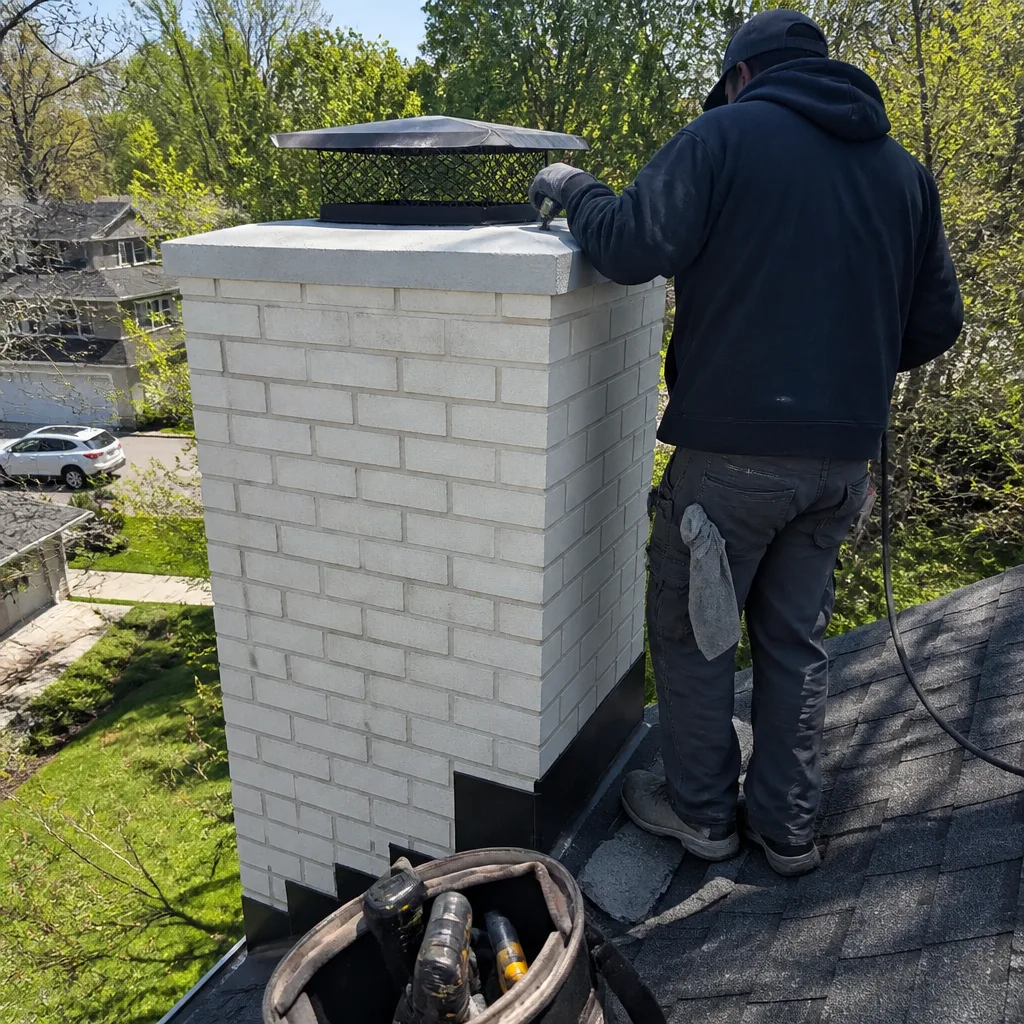 After
After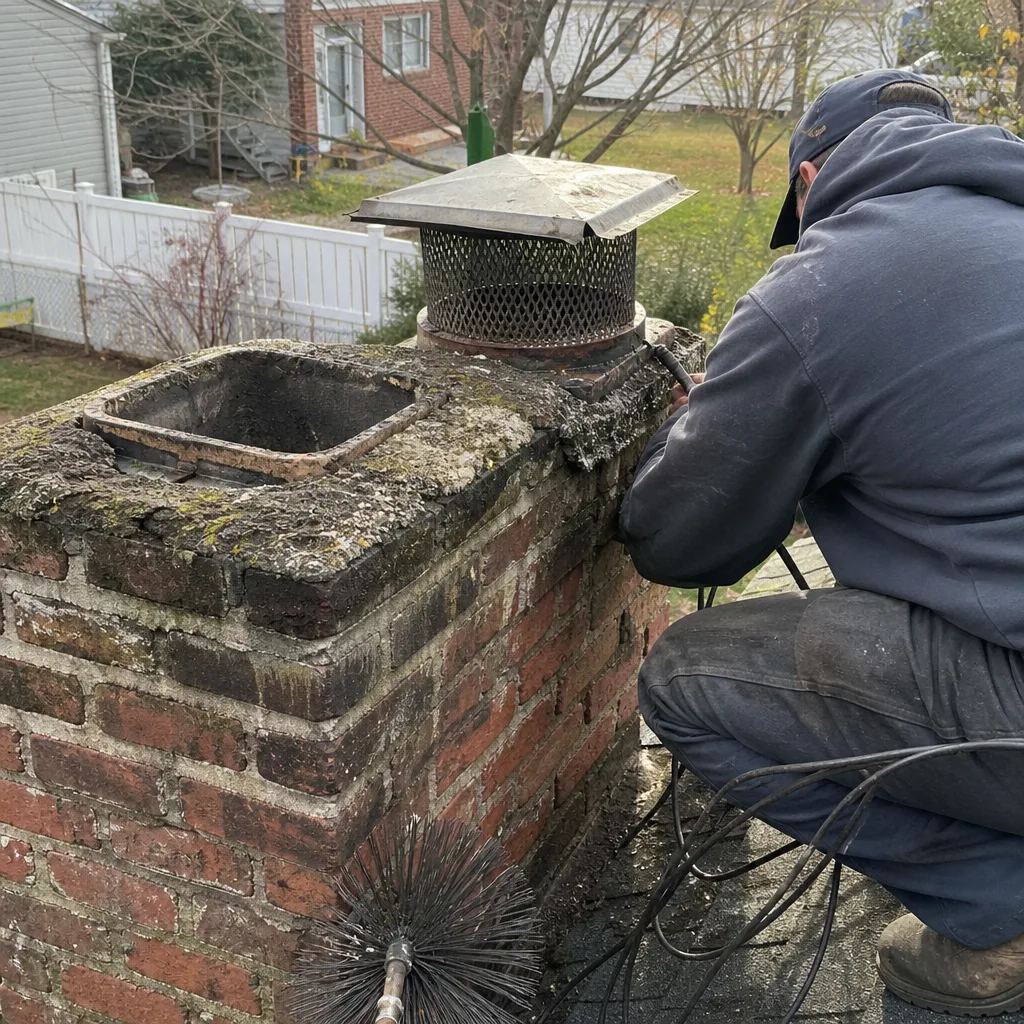 Before
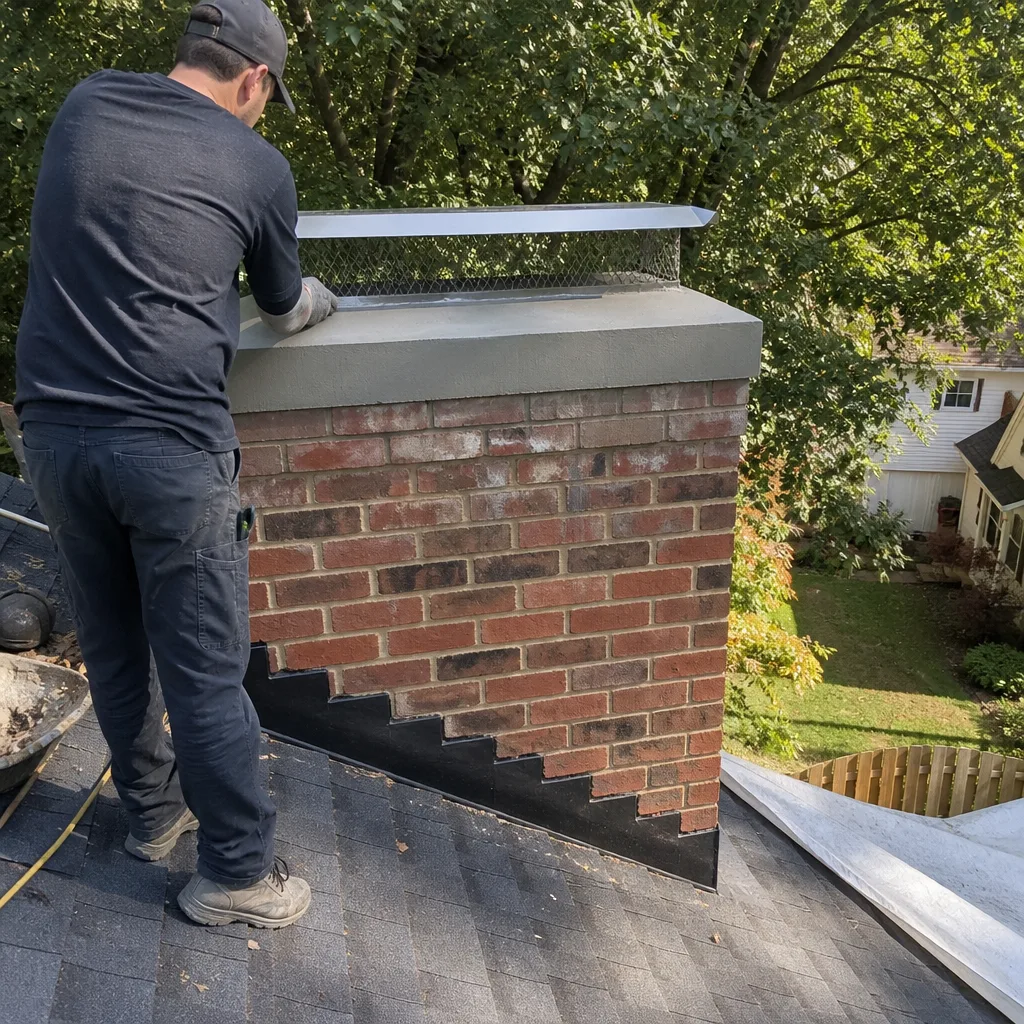 After
AfterDIY vs Professional Chimney Cleaning: The Rockville Homeowner’s Decision Guide
A homeowner who brushes their own flue has done real work. The soot on the tarp proves it. But if a chimney fire occurs the following season and the insurance adjuster asks for the inspection record, a receipt from a chimney brush kit at Home Depot does not answer the question. This guide is written for Rockville homeowners who want to know exactly what DIY chimney cleaning accomplishes, what it can’t, and where the line between capable and documented actually sits. For more on protecting your home year-round, see our Seasonal Chimney Cleaning Care for Rockville: Year-Round Homeowner’s Guide. We’ll cover the real differences in what gets removed, what gets recorded, and what happens when an undocumented chimney meets a home sale in Montgomery County.
Quick Answer
DIY chimney cleaning in Rockville can remove loose, powdery Stage 1 creosote when done properly with the right brush, but it cannot produce the camera-scan evidence and written record that insurers, home buyers, and fire marshals treat as proof of a maintained chimney. The real question isn’t whether you can physically clean a flue. It’s what the cleaning needs to prove if something goes wrong or the house changes hands. Professional cleaning adds removal of Stage 2 and 3 creosote, a documented interior inspection, and a paper trail that stands up when it matters.
Table of Contents
- What DIY Chimney Brushing Actually Accomplishes
- The Documentation Gap: What a Level 2 Inspection Produces
- When DIY Is Genuinely Appropriate
- The Liability Math for Rockville Homeowners Who DIY and Then Sell
- If You Hire After a Failed DIY Attempt: How to Brief a Sweep
- What DIY Actually Costs in Tools, Time, and Risk
- Rockville-Specific Factors That Tip the Decision
- Common Mistakes to Avoid
- When to Call a Professional
- Frequently Asked Questions
- The Bottom Line
BeforeAfterWhat DIY Chimney Brushing Actually Accomplishes
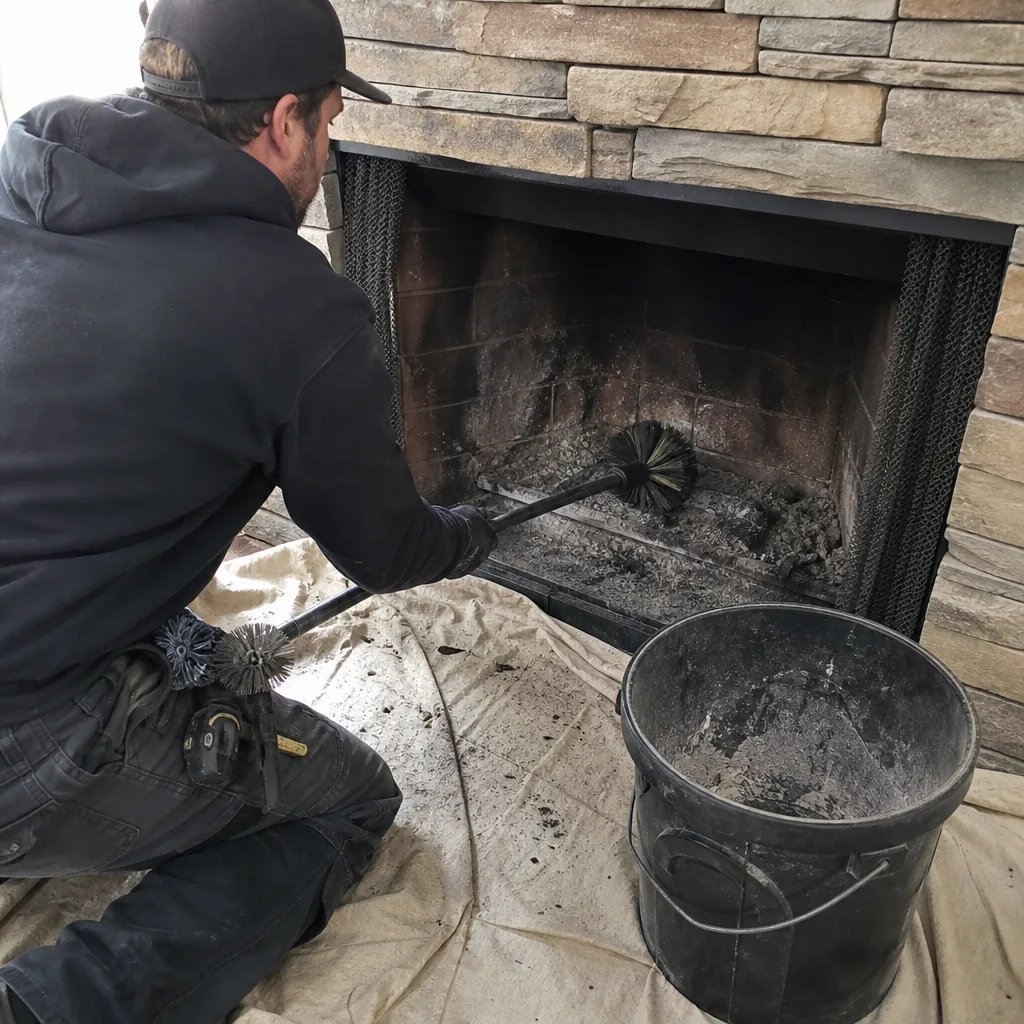
A homeowner with a properly sized wire or poly brush, a set of fiberglass rods, and a Saturday afternoon can absolutely remove loose creosote from the first several feet of a flue. What they’re removing, in almost every case, is Stage 1 creosote: the dusty, sooty, flaky residue that brushes off easily and falls down to the firebox where it can be vacuumed out. If your chimney has been used lightly, with seasoned hardwood, and you’re getting this fine black powder, a DIY brushing does what it’s supposed to do.
Here’s where it stops. Stage 2 creosote looks like shiny black flakes, almost like charcoal, and it’s baked onto the flue walls. Stage 3 looks like tar or a thick glaze, and it’s hardened into a ceramic-like coating. Neither responds to a brush. Stage 2 requires rotary chains or chemical treatments. Stage 3 frequently requires products like Gelco creosote remover or a HeatShield resurfacing treatment applied by someone who has removed the buildup first. A homeowner with a brush kit is not removing Stage 2 or 3. They’re polishing the surface of it.
The practical takeaway: in our experience, a DIY brushing works on flues that are already in good shape and lightly used. That’s a real category of homes. But the homeowner doing that brushing has no way of knowing, without a camera, whether the creosote they’re knocking loose was the only problem or the easy layer on top of a harder one. You can’t feel Stage 3 through a brush rod.
The Documentation Gap: What a Level 2 Inspection Produces
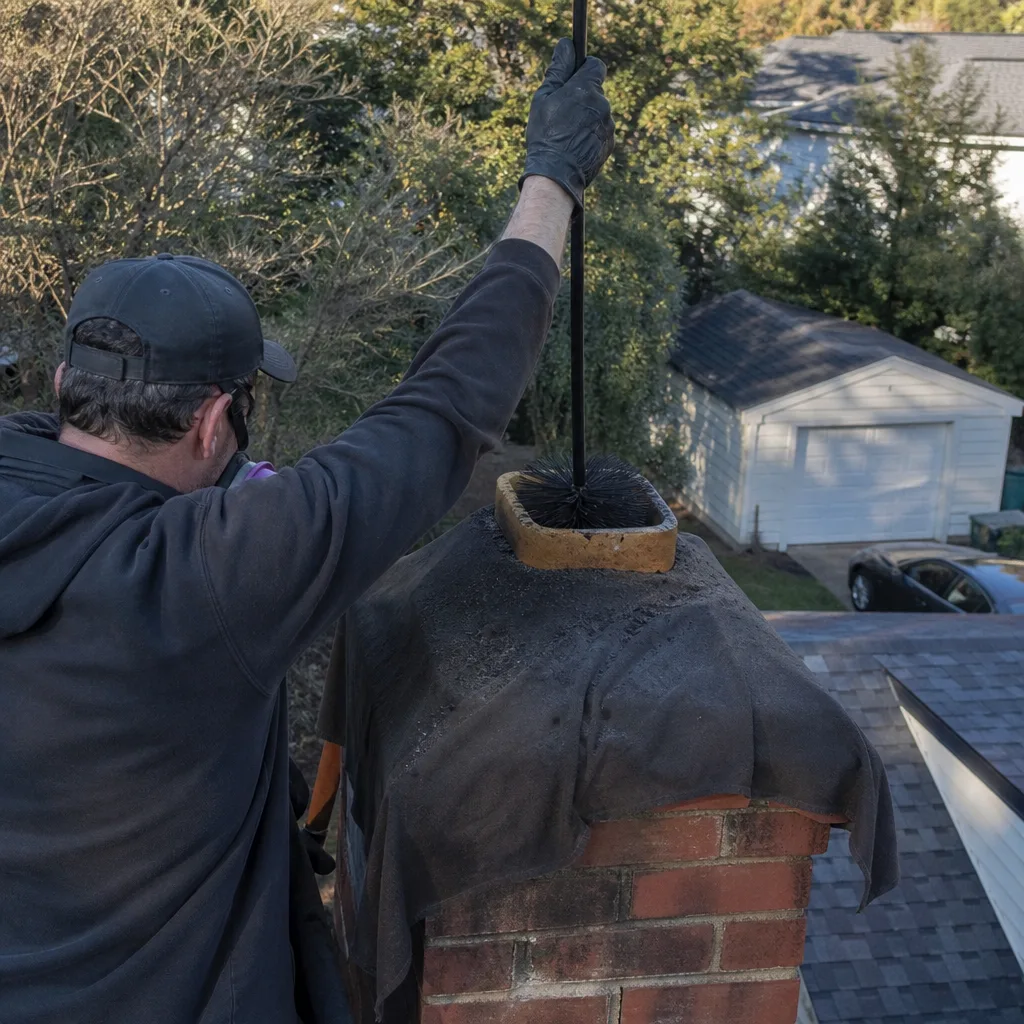
A professional chimney cleaning in Rockville produces two things a DIY session does not: an interior visual assessment of surfaces you cannot reach, and a written record of what was found and what was done. The first is protection. The second is proof.
An NFPA 211 Level 2 inspection involves a video camera sent down the full length of the flue, from the crown to the smoke chamber. The technician is looking at the condition of the flue liner, the integrity of mortar joints, the crown for cracking or spalling, and the full interior surface for creosote classification. Every Level 2 inspection performed by Level Two Chimney Rockville produces a photo record the homeowner keeps. Clause 4 of the Haven Standard requires it, and it’s been our default since 2009. No homemade brushing session produces a single image.
Here’s what a documented inspection captures that brushing cannot:
- Flue liner condition: hairline cracks in clay tile liners, gaps between sections, or early-stage deterioration that lets heat and gases reach combustible materials.
- Stage 2 and 3 creosote presence: classified, photographed, and logged so the homeowner knows what was there and when.
- Smoke chamber integrity: a spot most homeowners can’t access at all, where gaps and damage are invisible from the firebox.
- Crown condition: spalling or cracking on the concrete crown that lets water in and starts a freeze-thaw cycle in Rockville’s winters.
- Obstructions: animal nests, dead birds, or debris that won’t brush out and may require removal from the top.
That record is what an insurance company wants after a chimney fire. It’s what a home inspector wants when you sell. It’s what a fire marshal wants if there’s a problem. In Rockville, where many homes were built between the 1960s and 1990s and a significant number have older clay tile liners, this documentation matters more, not less. The age of the housing stock means common liner defects show up on camera regularly.
When DIY Is Genuinely Appropriate
There are chimney-related tasks that have no diagnostic component, and those are the ones a careful homeowner can handle without giving anything up. The key question is whether the task tells you something about the inside of the system. If it doesn’t, DIY is fine.
These tasks are genuinely DIY-appropriate:
- Gas fireplace glass cleaning: removing condensation haze and soot from the inside of the glass panel with the manufacturer’s recommended cleaner. There’s no flue surface involved and nothing to misdiagnose.
- Exterior cap inspection from the ground: using binoculars or a phone camera to check whether the cap is visibly intact, the mesh screen is unblocked, and nothing is leaning or missing. You’re not diagnosing the flue. You’re checking a visible exterior component.
- Firebox ash removal: scooping out cold ash after the fire is completely out, ideally 72 hours later. Wait the extra time. A live coal buried in ash can smolder for days.
- Seasonal visual check: looking up from the firebox with a flashlight for obvious obstructions, heavy buildup, or animal debris you can see without entering the flue.
What these have in common is that they don’t produce a false sense of security. Cleaning glass doesn’t tell you anything about the liner, and it doesn’t create a record that a home buyer or insurer would mistake for an inspection. The line is clean: if the task doesn’t claim to inspect, DIY is fine. If you finish and think you’ve checked the chimney, you haven’t.
The Liability Math for Rockville Homeowners Who DIY and Then Sell
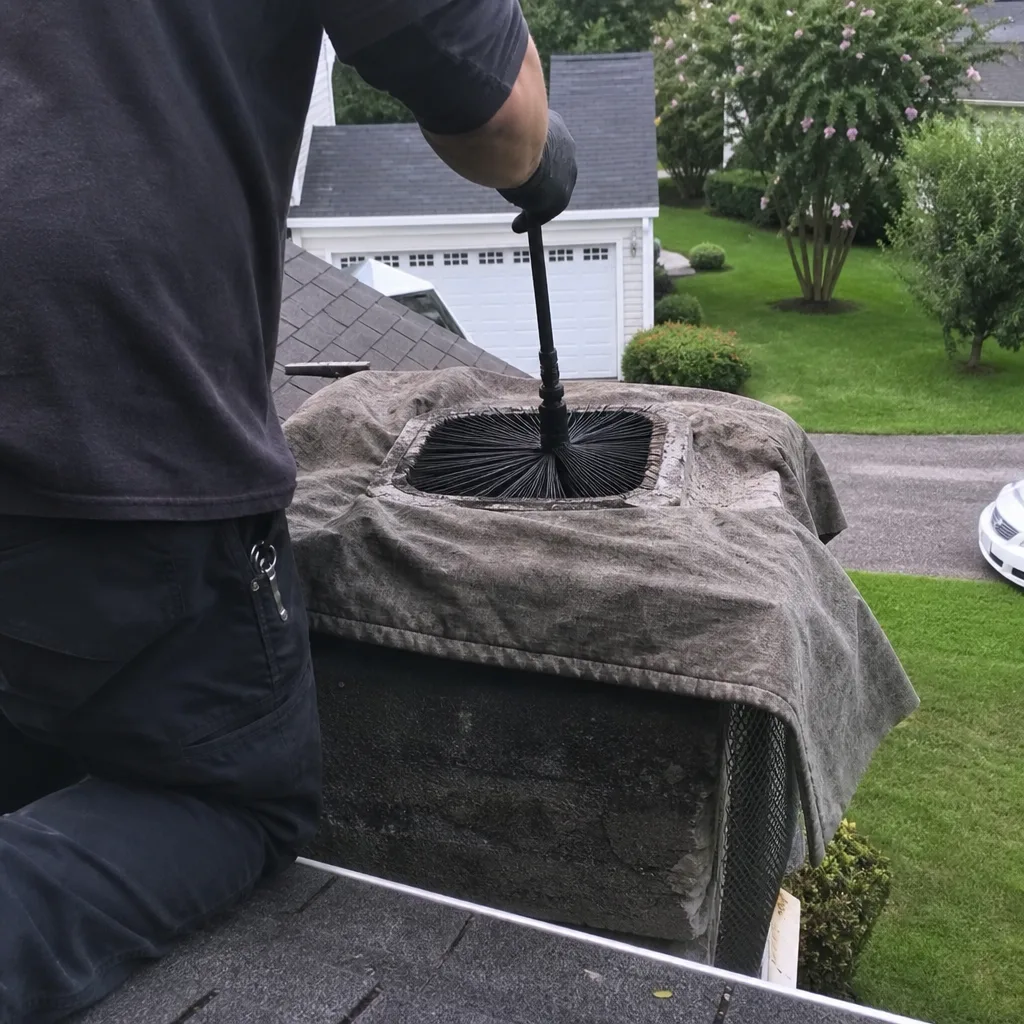
Montgomery County home sales have a specific artifact: the buyer’s home inspection. When a home inspector gets to the chimney, they shine a flashlight, look up, and note what they can see. If there’s visible creosote buildup, a damaged cap, or a missing cleanout door, that note goes in the report. The buyer’s next move in Rockville is frequently to request a Level 2 chimney inspection, which the seller generally pays for, or to ask for a credit toward chimney repairs.
Here’s the math. A homeowner who brushed their own chimney for five years has no record of any of those cleanings. There’s no dated document, no photo archive, no creosote classification, no liner condition notes from year to year. The beautiful maintenance history is oral tradition. The home inspector sees a chimney with no paper trail and flags it for a closer look. The Level 2 inspection then finds whatever it finds, and the seller negotiates from a position of having no documentation that the chimney was maintained at all.
The cost of that documentation gap is concrete. In Rockville’s market, a chimney repair credit requested after a buyer’s inspection commonly lands somewhere between $1,500 and $8,000 depending on what the camera finds. A homeowner who had spent roughly $250 to $400 per year on a professional cleaning and inspection would have had a documented record showing a maintained chimney, and the negotiation would be entirely different. The DIY savings accumulate quietly, then can vanish in one closing table conversation.
At Level Two Chimney Rockville home, we’ve helped sellers assemble records after the fact, but the strongest position is a chimney that was documented from the start. If you’re planning to sell in the next five years, that’s a real consideration.
If You Hire After a Failed DIY Attempt: How to Hire a Chimney Cleaning Contractor in Rockville: A Step-by-Step Guide
People call us after DIY attempts all the time. Sometimes it worked fine and they just couldn’t get a section clean. Sometimes the brush got stuck. Sometimes they looked up afterward and saw something they didn’t like. We’d rather take these calls than have someone keep working on a problem they can’t see. What makes the visit more useful is what you tell us before the camera goes up.
Here’s the five-point briefing we wish every homeowner gave us:
- Say what tool you used. A poly brush does different things to a flue than a wire brush. A wire brush on a clay liner leaves different marks than poly. A chimney sweep with a camera can spot drag marks from a brush and needs to know they’re yours, not previous damage.
- Describe what came out. Was it fine black powder, shiny flakes, chunks, or a tarlike glaze? The color and texture of what fell tells us the creosote stage before we ever look. It helps us target the camera scan.
- Tell us where the brush stopped. If you couldn’t push past a certain point, that’s a critical clue. It could be a damper orientation, a liner offset, or an obstruction. Knowing the exact spot saves diagnostic time.
- Mention anything odd you saw. A wet patch, a smell, a dead bird, anything unusual. Small observations often point to bigger findings.
- Don’t clean up before we arrive. Leave the soot, the debris, the tools. The scene itself is diagnostic. We’ve had homeowners vacuum everything up, and the mess they removed contained clues about the condition of the upper flue.
Then expect the camera. Clause 4 of the Haven Standard has required a photo record on every job since 2009, and a failed DIY attempt makes that record more valuable, not less. You’ll see what the brush couldn’t reach and what was actually on the walls. Our Chimney Cleaning & Sweep in Rockville starts with that scan, then moves to cleaning and removal based on what’s actually there.
What DIY Actually Costs in Tools, Time, and Risk
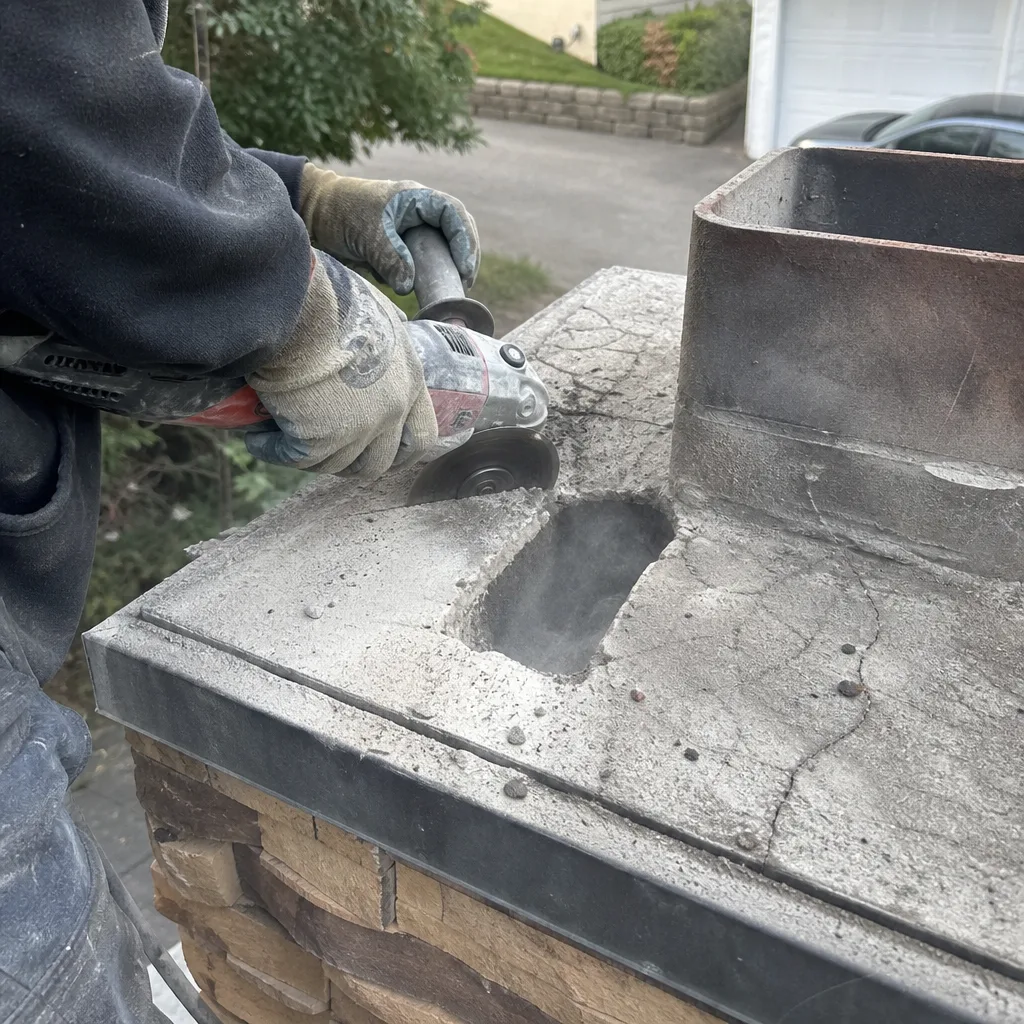
The honest ledger of DIY chimney cleaning includes line items most people don’t price. Let’s look at what you’re actually spending.
Tools:
- Brush kit with rods: $45 to $120 at a home center for a basic poly set. A rotary drill attachment kit starts around $60. If your flue is taller than one story or has an offset, you may need extension rods you didn’t plan on.
- Drop cloths and a shop vacuum with a fine-dust filter: $30 to $90 if you don’t already own them. Regular vacuum filters pass creosote dust straight through the exhaust.
- Safety glasses, dust mask, and gloves: $15 to $35. You want a P100 or N95 mask at minimum. Creosote dust is not house dust.
- Optional: a ladder tall enough for roof access, which starts around $150 for a decent 24-foot extension ladder. This is only needed if you clean from the top, which is the correct way but the riskiest part of the job.
Time: a first-time DIYer should plan on 3 to 5 hours, including setup, climbing safety, the actual brushing, and cleanup. If you clean from the roof, add significant time for ladder placement, roof safety, and getting the cap off and back on correctly.
Risk: this is the line item nobody prices until they need it. Working on a roof in Rockville means working at height on a pitched surface, often in fall when roofs are wet with dew or early frost. The Centers for Disease Control and Prevention tracks ladder falls as a leading cause of emergency room visits every year. Spring failures on older cap assemblies leave sharp metal under tension. A fall from even a single-story roof can mean an ambulance ride that costs more than a decade of professional chimney cleanings.
We’re not going to dress this up. If you’re not comfortable on a ladder, on a roof, with a drill, and with fine dust, the DIY route is not for you this season. Corrine Halstead, who leads Level Two Chimney Rockville, has said it plainly: the cheapest chimney cleaning in Rockville is the one that doesn’t end in an emergency room.
Rockville-Specific Factors That Tip the Decision
Rockville’s housing stock, climate, and local code environment all push on the DIY-versus-professional question in specific ways. Here’s what applies here, in this market, that a generic online guide won’t tell you.
The housing stock is older than the national average. A large share of Rockville homes were built between 1960 and 1990. That means clay tile liners, and clay tile liners crack. The freeze-thaw cycle of our winters, where temperatures swing across the freezing line repeatedly from November through March, is precisely what damages these liners over time. Water gets into a hairline crack, freezes, expands, and widens the crack a little more each winter. A homeowner brushing their own flue in a 1970s Rockville rambler is working inside a liner that may already have cracks they can’t feel, see, or brush.
Montgomery County enforces its adopted fire code, and insurers know it. Rockville homes fall under the county’s adopted NFPA codes, and insurance claims for chimney fires are handled by adjusters who know what a maintained chimney’s record should look like in this county. They don’t ask for a receipt from a brush kit. They ask for an inspection record.
Our burn season is longer than people think. Rockville homeowners light fires from October through sometimes early April. That’s five to six months of creosote deposition. If you only clean once a year, and you’re doing it yourself without a camera, you’re blind for half the burn season to what’s accumulating on the upper third of the flue, which is where most creosote concentrates because that’s where the gases cool and condense.
Local neighborhoods have distinct chimney profiles. In older sections like Twinbrook and the neighborhoods west of Rockville Pike, we see a lot of original clay liners and older caps. In newer builds and renovations, we see more stainless liners and factory-built fireplaces, which have different cleaning requirements. A DIY guide written for a general audience mentions none of this. Our Chimney Repair in Rockville work reflects the pattern directly.
Common Mistakes to Avoid
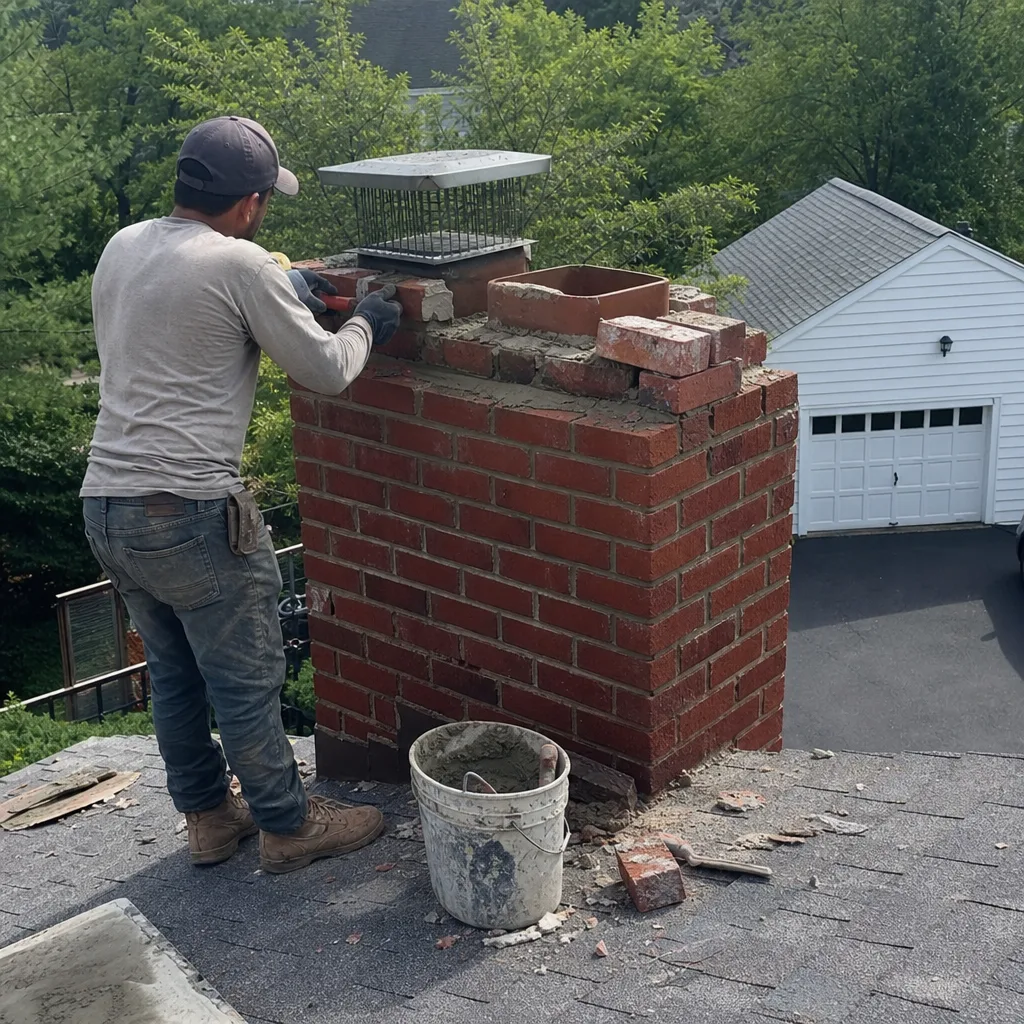
- Cleaning from the bottom without sealing the firebox opening properly. Fine creosote dust will find its way into every room on the same floor. A taped plastic barrier and a good fine-dust vacuum are mandatory, not optional. Most DIYers find out the hard way when the living room smells like a campfire for a week.
- Using a wire brush on a flue they haven’t inspected. Wire brushes are appropriate for some liners and damaging to others. Running one through a clay tile liner indiscriminately can score and weaken already fragile tiles. Know your liner type before you choose a brush.
- Assuming no visible smoke means no creosote. Creosote deposits on flue walls long before you’d ever see smoke backing up into the room. Smoke draws fine. The creosote is still there, forming on the upper third where it’s coolest. No visible smoke is not a clean bill of health, and assuming it is can produce a fire hazard behind the walls.
- Cleaning as a substitute for inspection. This is the most consequential mistake in Rockville, where older liners are common. Brushing the flue and walking away without laying eyes on the liner, the crown, and the smoke chamber gives you a clean-looking surface and zero information about the system’s condition. A clean chimney can still be a dangerous chimney.
- Buying the cheapest brush kit and calling it done. A $45 brush set is sized for a standard round flue. Your flue may be rectangular, oversized, or offset. A brush that doesn’t fit the flue does not clean the flue. It polishes one stripe down the middle and leaves the rest.
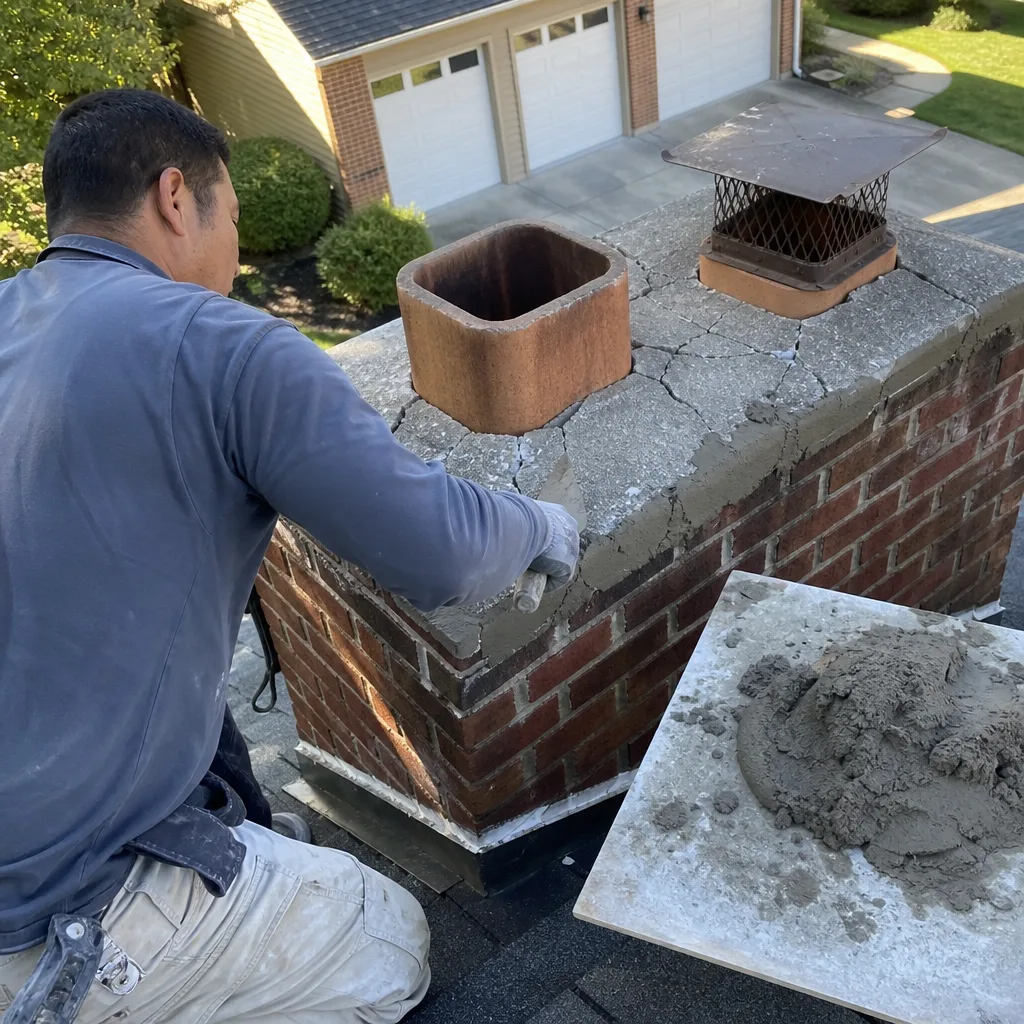
- Ignoring the cap. A damaged or missing chimney cap is the single most common entry point for water damage in Rockville’s climate. A homeowner focused on creosote can brush the flue and completely miss that the cap is cracked, rusted through, or missing a side. The Fireplace Services in Rockville we’ve done often starts with a cap problem that predated every creosote concern.
- Thinking the insurance company won’t notice. After a chimney fire, the adjuster’s first question is about maintenance history. A homeowner who says they clean it themselves every year, but has no record, no photos, and no receipt from a professional, is relying on oral testimony in a paper-driven process. That’s a weak hand.
When to Call a Professional
Call a professional if you see shiny or tarlike creosote inside your flue, if you can’t remember the last time the liner was actually inspected, if you’re buying or selling a home in Rockville, if you smell a sharp campfire odor when the fireplace isn’t in use, or if it’s been more than two years since anyone put a camera down the flue. Animals nest in Rockville chimneys every spring and fall. That alone is worth an annual camera check. Level Two Chimney Rockville offers free estimates in Rockville. Call (571) 376-7052 and we’ll tell you what we find, with photos, before we ask you to spend anything.
Frequently Asked Questions
A standard chimney sweep and Level 2 camera inspection in Rockville typically ranges from $230 to $400 depending on flue height, liner type, accessibility, and how heavily the chimney is used. For a detailed breakdown of pricing factors, see our Chimney Cleaning Cost Breakdown: The Rockville Homeowner’s Reference for 2026. At Level Two Chimney Rockville, we provide a written price before any work starts, so there’s no surprise after the tech is already in your home. Call (571) 376-7052 for an exact quote. Estimates are free.
The NFPA standard, and our recommendation for Rockville’s burn season, is once per year for a wood-burning fireplace that’s used regularly, meaning more than once a week during the cold months. Gas fireplaces need less frequent sweeping but still benefit from an annual visual check. Rockville’s season runs from October through early April, so the best time to clean is late summer or early fall, before the burn season starts, when the creosote from last winter has fully dried and is easiest to remove.
DIY cleaning doesn’t automatically invalidate insurance, but after a chimney fire, your insurer will ask for your maintenance history. A documented record from a professional sweep, with a dated report and photos, is what adjusters are used to seeing and what supports a claim. An oral statement that you brushed the flue yourself, with no record, is likely to be treated as unverifiable. In Rockville’s older housing stock, where chimney fire claims involve structures built decades ago, documentation matters heavily. Many homeowners only discover this after the claim is in process.
You can remove Stage 1 creosote from the lower portion of a flue with a properly fitted brush, and if your chimney is lightly used and already in good condition, that may be all that’s there. You cannot determine, without a camera, whether that’s all that’s there. The limitation is not your capability. It’s your line of sight. Every professional cleaning includes what the DIY session cannot: a visual assessment of the full flue length, the liner, the smoke chamber, and the crown, captured in photos you keep.
Stage 1 is a loose, dusty, sooty residue that brushes off with a standard chimney brush. Stage 2 is a flaky, shiny, crystalline deposit that has bonded to the flue walls and requires rotary tools or chemical treatment to remove. Stage 3 is a hardened, glazed, tarlike coating that can resemble black ceramic and frequently requires chemical removal with products like Gelco or a resurfacing treatment like HeatShield after the buildup is gone. Stage 2 and 3 are both fire fuel and both require tools and chemistry a typical DIY brush kit doesn’t include.
A Level 2 inspection, defined by NFPA 211, includes everything in a Level 1 visual check plus a video camera scan of the full flue interior, including the liner, smoke chamber, and accessible portions of the structure. It’s required when a property changes hands, after a chimney fire, after a seismic event, or when the system is being relined. Clause 4 of the Haven Standard requires a documented photo record on every job, not just Level 2 calls, and we’ve included that as standard since 2009. A regular cleaning removes soot. A Level 2 inspection tells you what’s behind the soot.
The Bottom Line
The DIY-versus-professional question is not a question of whether you can brush a flue. It’s a question of what the brushing needs to prove. If your chimney is lightly used, your liner is known to be in good shape, and you’re comfortable on a roof, a DIY brushing removes Stage 1 creosote and leaves the firebox ready for next season. If any of those conditions is unknown, or if you’ll sell or file an insurance claim someday, the documentation and camera record from a professional cleaning is the part of the job that matters most. In Rockville, where the housing stock is older and the winters swing through freeze-thaw cycles, the camera is not an add-on. It’s the point.
Written by Corrine Halstead, Owner at Level Two Chimney Rockville, serving Rockville since 2009. Browse our more guides & resources for Rockville homeowners.