
Level 1 sweep and inspection to the NFPA 211 annual standard - flue, crown, cap, and flashing checked and photographed
Chimney sweep logs do not sweep chimneys. They loosen some creosote - which then falls where a brush and vacuum still have to collect it.
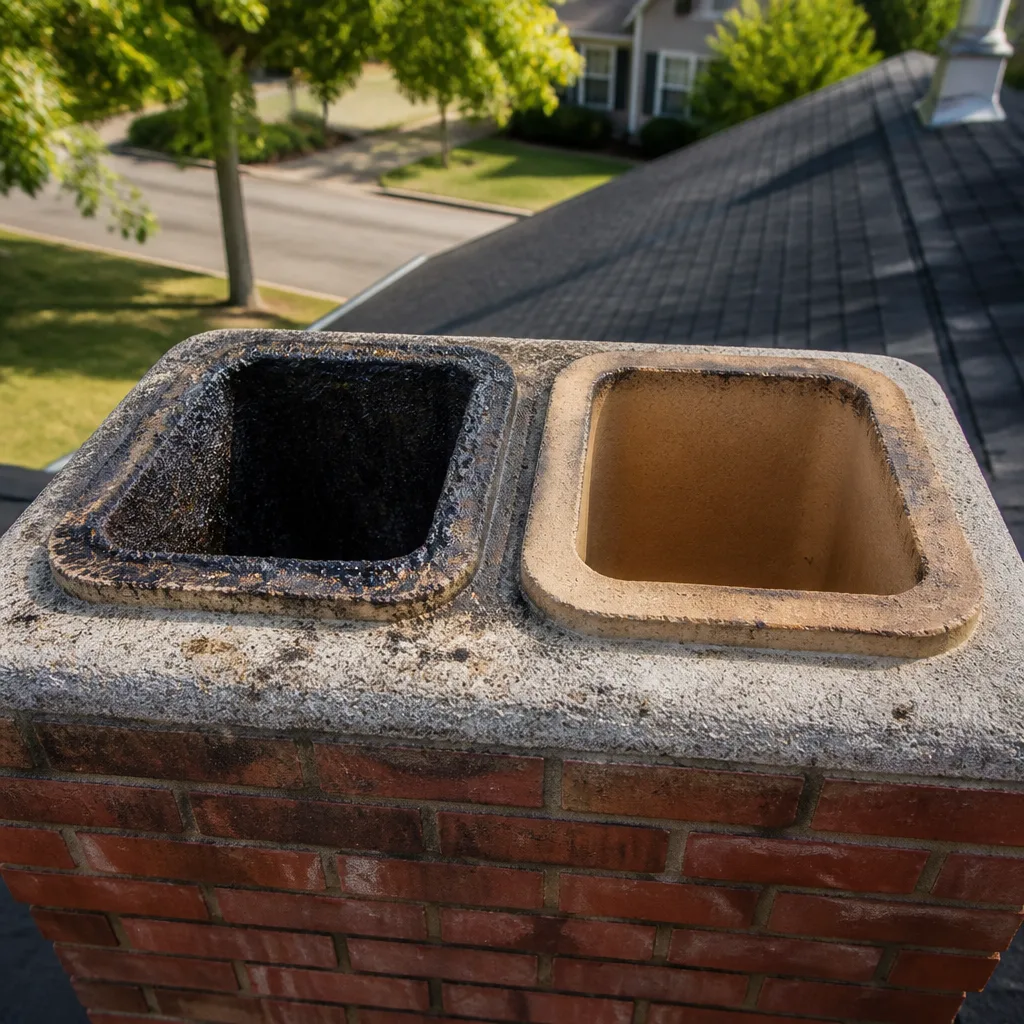
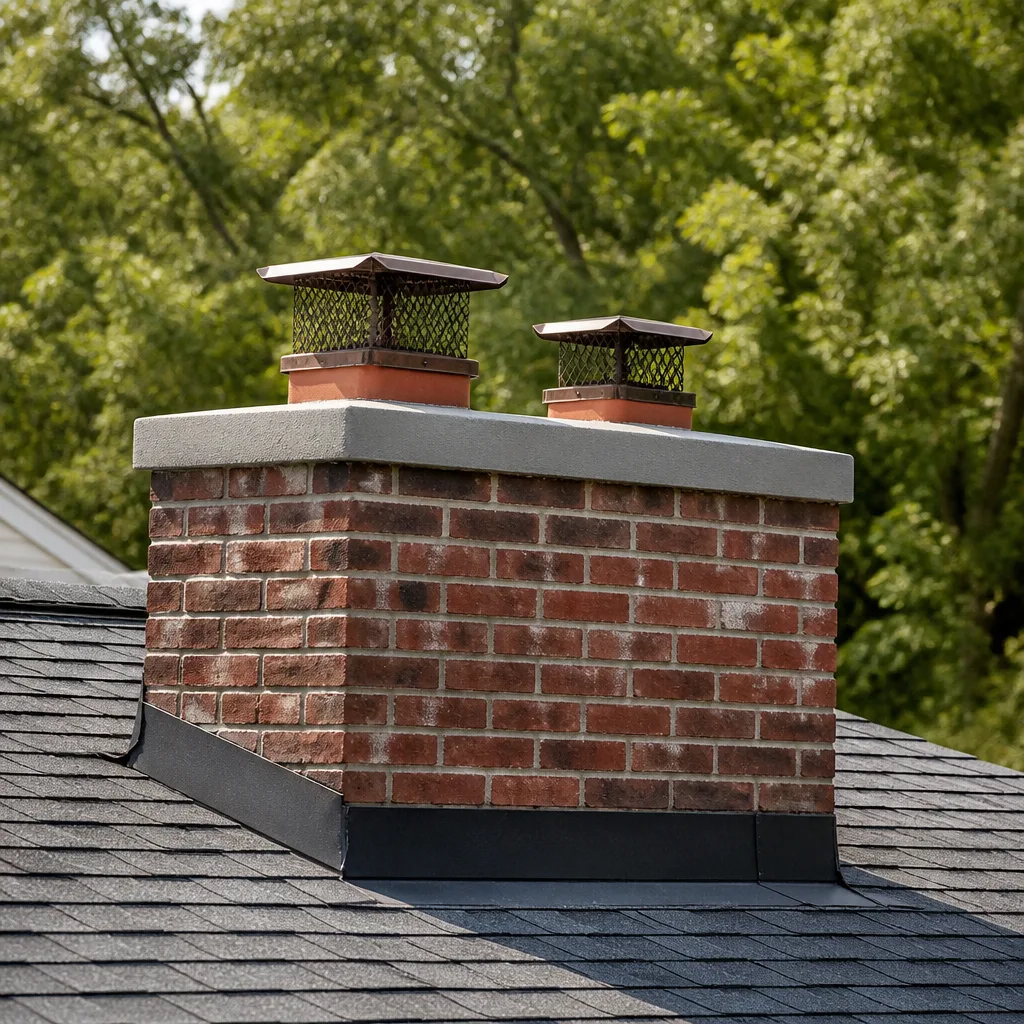
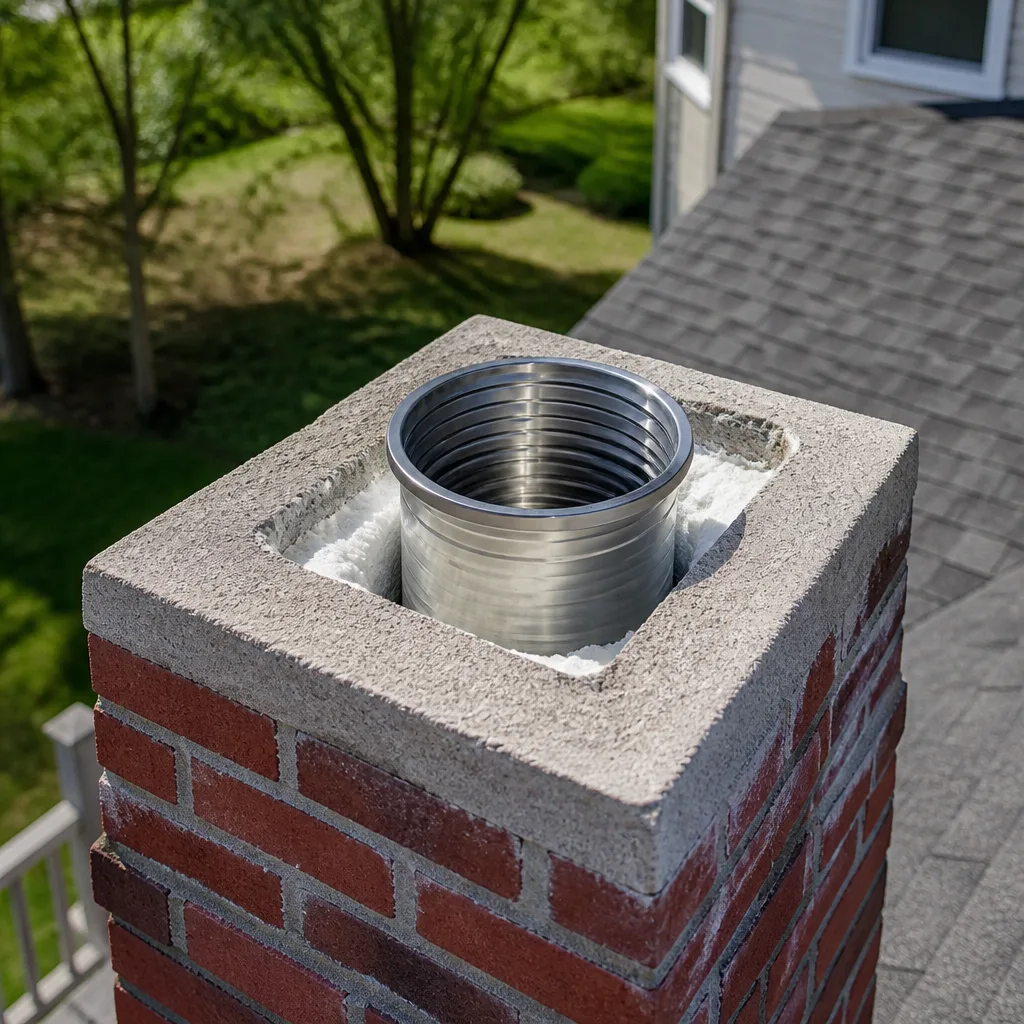
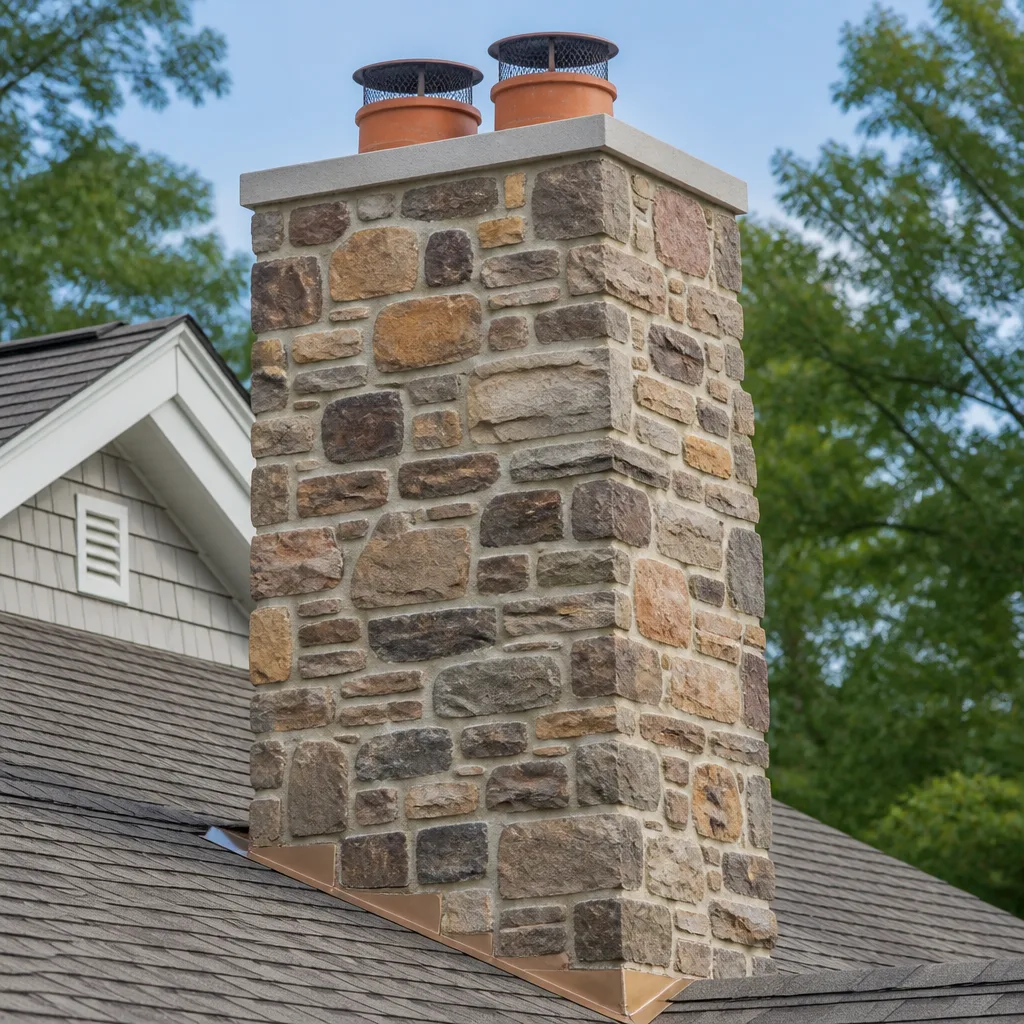
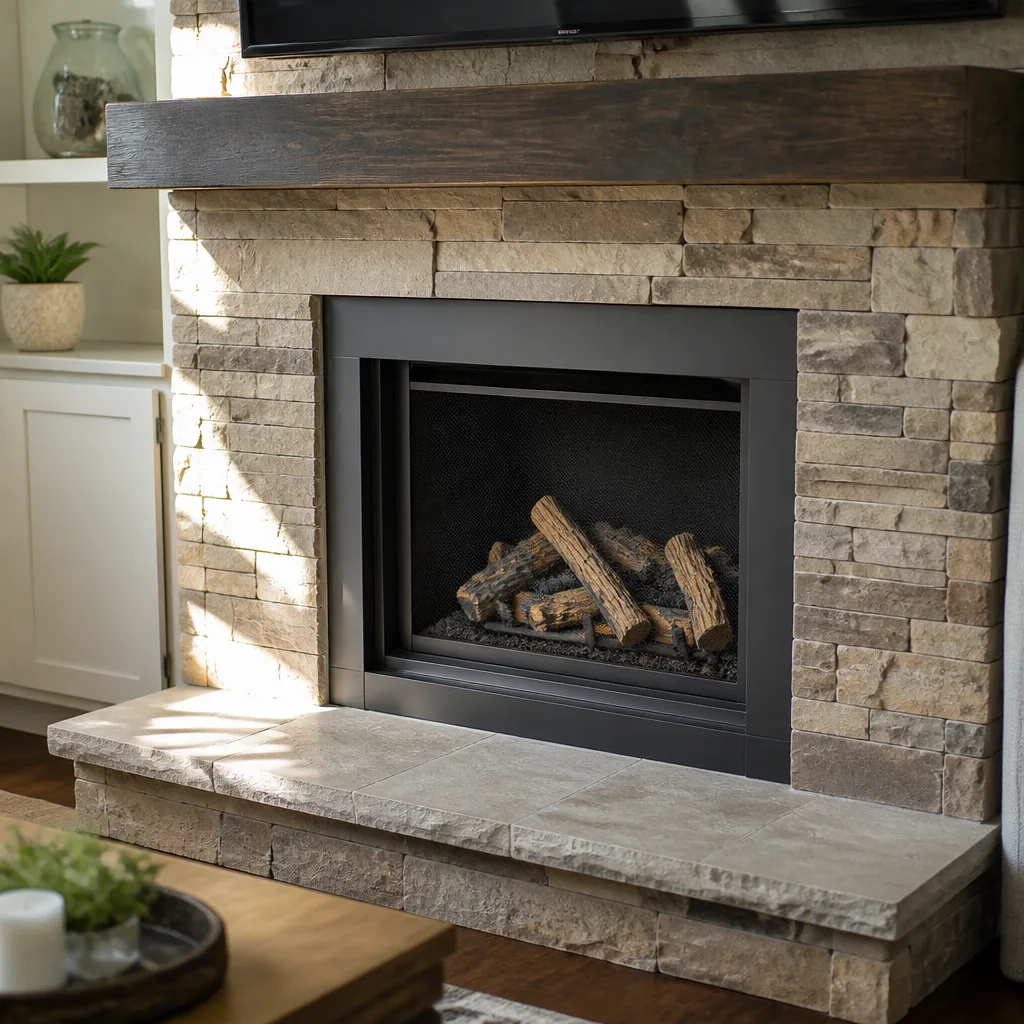
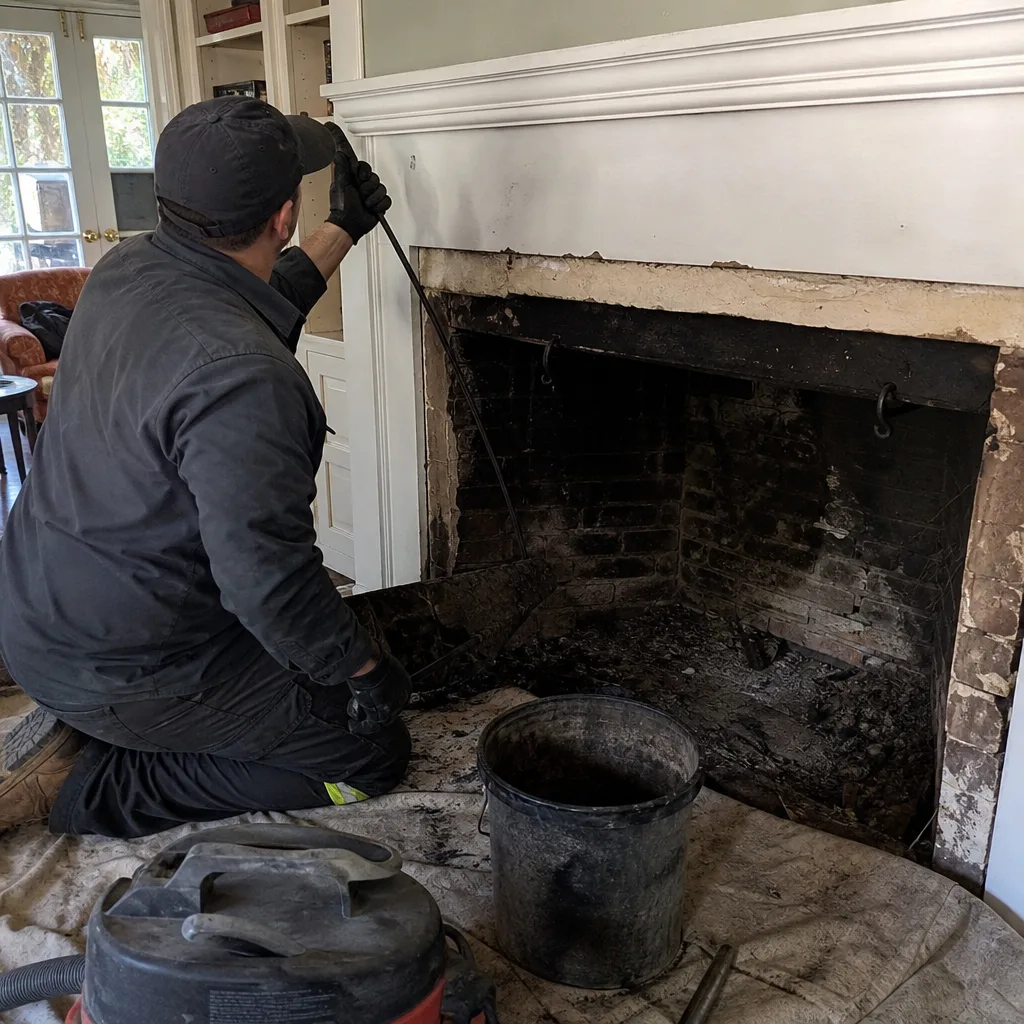 Before
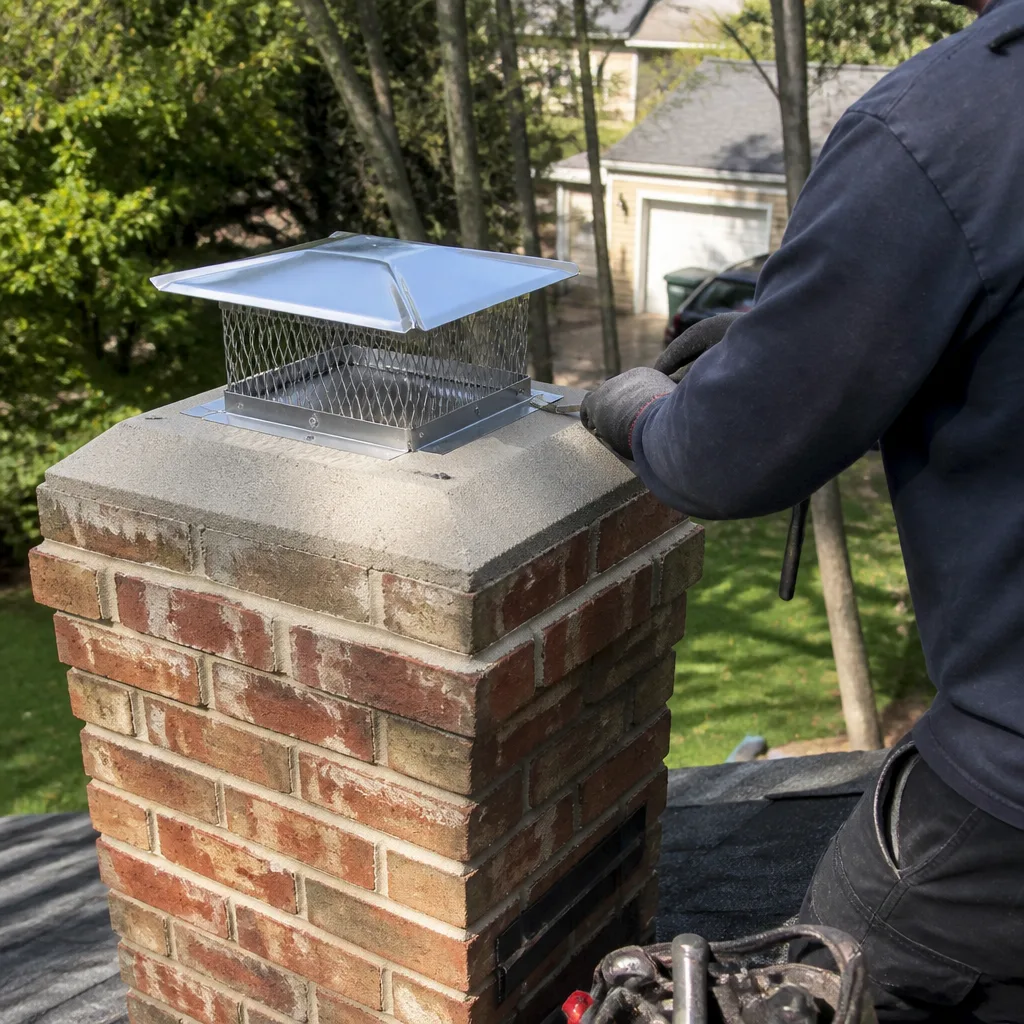 After
After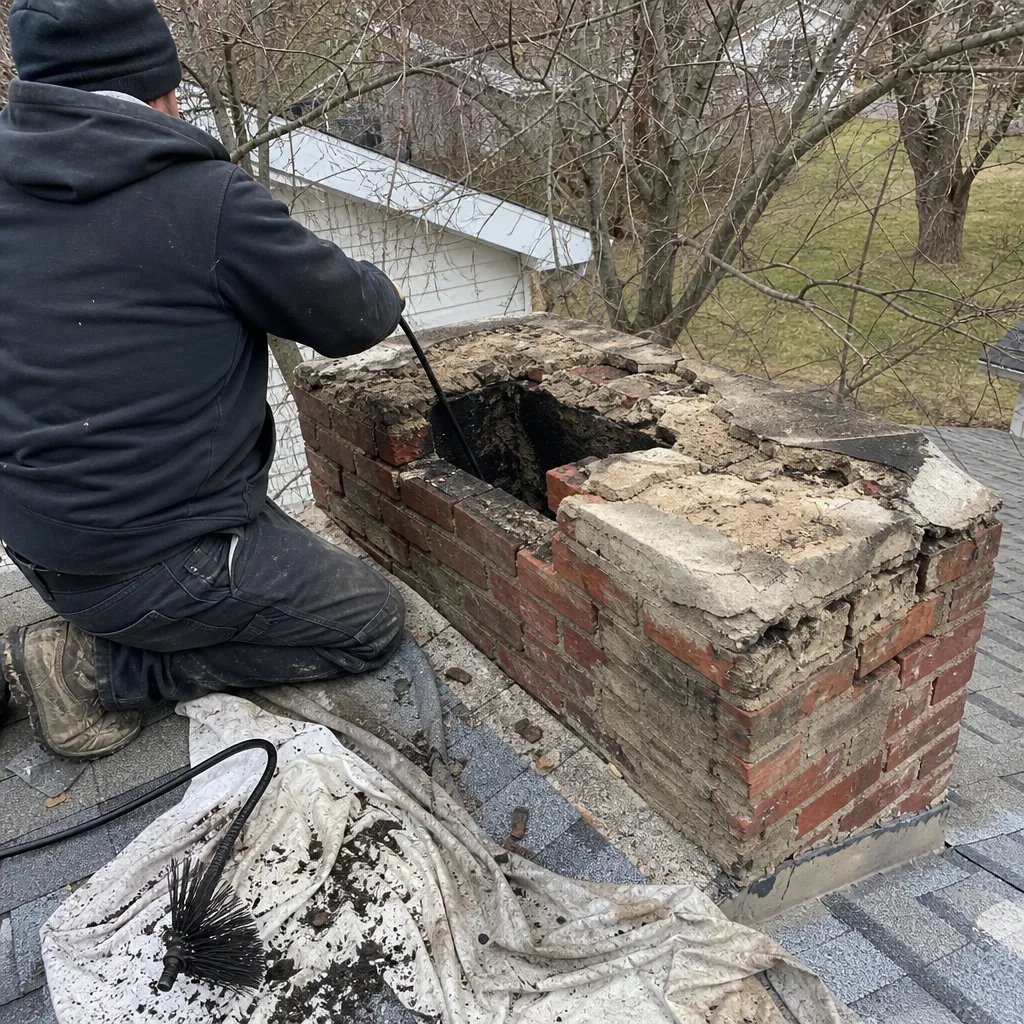 Before
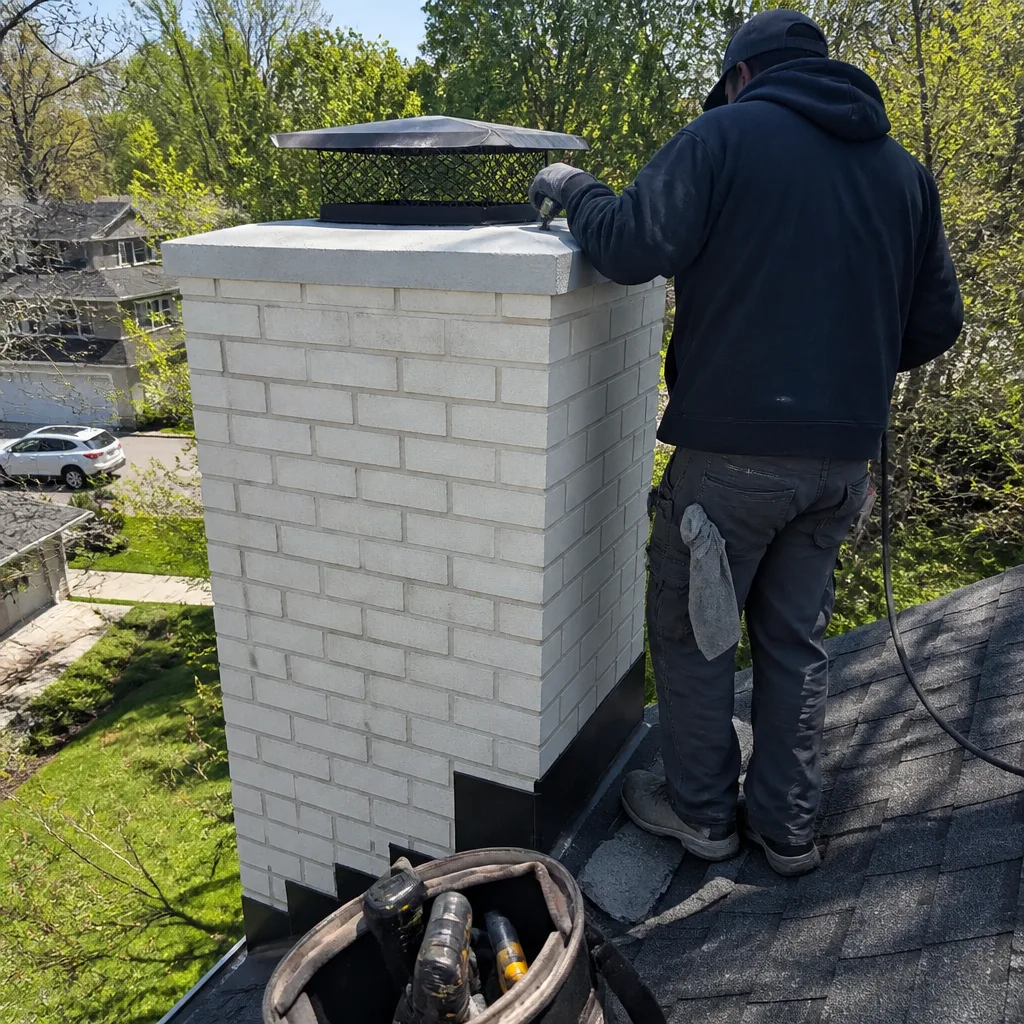 After
After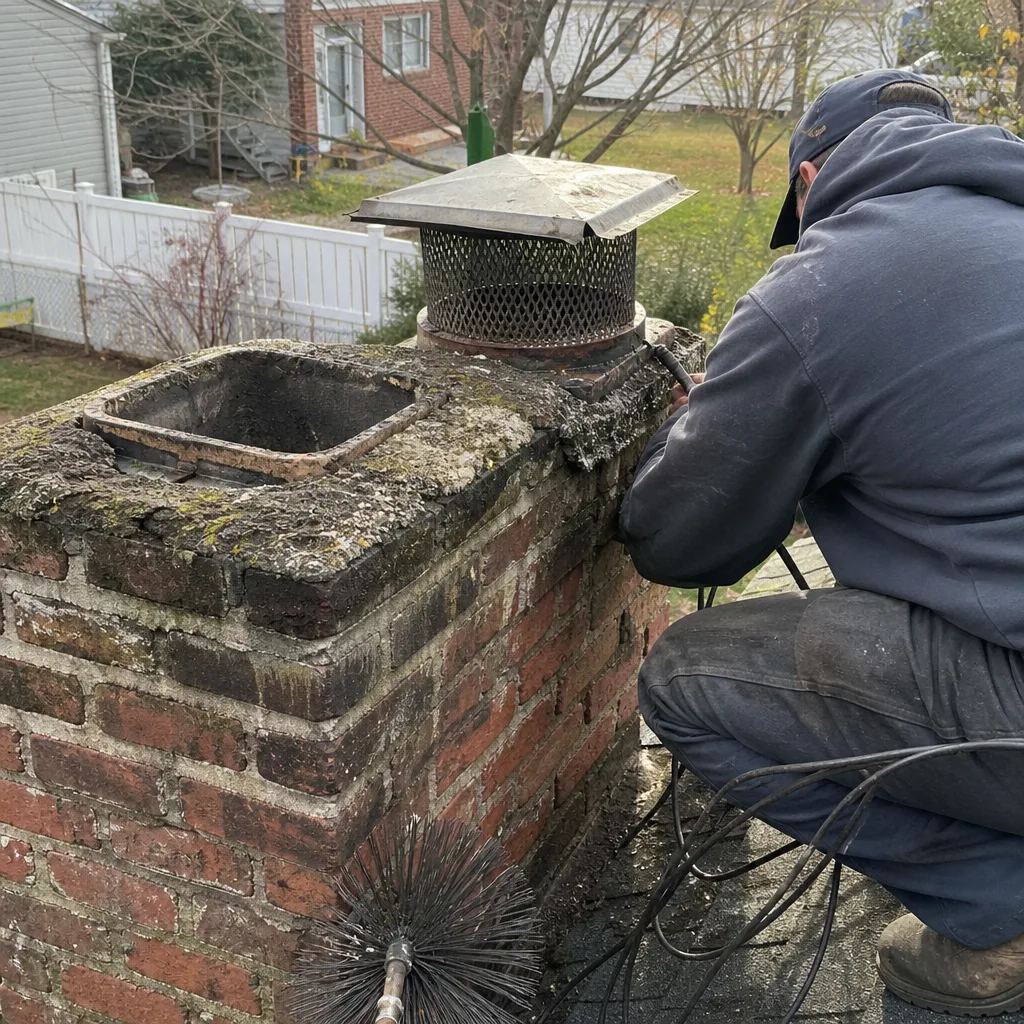 Before
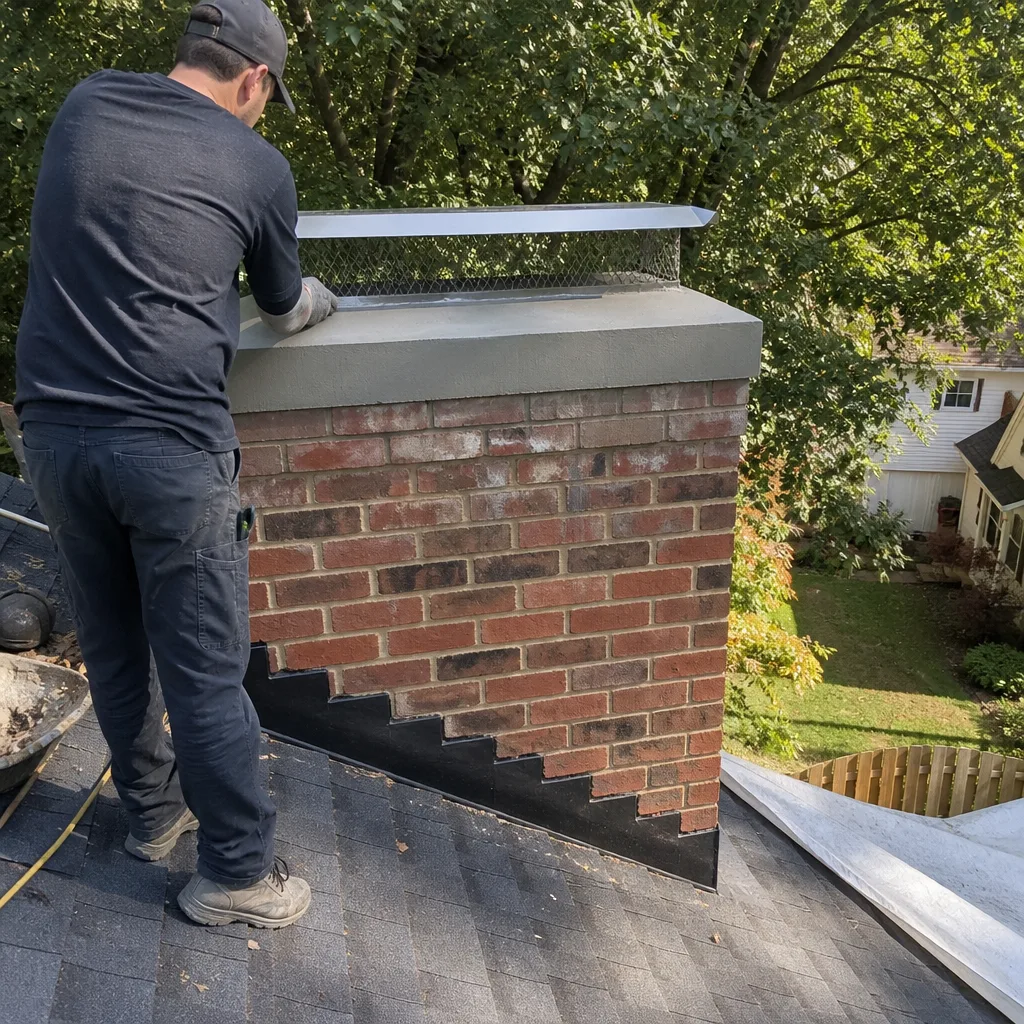 After
AfterCreosote Removal in Rockville, MD
Creosote removal in Rockville typically costs between $250 and $600, depending on the classification and buildup thickness - and it’s almost always done the same day we visit. Level Two Chimney Rockville has handled creosote at every stage, from a routine Class I coating to the glazed, tar-like Class III deposits that require chemical treatment and mechanical removal. If your fireplace smells like a campfire when it hasn’t been used, or your last Chimney Cleaning & Sweep services visit was skipped, this is the page to read before calling anyone.
Our work sits under our full Chimney Cleaning & Sweep in Rockville service, which covers the whole flue system from firebox to cap. Creosote removal is the piece most homeowners don’t think about until they smell something wrong or a camera shows them what’s clinging to the liner walls. We’ve run that camera down more than 38,000 flues since 2009 - every visit with a written price before the work starts and a documented photo record when it’s done. Call us at (571) 376-7052 and a live person will pick up, any hour of the day.
What Creosote Is and Why It Builds Up in Rockville Homes
Creosote is the byproduct of incomplete combustion. When wood smoke cools before it clears the flue, hydrocarbons condense on the liner walls and harden into deposits. Three classes, three different removal approaches.
Class I is the dusty, flaky residue you see after a season of well-seasoned hardwood burned in a properly sized firebox. A standard rotary brush clears it. Class II is a crunchy, tar-like buildup that’s denser and stickier – it still responds to mechanical cleaning, but it takes longer and the right brush head. Class III is glazed, shiny, and chemically bonded to the liner surface. Brushes alone won’t move it. It has to be treated with a creosote modifier first, left to crystallize, then mechanically removed. At its worst, Class III can reduce a 6-inch flue opening by an inch or more, and it ignites easily.
Rockville’s climate pushes this along. The winters here drop into the low 20s regularly, and homeowners in neighborhoods like Fallswood, College Gardens, and Twinbrook tend to run fires hard through December, January, and February. When the outside air is that cold and the chimney exterior is exposed on three sides – common in the older colonials and split-levels on the east side of the city – flue gases cool faster, and creosote deposits accumulate at a higher rate than they would in a milder climate. We see it every February when the Level 2 Inspection backlog clears: the homes that burned the most wood show the heaviest Class II and Class III buildup, particularly in chimneys with interior-to-exterior transitions that weren’t built with the liner diameter the NFPA 211 standard now calls for.
When You Need Creosote Removal
- You smell a sharp, smoky or tar-like odor from the fireplace when it’s not in use. That odor is creosote off-gassing through the liner and into your living space. It’s most noticeable in summer when negative pressure pulls air down the flue, but smelling it in winter is equally significant.
- Your last professional sweep was more than 12 months ago. The Chimney Safety Institute of America recommends an annual inspection and cleaning for any chimney in regular use. In Rockville’s climate, skipping a season is how Class I deposits graduate to Class II.
- You’ve been burning green or unseasoned wood. Wood with moisture content above 20% produces far more smoke per BTU, which means more condensation on the liner wall and faster creosote accumulation – especially in Rockville homes where hardwood is often bought from local vendors and may not have dried long enough.
- Your fires produce more smoke than they used to. A noticeable increase in smoke backdraft or slow draw usually means the flue opening is narrowing. Class III glazing can cut a 6-inch clay tile liner down to a 4- or 5-inch effective opening before the restriction becomes obvious.
- A camera inspection found creosote flagged on your liner report. If a technician came and handed you a written report showing buildup on the flue tile joints or the smoke chamber corbelling, that’s a direct referral for removal – not a suggestion to watch it for another season.
- You’ve had a chimney fire, even a small one. Many chimney fires go undetected by homeowners. If you’ve heard a roaring or crackling sound from the chimney during a fire, or noticed white haze on the exterior brickwork afterward, creosote ignition is a serious possibility. Do not use the fireplace again until the flue has been inspected and cleared.
BeforeAfterOur Creosote Removal Process
- Written price before we touch anything. Before anyone opens a tarp or removes a damper, you’ll have a written scope and a written price in your hand. This isn’t a courtesy – it’s Haven Standard Clause 1. The price doesn’t change when we’re done, and you don’t agree to anything verbally.
- NFPA 211 Level 2 camera scan. We run a camera down the full length of the flue and capture footage of the liner, the smoke chamber, the smoke shelf, and the damper assembly. This tells us the exact classification of the buildup and whether the liner is intact enough to handle mechanical removal without risk. It also gives you a documented baseline. This is Clause 4 of the Haven Standard – the photo and camera record that goes with you when the job is done.
- Creosote classification and method selection. Class I and most Class II deposits get removed with commercial-grade rotary brushes sized to your liner diameter. Class III glazed deposits require a chemical modifier – typically a powdered or liquid creosote-destroying product applied at the liner surface – left to convert the deposit to a friable, brushable state. We use products sourced through our Haven supply network, which includes materials from Olympia Chimney and HeatShield where liner conditioning is also needed.
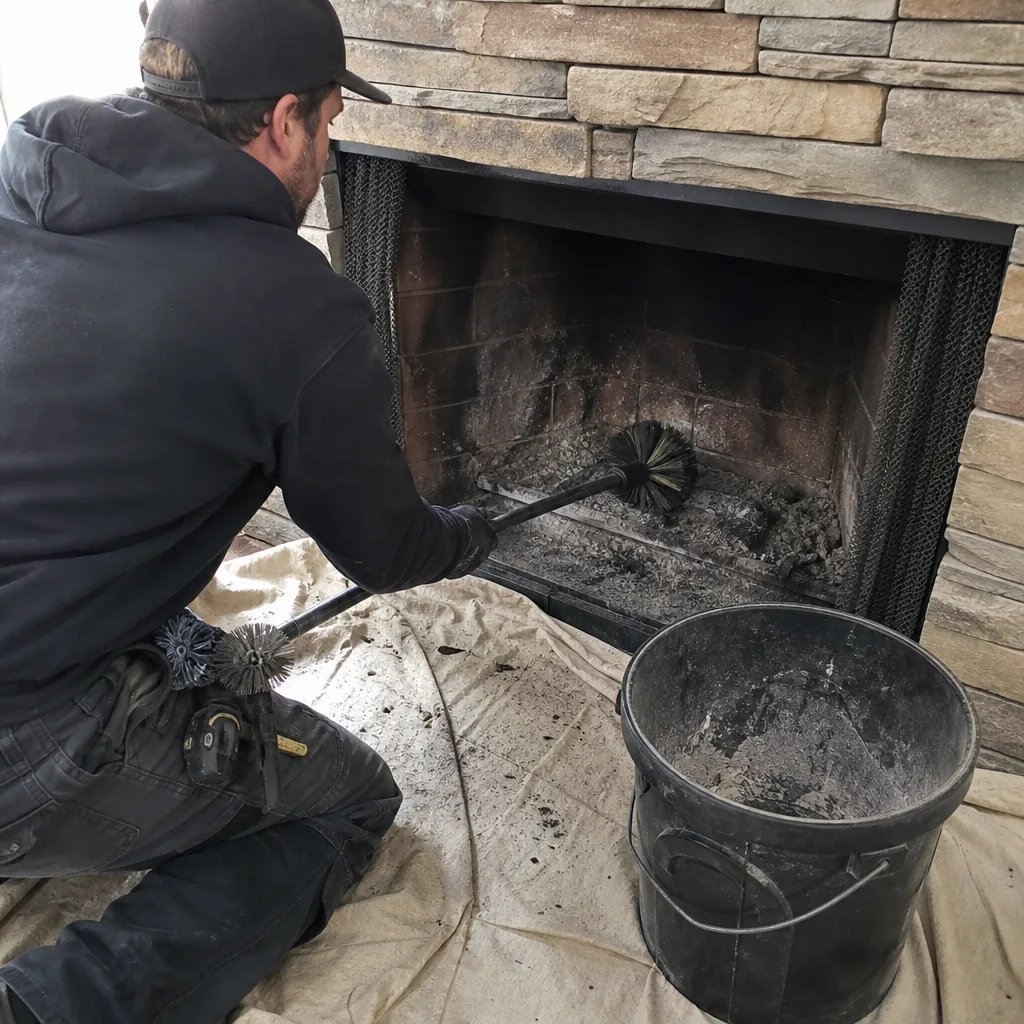
- Mechanical removal with containment. Drop cloths go down before any brush enters the flue. The firebox is sealed during top-down brushing to prevent fallout from spreading through the room. For Class III, after the chemical modifier has done its work, we return for the mechanical pass. If your home is in a neighborhood like Fallswood with older masonry fireplaces, we pay particular attention to the smoke shelf – a horizontal ledge just above the damper that collects debris and is frequently missed in a standard sweep.
- Post-removal camera confirmation. We run the camera a second time after the work is finished. If the liner still shows residue that doesn’t meet our standard, we address it before packing up – not after you’ve signed something. The 365-Day Done Right Promise covers the work; if it’s not right, we make it right.
- Written documentation on the way out. You receive the before-and-after photo record, the written scope of what was done, and the warranty in writing. If the liner showed any crack, spalling, or joint separation during the scan, that’s noted separately with photos and a clear explanation of what it means and what it would cost to address – no pressure, no upsell theater.
Creosote Removal Pricing in Rockville
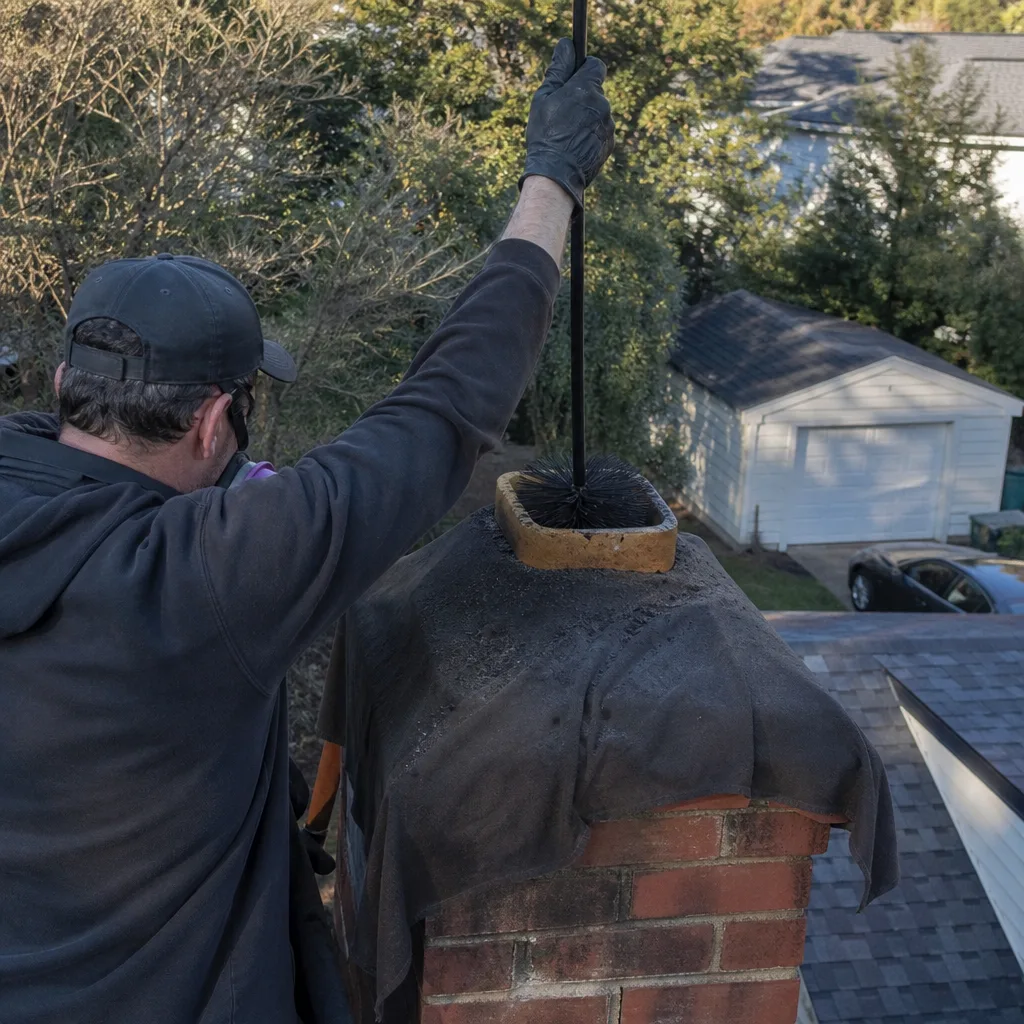
Creosote removal in Rockville runs $250 to $600 for most residential jobs. The range is wide because the classification matters significantly to the labor and materials involved. Below is a plain breakdown of what you’re looking at by scenario.
| Scenario | Typical Price Range |
|---|---|
| Class I removal (standard annual sweep with light creosote) | $180 – $280 |
| Class II removal (heavier buildup, longer mechanical pass) | $280 – $420 |
| Class III removal (glazed deposit, chemical treatment + mechanical) | $420 – $600+ |
| Class III with follow-up visit (chemical modifier set, then return removal) | $550 – $800 |
| Camera inspection (NFPA 211 Level 2) – included on every visit | Included |
What moves the price: liner length (a two-story colonial in College Gardens with a 25-foot flue takes more time than a one-story ranch), liner material (smooth stainless liners are faster to clean than original clay tile with offset sections), and whether the deposit is uniform or concentrated in one area like the smoke chamber. A chimney that hasn’t been serviced in three or four years will almost always land in the Class II to Class III range.
Every quote is written before work begins – no estimates revised after the job is open, no surprise line items when the invoice arrives. If you have a written estimate from another company, bring it to us. We offer a free second opinion on any written quote, and we’ll tell you plainly whether the scope is right and whether the price is in line with what Rockville’s market actually looks like.
Call (571) 376-7052 for an exact quote. Estimates are free, and the price you’re given before the work starts is the price on the invoice when it’s done.
FAQs – Creosote Removal in Rockville
How much does creosote removal cost in Rockville, MD?
Creosote removal in Rockville costs between $180 and $600 for most homes, depending on whether the buildup is Class I, II, or III. Class I removal during a standard Fireplace Cleaning runs $180-$280. Class III glazed deposits that require chemical treatment before mechanical removal typically land between $420 and $600, sometimes more if a second visit is needed after the modifier sets. You’ll have a written price before any work begins – always. Call (571) 376-7052 for an exact figure tied to your specific chimney.
Is Class III creosote dangerous?
Yes. Class III glazed creosote is the most dangerous form of buildup. It’s shiny, hard, and chemically bonded to the liner surface – it doesn’t brush off, and it ignites at temperatures a normal wood fire can reach. A creosote fire inside the flue can hit 2,000 degrees Fahrenheit and cause liner fractures, smoke and carbon monoxide intrusion, and in serious cases, structural damage to the surrounding masonry. Do not use a fireplace that has been flagged for Class III deposits until a qualified technician has cleared and documented the flue. This is one of those situations where “wait and see” is not a reasonable option.
Can I remove creosote myself?
For Class I deposits – the light, dusty residue after a well-managed fire season – a homeowner with the right rotary brush kit can do a reasonable job. But Class II and especially Class III deposits require commercial-grade tools, correct brush sizing for your liner diameter, and chemical modifiers that aren’t available at hardware stores. More importantly, without a Level 1 Inspection with camera scan before and after, you won’t know whether the liner sustained heat damage that makes the flue unsafe to use even after cleaning. The risk with DIY on Class II or III isn’t usually the cleaning itself – it’s the inspection you skip. Call (571) 376-7052 if you’re not sure what class you’re dealing with; we’ll tell you honestly.
How often does creosote need to be removed in Rockville?
Once a year is the NFPA 211 standard for any fireplace in regular use, and in Rockville it’s a reasonable minimum given the heating season. Homes that burn more than two cords of wood per winter, or that use a fireplace as a primary heat source, may need a mid-season check. The Rockville climate – cold enough that chimneys run hard from November through March, and with significant temperature swings that affect draft – means Class I can become Class II faster than homeowners expect if the wood is even slightly green. The clearest signal is the annual camera scan: it shows exactly what’s there, and the photo record tells you how fast it accumulated since the last visit.
Why Level Two Chimney Rockville for Creosote Removal
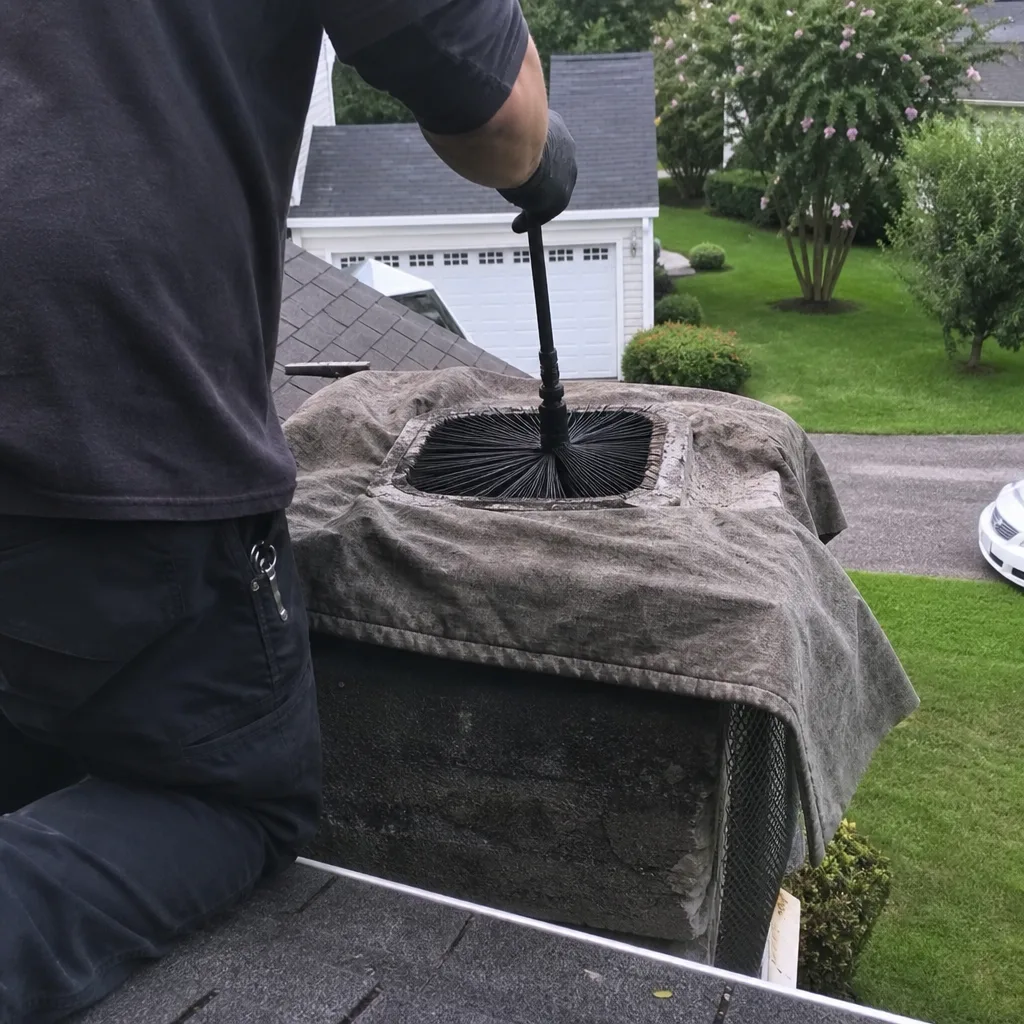
Since 2009, we’ve run a camera down every flue we’ve serviced – more than 38,000 chimneys total. That wasn’t an industry standard when we started. It became Clause 4 of the Haven Standard because, after the first few hundred jobs, it became obvious that you can’t classify creosote accurately, you can’t confirm removal was complete, and you can’t give a homeowner an honest record without camera documentation. A flashlight look and a brush pass is not an inspection, and it’s not a cleaning you can verify.
Every technician who arrives at your door is background-checked, uniformed, and assigned by name. You’ll get a text when they’re on the way. The written price they hand you before they start is the price on the invoice when they leave. The 365-Day Done Right Promise is stamped on every job: if something wasn’t right, we come back and make it right – no arguments, no service call fees.
We source materials through Haven’s supply network, which gives us access to products from Olympia Chimney and HeatShield at pricing that doesn’t get passed through with a retail markup. If the creosote removal surfaces a liner problem – a cracked tile, a failed joint, an area that needs HeatShield resurfacing – you’ll see the camera footage that shows it, a written explanation of what it means, and a written price to address it. That’s how a real inspection works. You can read more about the full scope of what we do under our home page.
If you’ve been told you need creosote removal but haven’t seen a written quote yet, call us. If you have a written quote from someone else, bring it to us. Free second opinion, no strings, and we’ll tell you exactly what the camera shows before we ask you to spend anything.
Schedule Creosote Removal in Rockville
Call (571) 376-7052 to schedule a creosote removal visit in Rockville, MD. A live person answers around the clock – not a voicemail, not a form. You’ll get a same-day or next-day appointment in most cases, a written price before anyone starts work, and a documented photo record when it’s done. The 365-Day Done Right Promise covers every job we complete.
Written by Corrine Halstead, Owner at Level Two Chimney Rockville, serving Rockville.